


A parent-mediated intervention that targets responsive parental behaviors increases attachment behaviors in children with ASD: results from a randomized clinical trial
- PMID: 24488157
- PMCID: PMC4371529
- DOI: 10.1007/s10803-014-2049-2
A parent-mediated intervention that targets responsive parental behaviors increases attachment behaviors in children with ASD: results from a randomized clinical trial
Abstract
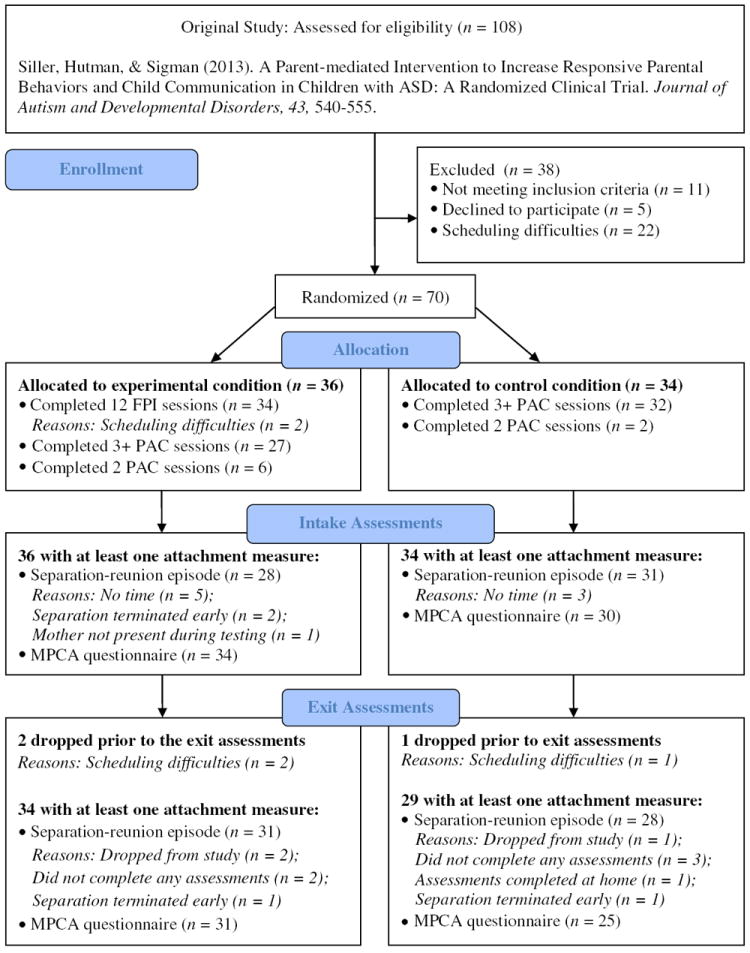
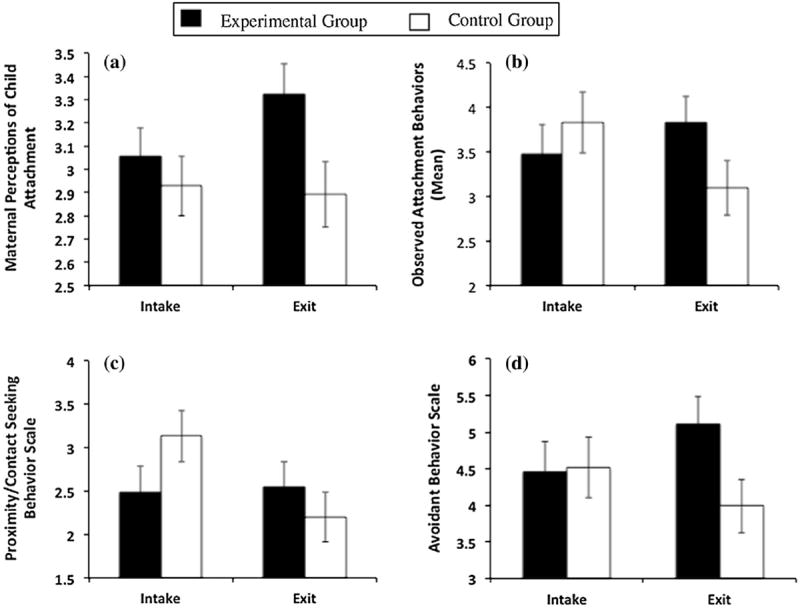
The current study is a randomized clinical trial evaluating the efficacy of Focused Playtime Intervention (FPI) in a sample of 70 children with Autism Spectrum Disorder. This parent-mediated intervention has previously been shown to significantly increase responsive parental communication (Siller et al. in J Autism Dev Disord 43:540-555, 2013a). The current analyses focus on children's attachment related outcomes. Results revealed that children who were randomly assigned to FPI showed bigger increases in attachment-related behaviors, compared to children assigned to the control condition. Significant treatment effects of FPI were found for both an observational measure of attachment-related behaviors elicited during a brief separation-reunion episode and a questionnaire measure evaluating parental perceptions of child attachment. The theoretical and clinical implications of these findings are discussed.
Figures
References
-
- Ainsworth MS. Infant–mother attachment. American Psychologist. 1979;34:932–937. - PubMed
-
- Ainsworth MDS, Blehar MC, Waters E, Wall S. Patterns of attachment: A psychological study of the strange situation. Hillsdale, NJs: Lawrence Erlbaum Associates; 1978.
-
- Atkinson L, Chisholm VC, Scott B, Goldberg S, Vaughn BE, Blackwell J, et al. Maternal sensitivity, child functional level, and attachment in Down syndrome. In: Vondra J, Barnett D, editors. Atypical attachment in infancy and early childhood. Monographs of the Society for Research in Child Development. Serial No. 258. Vol. 64. 1999. pp. 45–66. - PubMed
-
- Bernabei P, Camaioni L, Levi G. An evaluation of early development in children with autism and pervasive developmental disorders from home movies: Preliminary findings. Autism. 1998;2:243–258.
-
- Bono MA, Daley T, Sigman M. Relations among joint attention, amount of intervention and language gain in autism. Journal of Autism and Developmental Disorders. 2004;34:495–505. - PubMed
Publication types
MeSH terms
Grants and funding
LinkOut - more resources
Full Text Sources
Other Literature Sources
