Patient perceptions of osteoporosis treatment thresholds
- PMID: 24488417
- PMCID: PMC4060529
- DOI: 10.3899/jrheum.130548
Patient perceptions of osteoporosis treatment thresholds
Abstract
Objective: Many older patients express concerns about medication risks, and have higher risk thresholds than physicians for cardiovascular preventive medications. We hypothesized that patients have relatively high risk thresholds for fracture preventive medications.
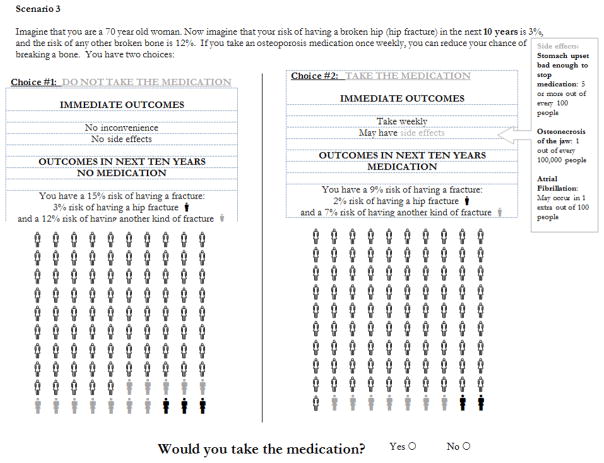
Methods: Women ≥ 60 years old were recruited from 3 primary care internal medicine clinics in Wisconsin. Participants were provided information regarding fracture risks and treatment risks and benefits, followed by a series of vignettes depicting a 70-year-old woman at baseline fracture risks between 5-50%. Fracture risks were shown graphically and treatment side effects were provided for each vignette, and participants were asked to respond regarding whether they would accept treatment. The association of vignette treatment acceptance with participant beliefs regarding medication risks was examined in analyses adjusted for perceived risk of medications, patient numeracy, and prior respondent experience with osteoporosis.
Results: The mean age of women in the cohort was 69.4 years (SD 7.29). Ninety-one percent were non-Hispanic whites, 34% reported a history of fracture, and 20.3% a history of osteoporosis. Subjects varied substantially in their responses to vignettes, but only 51% reported they would accept prescription osteoporosis treatment at the threshold currently recommended by national physician treatment guidelines, and fewer would accept treatment at lower risks. Belief that medications are generally not worth their risks was associated with lower acceptance of treatment at all levels of fracture risk.
Conclusion: There is substantial variability in preferences for postmenopausal osteoporosis treatment. Presentation of individualized fracture risks as recommended by current guidelines has potential to allow better targeting to higher-risk patients, but further work is needed regarding how to present this information and counsel patients.
Keywords: OSTEOPOROSIS; PATIENT SATISFACTION; PRACTICE GUIDELINES; PREVENTIVE MEDICINE; WOMEN.
Conflict of interest statement
The authors have no conflicts of interest to report.
Figures

References
-
- Cummings SR, Black DM, Thompson DE, Applegate WB, Barrett-Connor E, Musliner TA, et al. Effect of alendronate on risk of fracture in women with low bone density but without vertebral fractures: results from the Fracture Intervention Trial. JAMA. 1998;280(24):2077–82. - PubMed
-
- Liberman UA, Weiss SR, Broll J, Minne HW, Quan H, Bell NH, et al. Effect of oral alendronate on bone mineral density and the incidence of fractures in postmenopausal osteoporosis. The Alendronate Phase III Osteoporosis Treatment Study Group. N Engl J Med. 1995;333(22):1437–43. - PubMed
-
- National Osteoporosis Foundation. Clinician’s Guide to Prevention and Treatment of Osteoporosis. Washington, DC: National Osteoporosis Foundation; 2013.
Publication types
MeSH terms
Substances
Grants and funding
LinkOut - more resources
Full Text Sources
Other Literature Sources
Medical