


Mechanisms of metabonomic for a gateway drug: nicotine priming enhances behavioral response to cocaine with modification in energy metabolism and neurotransmitter level
- PMID: 24489831
- PMCID: PMC3904956
- DOI: 10.1371/journal.pone.0087040
Mechanisms of metabonomic for a gateway drug: nicotine priming enhances behavioral response to cocaine with modification in energy metabolism and neurotransmitter level
Abstract
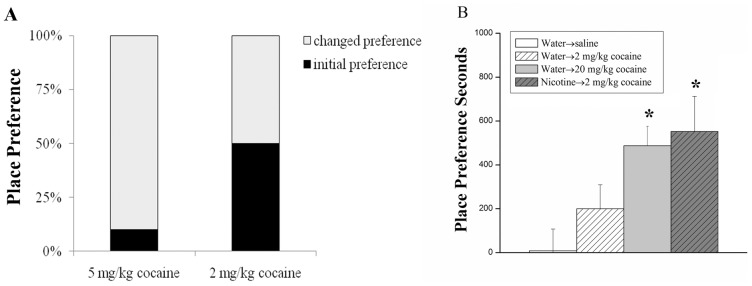
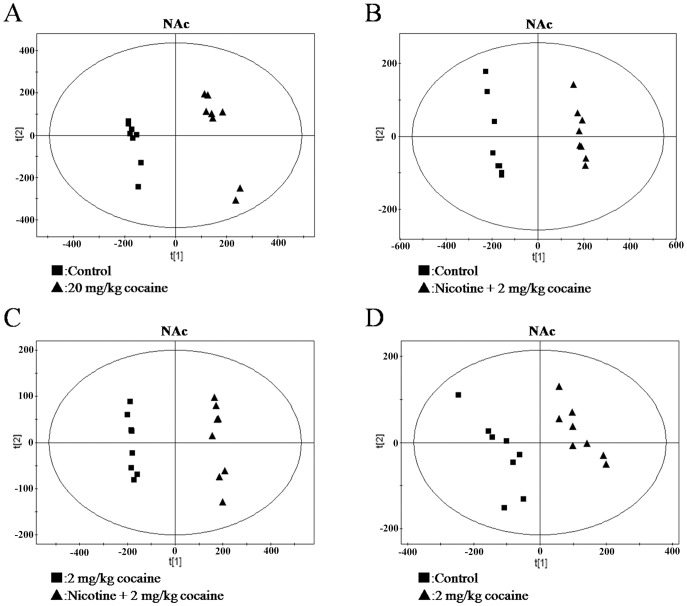
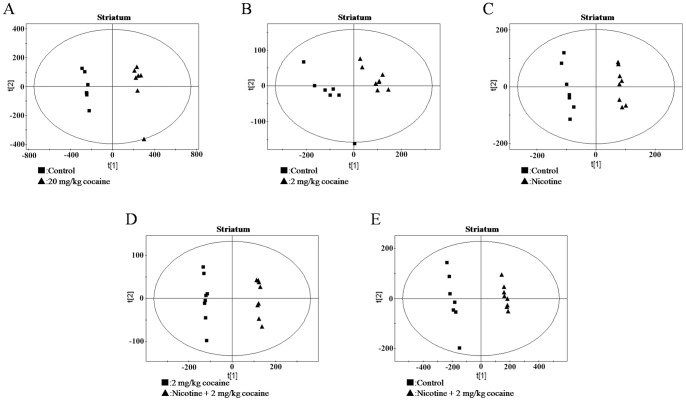
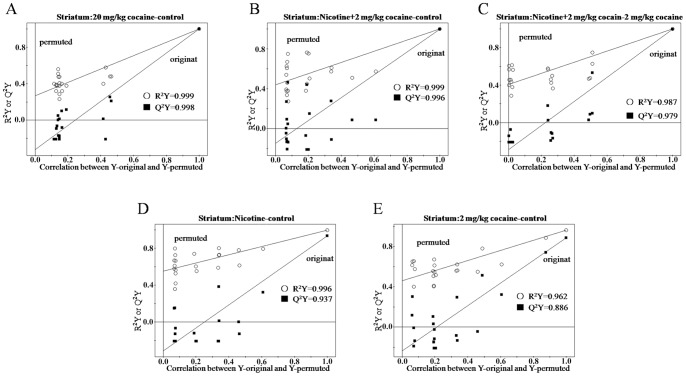
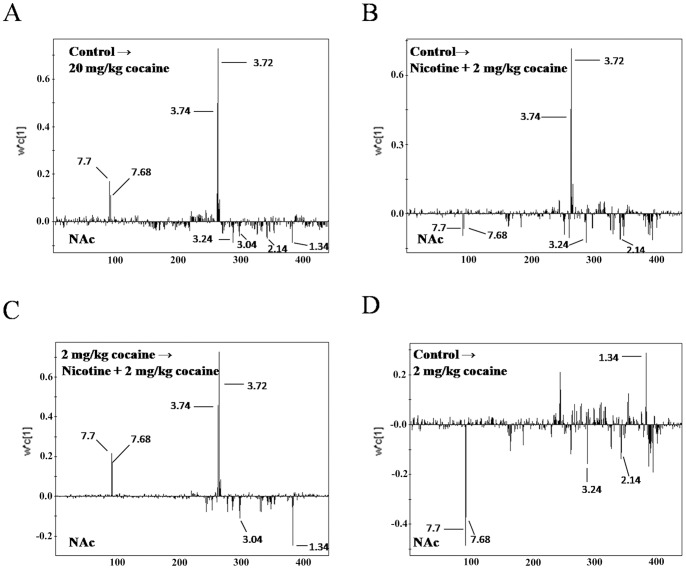
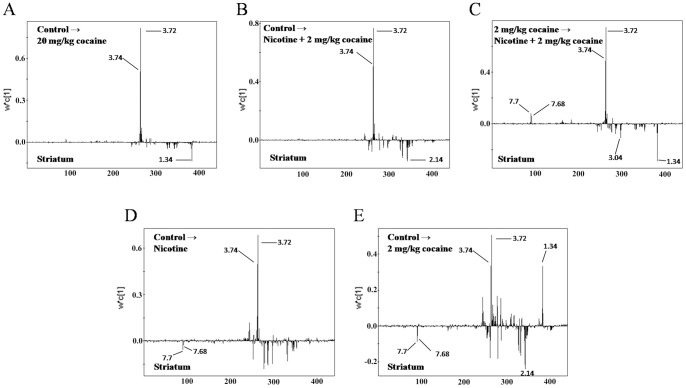
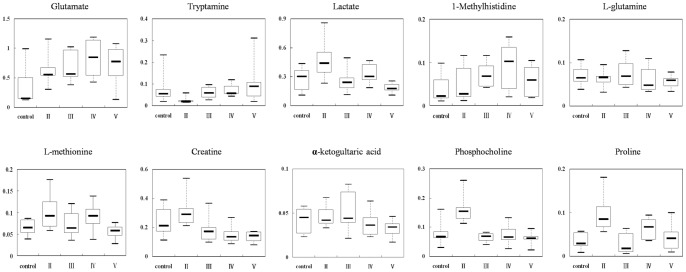
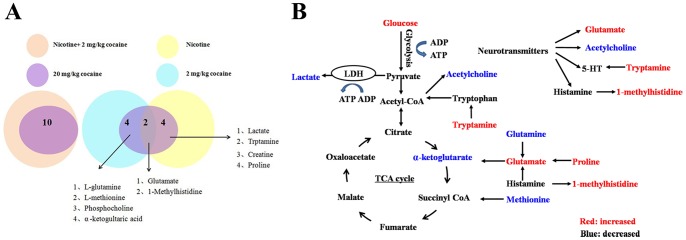
Nicotine, one of the most commonly used drugs, has become a major concern because tobacco serves as a gateway drug and is linked to illicit drug abuse, such as cocaine and marijuana. However, previous studies mainly focused on certain genes or neurotransmitters which have already been known to participate in drug addiction, lacking endogenous metabolic profiling in a global view. To further explore the mechanism by which nicotine modifies the response to cocaine, we developed two conditioned place preference (CPP) models in mice. In threshold dose model, mice were pretreated with nicotine, followed by cocaine treatment at the dose of 2 mg/kg, a threshold dose of cocaine to induce CPP in mice. In high-dose model, mice were only treated with 20 mg/kg cocaine, which induced a significant CPP. (1)H nuclear magnetic resonance based on metabonomics was used to investigate metabolic profiles of the nucleus accumbens (NAc) and striatum. We found that nicotine pretreatment dramatically increased CPP induced by 2 mg/kg cocaine, which was similar to 20 mg/kg cocaine-induced CPP. Interestingly, metabolic profiles showed considerable overlap between these two models. These overlapped metabolites mainly included neurotransmitters as well as the molecules participating in energy homeostasis and cellular metabolism. Our results show that the reinforcing effect of nicotine on behavioral response to cocaine may attribute to the modification of some specific metabolites in NAc and striatum, thus creating a favorable metabolic environment for enhancing conditioned rewarding effect of cocaine. Our findings provide an insight into the effect of cigarette smoking on cocaine dependence and the underlying mechanism.
Conflict of interest statement
Figures

References
-
- Kandel D (1975) Stages in adolescent involvement in drug use. Science 190: 912–914. - PubMed
-
- Torabi MR, Bailey WJ, Majd-Jabbari M (1993) Cigarette smoking as a predictor of alcohol and other drug use by children and adolescents: evidence of the “gateway drug effect”. Journal of School Health 63: 302–306. - PubMed
-
- O’Donnell JA (1979) Cigarette smoking as a precursor of illicit drug use. Cigarette Smoking as a Dependence Process: 30. - PubMed
-
- Kelley BM, Rowan JD (2004) Long-term, low-level adolescent nicotine exposure produces dose-dependent changes in cocaine sensitivity and reward in adult mice. International journal of developmental neuroscience 22: 339–348. - PubMed
Publication types
MeSH terms
Substances
LinkOut - more resources
Full Text Sources
Other Literature Sources
