


The effect of submaximal exercise preceded by single whole-body cryotherapy on the markers of oxidative stress and inflammation in blood of volleyball players
- PMID: 24489985
- PMCID: PMC3893756
- DOI: 10.1155/2013/409567
The effect of submaximal exercise preceded by single whole-body cryotherapy on the markers of oxidative stress and inflammation in blood of volleyball players
Abstract
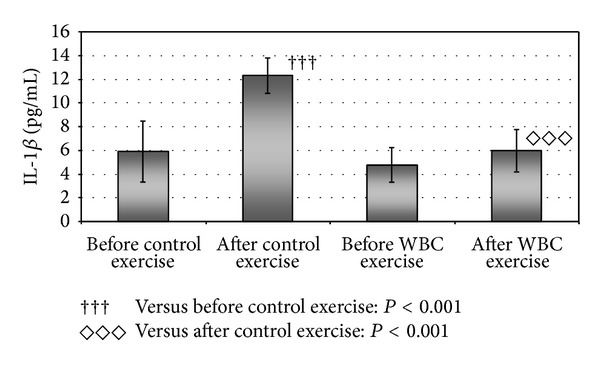
The aim of the study was to determine the effect of single whole-body cryotherapy (WBC) session applied prior to submaximal exercise on the activity of antioxidant enzymes, the concentration of lipid peroxidation products, total oxidative status, and the level of cytokines in blood of volleyball players. The study group consisted of 18 male professional volleyball players, who were subjected to extremely cold air (-130°C) prior to exercise performed on cycloergometer. Blood samples were taken five times: before WBC, after WBC procedure, after exercise preceded by cryotherapy (WBC exercise), and before and after exercise without WBC (control exercise). The activity of catalase statistically significantly increased after control exercise. Moreover, the activity of catalase and superoxide dismutase was lower after WBC exercise than after control exercise (P < 0.001). After WBC exercise, the level of IL-6 and IL-1β was also lower (P < 0.001) than after control exercise. The obtained results may suggest that cryotherapy prior to exercise may have some antioxidant and anti-inflammatory properties. The relations between the level of studied oxidative stress and inflammatory markers may testify to the contribution of reactive oxygen species in cytokines release into the blood system in response to exercise and WBC.
Figures



References
-
- Blair SN, Cheng Y, Holder JS. Is physical activity or physical fitness more important in defining health benefits? Medicine and Science in Sports and Exercise. 2001;33(6):S379–S399. - PubMed
-
- Crespo CJ, Garcia Palmieri MR, Perdomo RP, et al. The relationship of physical activity and body weight with all-cause mortality: results from the Puerto Rico Heart Health Program. Annals of Epidemiology. 2002;12(8):543–552. - PubMed
-
- Meeusen R, Duclos M, Gleeson M, Rietjens G, Steinacker J, Urhausen A. Prevention, diagnosis and treatment of the Overtraining Syndrome. European Journal of Sport Science. 2006;6(1):1–14. - PubMed
-
- Kellmann M. Preventing overtraining in athletes in high-intensity sports and stress/recovery monitoring. Scandinavian Journal of Medicine and Science in Sports. 2010;20(2):95–102. - PubMed
Publication types
MeSH terms
Substances
LinkOut - more resources
Full Text Sources
Other Literature Sources
Medical
