


Inaugurating the Study of Animal Metacognition
Abstract
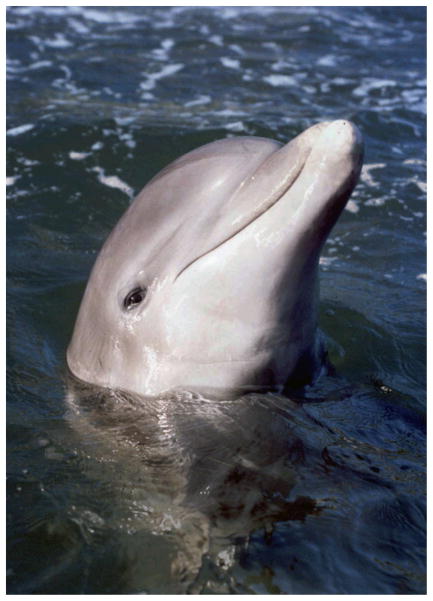
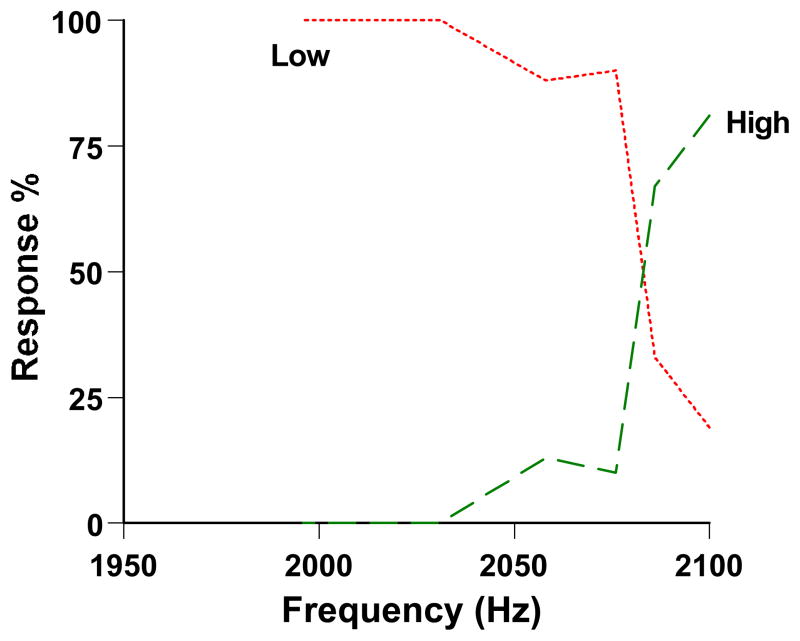
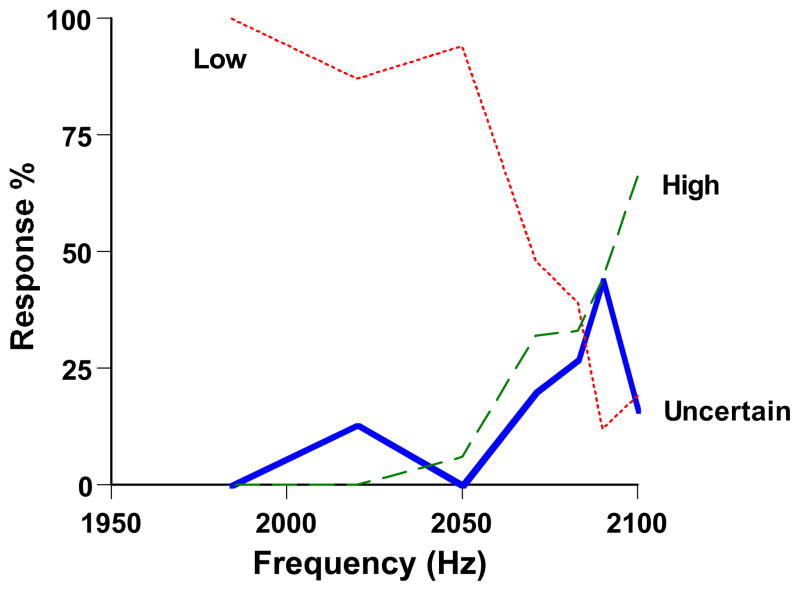
Metacognition-the ability to monitor and control one's own cognition-is a sophisticated ability that reveals humans' reflective mind and consciousness. Researchers have begun to explore whether animals share humans' metacognitive capacity. This article reprises the original study that explored metacognition across species. A captive dolphin performed an auditory pitch-discrimination task using High/Low discrimination responses and an Uncertainty response with which he could decline to complete any trials he chose. He selectively declined the difficult trials near his discriminative threshold-just as humans do. This comparative exploration of metacognition required a trial-intensive titration of perceptual threshold and the training of a distinctive behavioral response. It could not have been conducted in the wild, though the naturalistic observation of dolphin uncertainty behaviors and risk-management strategies would no doubt yield complementary insights. The dolphin study inaugurated a new area of cross-species research. This research area opens a new window on reflective mind in animals, illuminates the phylogenetic emergence of metacognition, and may reveal the antecedents of human consciousness.
Keywords: comparative psychology; decision making under uncertainty; dolphin cognition; metacognition; uncertainty monitoring.
Figures
References
-
- Angell F. On judgments of “like” in discrimination experiments. American Journal of Psychology. 1907;18:253.
-
- Atkinson RC, Juola JF. Search and decision processes in recognition memory. In: Krantz DH, Atkinson RC, Luce RD, Suppes P, editors. Learning, Memory, and Thinking. San Francisco, CA: W. H. Freeman; 1974. pp. 243–293.
-
- Au WW, Moore PW. Critical ratio and critical bandwidth for the Atlantic bottlenose dolphin. Journal of the Acoustical Society of America. 1990;88:1635–1638. - PubMed
-
- Benjamin AS, Bjork RA, Schwartz BL. The mismeasure of memory: When retrieval fluency is misleading as a metacognitive index. Journal of Experimental Psychology: General. 1998;127:55–68. - PubMed