


Low-dose 6-bromoindirubin-3'-oxime induces partial dedifferentiation of endothelial cells to promote increased neovascularization
- PMID: 24496925
- PMCID: PMC4037358
- DOI: 10.1002/stem.1658
Low-dose 6-bromoindirubin-3'-oxime induces partial dedifferentiation of endothelial cells to promote increased neovascularization
Abstract
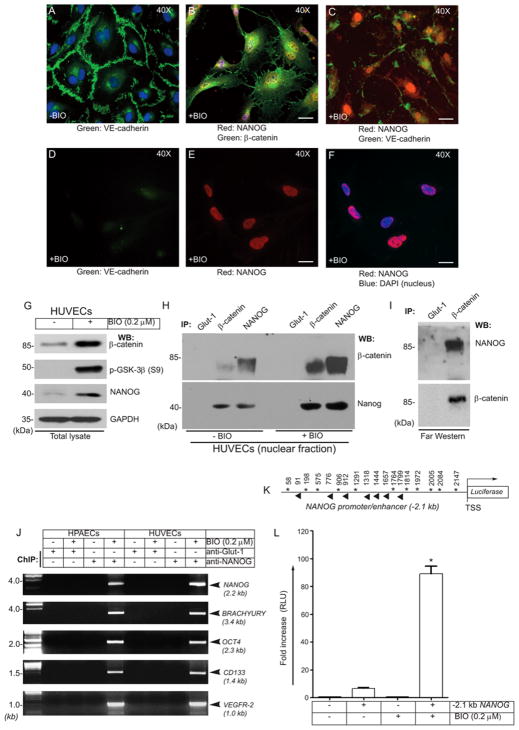
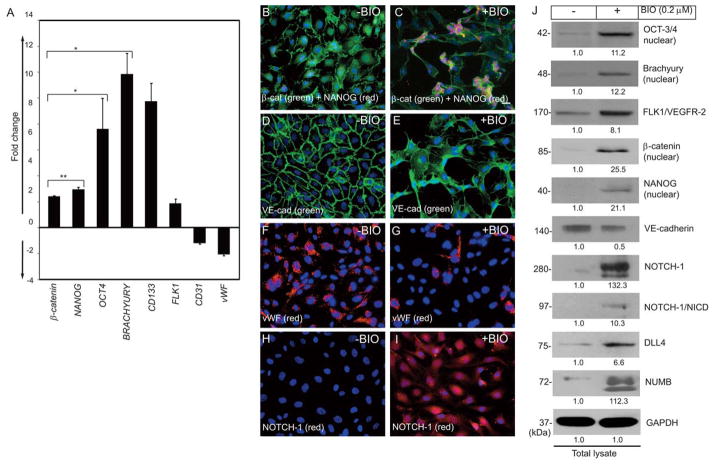
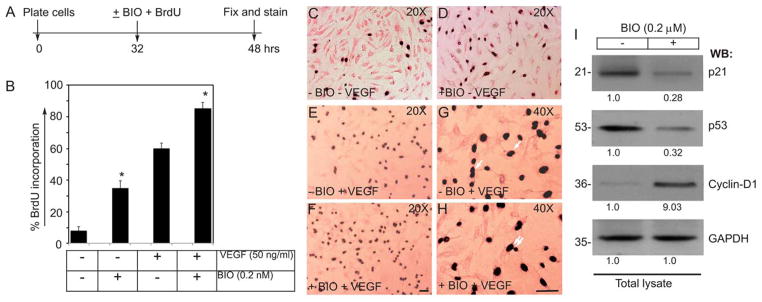
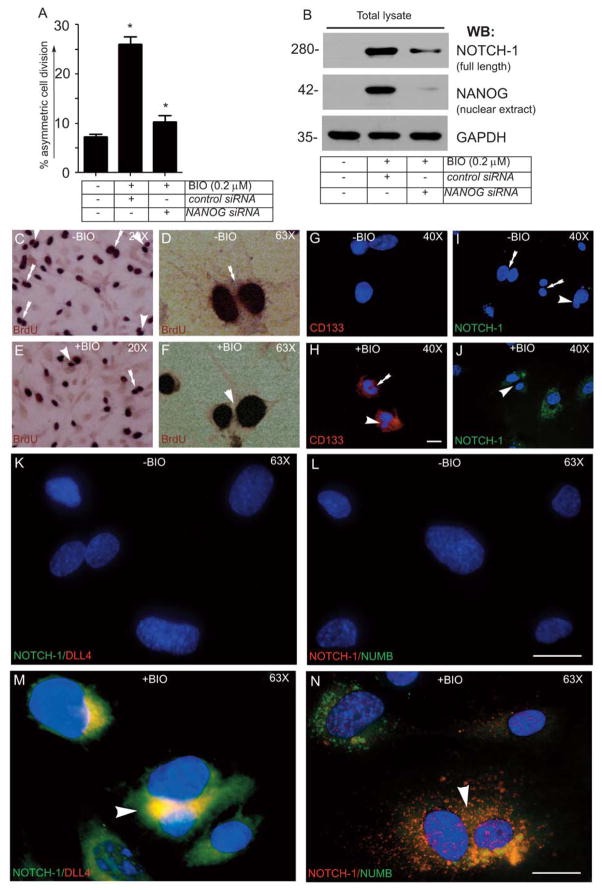
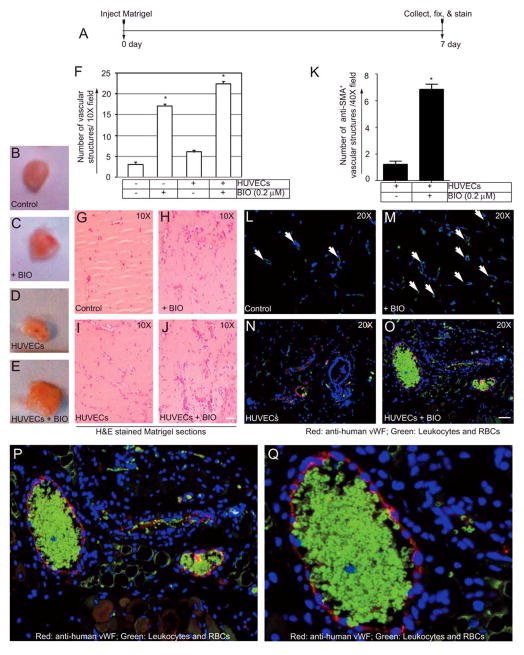
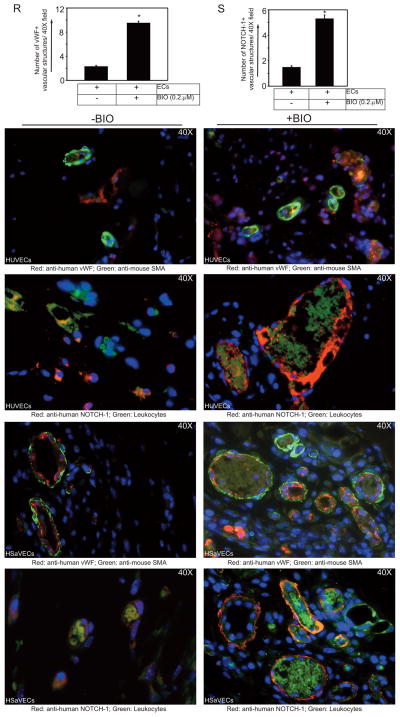
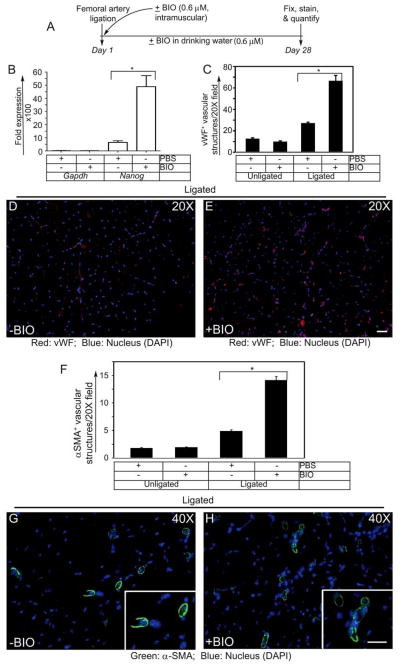
Endothelial cell (EC) dedifferentiation in relation to neovascularization is a poorly understood process. In this report, we addressed the role of Wnt signaling in the mechanisms of neovascularization in adult tissues. Here, we show that a low-dose of 6-bromoindirubin-3'-oxime (BIO), a competitive inhibitor of glycogen synthase kinase-3β, induced the stabilization of β-catenin and its subsequent direct interaction with the transcription factor NANOG in the nucleus of ECs. This event induced loss of VE-cadherin from the adherens junctions, increased EC proliferation accompanied by asymmetric cell division (ACD), and formed cellular aggregates in hanging drop assays indicating the acquisition of a dedifferentiated state. In a chromatin immunoprecipitation assay, nuclear NANOG protein bound to the NANOG- and VEGFR2-promoters in ECs, and the addition of BIO activated the NANOG-promoter-luciferase reporter system in a cell-based assay. Consequently, NANOG-knockdown decreased BIO-induced NOTCH-1 expression, thereby decreasing cell proliferation, ACD, and neovascularization. In a Matrigel plug assay, BIO induced increased neovascularization, secondary to the presence of vascular endothelial growth factor (VEGF). Moreover, in a mouse model of hind limb ischemia, BIO augmented neovascularization that was coupled with increased expression of NOTCH-1 in ECs and increased smooth muscle α-actin(+) cell recruitment around the neovessels. Thus, these results demonstrate the ability of a low-dose of BIO to augment neovascularization secondary to VEGF, a process that was accompanied by a partial dedifferentiation of ECs via β-catenin and the NANOG signaling pathway.
Keywords: 6-Bromoindirubin-3′-oxime; Dedifferentiation; Endothelial cells; Hind limb ischemia; Neovascularization.
© 2014 AlphaMed Press.
Conflict of interest statement
The authors declare no competing financial interests.
Figures
References
-
- Kajstura J, Gurusamy N, Ogórek B, et al. Myocyte turnover in the aging human heart. CIRC RES. 2010;107:1374–1386. - PubMed
-
- Frati C, Savi M, Graiani G, et al. Resident cardiac stem cells. CURR PHARM DES. 2011;17:3252–3257. - PubMed
-
- Jopling C, Boue S, Izpisua Belmonte JC. Dedifferentiation, transdifferentiation and reprogramming: three routes to regeneration. NAT REV MOL CELL BIOL. 2011;12:79–89. - PubMed
Publication types
MeSH terms
Substances
Grants and funding
LinkOut - more resources
Full Text Sources
Other Literature Sources
Research Materials
