


Cognitive behavioral therapy for insomnia in posttraumatic stress disorder: a randomized controlled trial
- PMID: 24497661
- PMCID: PMC3900619
- DOI: 10.5665/sleep.3408
Cognitive behavioral therapy for insomnia in posttraumatic stress disorder: a randomized controlled trial
Abstract
Study objectives: Examine whether cognitive behavioral therapy for insomnia (CBT-I) improves sleep in posttraumatic stress disorder (PTSD) as well as nightmares, nonsleep PTSD symptoms, depression symptoms, and psychosocial functioning.
Design: RANDOMIZED CONTROLLED TRIAL WITH TWO ARMS: CBT-I and monitor-only waitlist control.
Setting: Department of Veterans Affairs (VA) Medical Center.
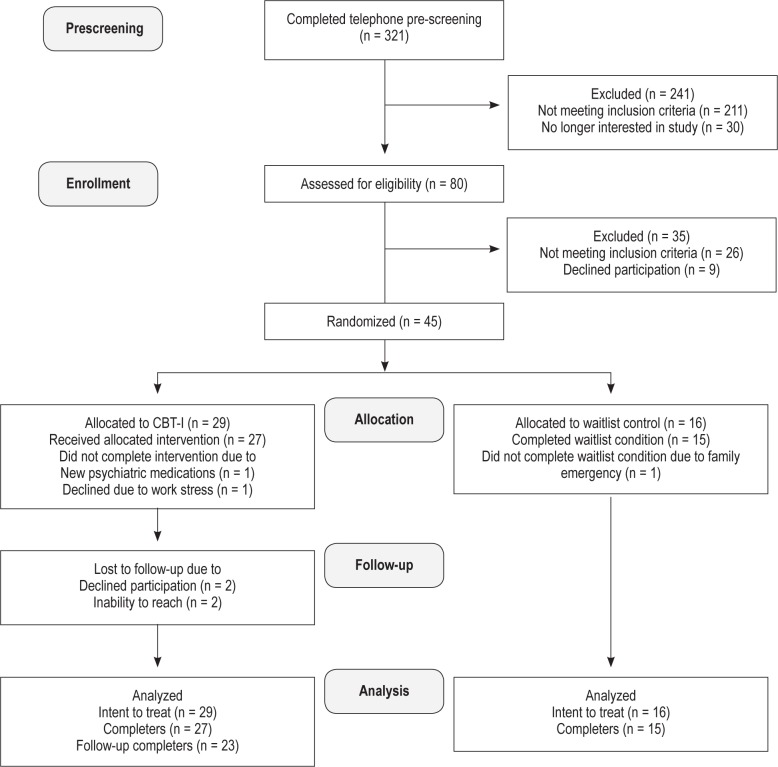
Participants: Forty-five adults (31 females: [mean age 37 y (22-59 y)] with PTSD meeting research diagnostic criteria for insomnia, randomly assigned to CBT-I (n = 29; 22 females) or monitor-only waitlist control (n = 16; nine females).
Interventions: Eight-session weekly individual CBT-I delivered by a licensed clinical psychologist or a board-certified psychiatrist.
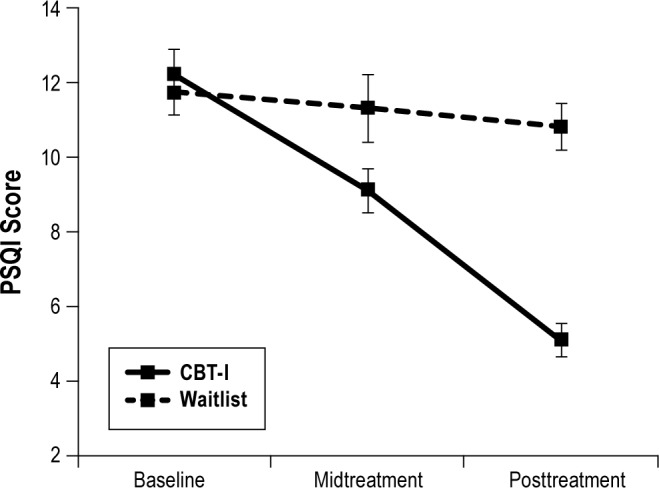
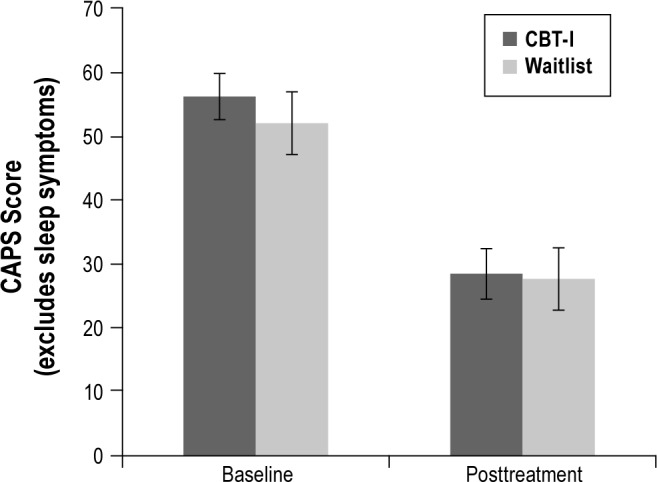
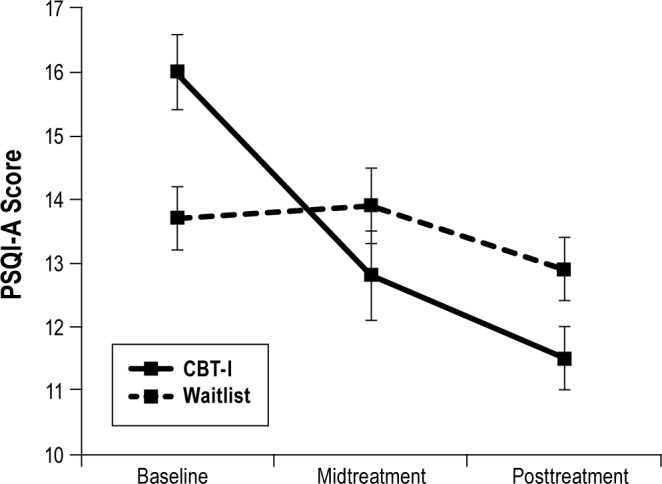
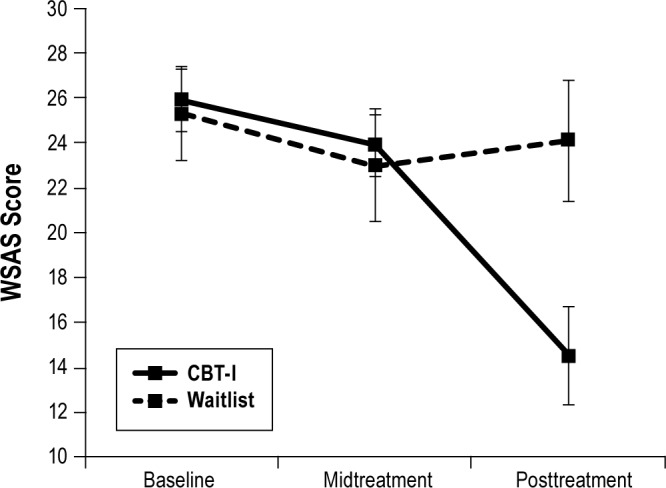
Measurements and results: Measures included continuous monitoring of sleep with diary and actigraphy; prepolysomnography and postpolysomnography and Clinician-Administered PTSD Scale (CAPS); and pre, mid, and post self-report questionnaires, with follow-up of CBT-I participants 6 mo later. CBT-I was superior to the waitlist control condition in all sleep diary outcomes and in polysomnography-measured total sleep time. Compared to waitlist participants, CBT-I participants reported improved subjective sleep (41% full remission versus 0%), disruptive nocturnal behaviors (based on the Pittsburgh Sleep Quality Index-Addendum), and overall work and interpersonal functioning. These effects were maintained at 6-mo follow-up. Both CBT-I and waitlist control participants reported reductions in PTSD symptoms and CAPS-measured nightmares.
Conclusions: Cognitive behavioral therapy for insomnia (CBT-I) improved sleep in individuals with posttraumatic stress disorder, with durable gains at 6 mo. Overall psychosocial functioning improved following CBT-I. The initial evidence regarding CBT-I and nightmares is promising but further research is needed. Results suggest that a comprehensive approach to treatment of posttraumatic stress disorder should include behavioral sleep medicine.
Clinical trial information: TRIAL NAME: Cognitive Behavioral Treatment Of Insomnia In Posttraumatic Stress Disorder. URL: http://clinicaltrials.gov/ct2/show/NCT00881647.
Registration number: NCT00881647.
Keywords: Insomnia; cognitive behavioral therapy; posttraumatic stress disorder.
Figures
References
-
- Roszell DK, McFall ME, Malas KL. Frequency of symptoms and concurrent psychiatric disorder in Vietnam veterans with chronic PTSD. Hosp Community Psychiatry. 1991;42:293–6. - PubMed
-
- Ohayon MM, Shapiro CM. Sleep disturbances and psychiatric disorders associated with posttraumatic stress disorder in the general population. Compr Psychiatry. 2000;41:469–78. - PubMed
-
- Roszell DK, McFall ME, Malas KL. Frequency of symptoms and concurrent psychiatric disorder in Vietnam veterans with chronic PTSD. Hosp Community Psychiatry. 1991;42:293–6. - PubMed
-
- Mellman TA, Kulick-Bell R, Ashlock LE, Nolan B. Sleep events among veterans with combat-related posttraumatic stress disorder. Am J Psychiatry. 1995;152:110–5. - PubMed
-
- Germain A, Buysse DJ, Shear MK, Fayyad R, Austin C. Clinical correlates of poor sleep quality in posttraumatic stress disorder. J Trauma Stress. 2004;17:474–84. - PubMed
Publication types
MeSH terms
Associated data
Grants and funding
LinkOut - more resources
Full Text Sources
Other Literature Sources
Medical
Miscellaneous
