. 2014 Jan 31;9(1):e87260.
doi: 10.1371/journal.pone.0087260. eCollection 2014.

Fluphenazine reduces proteotoxicity in C. elegans and mammalian models of alpha-1-antitrypsin deficiency

Affiliations

Fluphenazine reduces proteotoxicity in C. elegans and mammalian models of alpha-1-antitrypsin deficiency

Jie Li et al. PLoS One. .

Abstract

The classical form of α1-antitrypsin deficiency (ATD) is associated with hepatic fibrosis and hepatocellular carcinoma. It is caused by the proteotoxic effect of a mutant secretory protein that aberrantly accumulates in the endoplasmic reticulum of liver cells. Recently we developed a model of this deficiency in C. elegans and adapted it for high-content drug screening using an automated, image-based array scanning. Screening of the Library of Pharmacologically Active Compounds identified fluphenazine (Flu) among several other compounds as a drug which reduced intracellular accumulation of mutant α1-antitrypsin Z (ATZ). Because it is representative of the phenothiazine drug class that appears to have autophagy enhancer properties in addition to mood stabilizing activity, and can be relatively easily re-purposed, we further investigated its effects on mutant ATZ. The results indicate that Flu reverses the phenotypic effects of ATZ accumulation in the C. elegans model of ATD at doses which increase the number of autophagosomes in vivo. Furthermore, in nanomolar concentrations, Flu enhances the rate of intracellular degradation of ATZ and reduces the cellular ATZ load in mammalian cell line models. In the PiZ mouse model Flu reduces the accumulation of ATZ in the liver and mediates a decrease in hepatic fibrosis. These results show that Flu can reduce the proteotoxicity of ATZ accumulation in vivo and, because it has been used safely in humans, this drug can be moved rapidly into trials for liver disease due to ATD. The results also provide further validation for drug discovery using C. elegans models that can be adapted to high-content drug screening platforms and used together with mammalian cell line and animal models.


Conflict of interest statement

Competing Interests: The authors have declared that no competing interests exist.

Figures

Figure 1
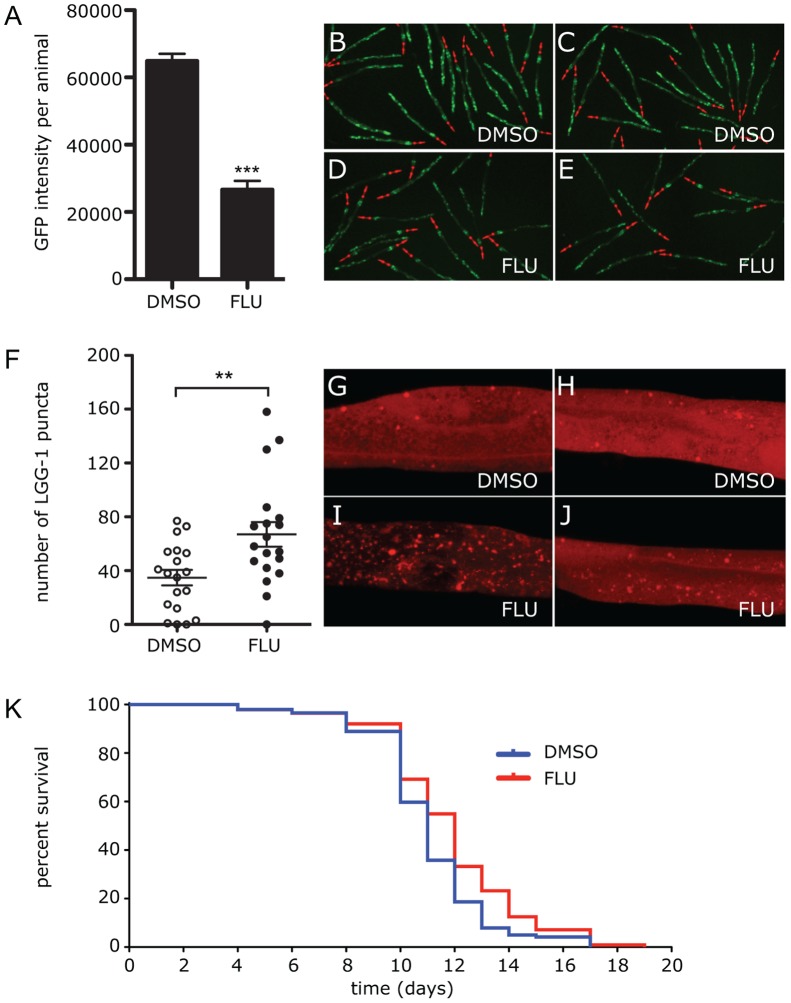
Figure 1. Effect of Flu treatment on clearance of ATZ and autophagy.
Animals expressing sGFP::ATZ were treated with DMSO or 50 µM Flu for 24 h and GFP intensity measured using the Arrayscan VTI (A). An average of three independent experiments with total n >300 animals per treatment is shown. Error bars represent SEM. Statistical significance was determined by using a Student’s t-test, ***P<0.001. Representative Arrayscan images of animals treated with DMSO (B,C) or 50 µM Flu (D,E). Effect of Flu treatment on LGG-1 puncta (F–J). Transgenic animals expressing mCherry::LGG-1 were treated with DMSO or Flu for 24 h and imaged using a Leica TCS SP8 microscope. LGG-1 puncta was quantified using Threshold Object Identification method in Volocity (Perkin Elmer, v5.4). Graph shows the average number of LGG-1 puncta in the posterior intestine of the animal (F). Statistical significance was determined using a Student’s t-test. **P<0.01. Representative confocal images of an mCherry::LGG-1 expressing animal treated with DMSO (G,H) or 50 µM Flu (I,J). Effect of Flu treatment on longevity of worms (K). The Kaplan-Meier graph showing the average lifespan of ATZ animals treated with DMSO (blue) or 50 µM Flu (red). Animals treated with 50 µM Flu had significantly (p<0.001) improved lifespan. Statistical significance was determined using Log-rank (Mantel-Cox) test. Data shown is an average of 3 experiments, n = 150 animals/treatment.
Figure 2
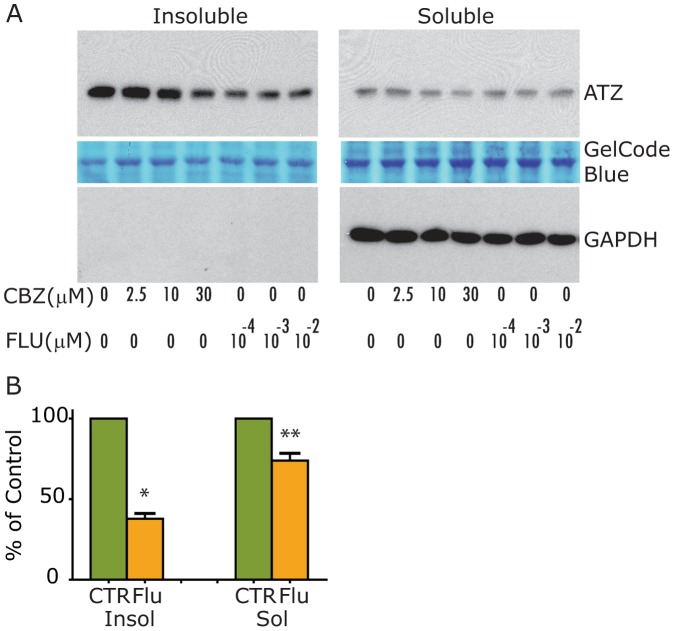
Figure 2. Effect of Flu on steady state levels of ATZ in genetically engineered HeLa HTO/Z cell line.
Separate monolayers were incubated for 48 hours in the absence or presence of Flu or CBZ. Drug was added to the medium daily. Cells were then harvested, homogenized and the cell homogenates separated into soluble and insoluble fractions. The fractions were analyzed by immunoblot for AT (top) as well as loading controls, GelCode Blue (middle) and GAPDH (bottom). A, HTO/Z cell line expressing mutant ATZ; B, Densitometric analysis of 4 separate experiments in HTO/Z cell line. Mean +/− standard error is shown with error bars. Asterisks denote a statistically significant difference (p = 0.0029 for insoluble ATZ; p = 0.0292 for soluble ATZ).
Figure 3
Figure 3. Effect of Flu on steady state levels of ATZ compared to wild type AT and other AT variants in genetically engineered HeLa cell lines.
Exactly as in Figure 2. A, HTO/Z cell line expressing mutant ATZ; changes in relative ATZ levels as determined by densitometry is shown at the top of the panel; B, Dose-response relationship for the effect of Flu on soluble and insoluble ATZ levels in the HTO/Z cell line. These data represent mean +/− standard error from 4 separate experiments and the effect of dose is highly significant, p<0.0001 by two-way ANOVA; C, HTO/M cell line expressing wild type AT; D, HTO/Saar cell line expressing mutant AT Saar; E, HTO/Saar Z cell line expressing mutant AT Saar Z. In each case, GAPDH is used as a loading control for the soluble fraction and GelCode Blue stained bands are used as a loading control for the insoluble fraction.
Figure 4
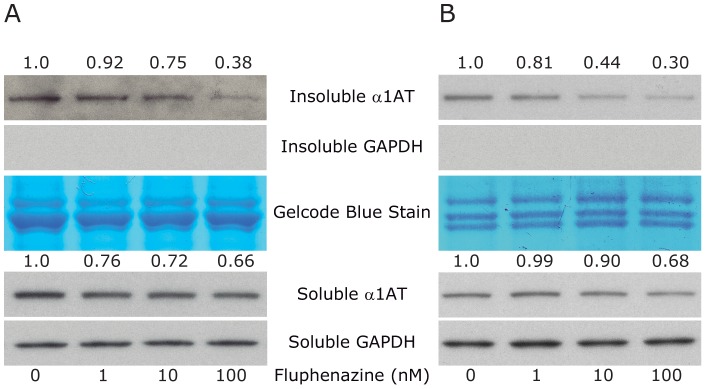
Figure 4. Effect of Flu on steady state levels of ATZ in other genetically engineered cell line models of ATD.
Two different cell line models were analyzed for the effect of Flu exactly as described in Figure 2. A, HG2TONBZ#2; B, HG2TONGZT#1. In each case levels of ATZ and GAPDH are shown. GelCode blue stained bands are also shown as a control for the insoluble fractions. The change in level of ATZ as determined by densitometry is shown at the top of the panels.
Figure 5
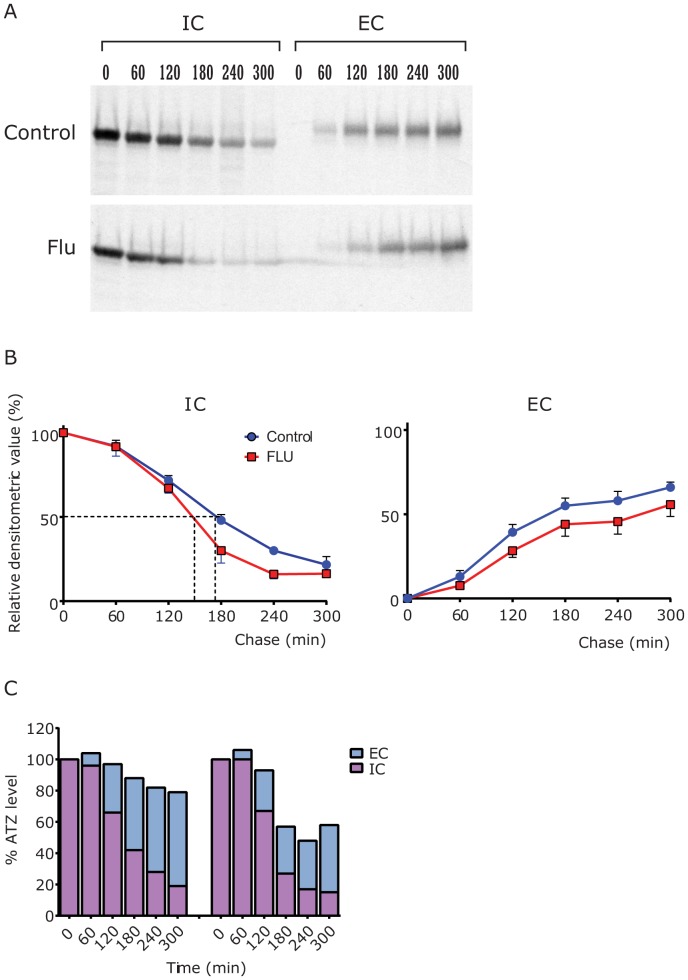
Figure 5. Effect of Flu on kinetics of secretion of ATZ in the HTO/Z cell line.
Separate monolayers were incubated for 48 hours in the absence or presence of Flu (0.1 nM) and then were subjected to pulse radiolabeling for 60 mins. The monolayers were rinsed vigorously and then subjected to chase in medium with excess unlabeled methionine for time periods up to 240 mins. The extracellular fluid (EC) and cell lysates (IC) were analyzed by immunoprecipitation for AT followed by SDS-PAGE/fluorography. A, Fluorograms of control (top) and Flu-treated cells. Chase time points are shown at the top. B, Densitometric analysis of kinetics. Disappearance of ATZ from IC compartment is shown on the left and appearance in EC is shown on the right for n = 3 experiments. Mean +/−SEM is shown for each time point with error bars. The IC disappearance is increased significantly (p = 0.0012) and the EC appearance is decreased significantly (p = 0.0033), using the matched ANOVA in GraphPad. The half-time for disappearance is shown with dashed lines, 180 mins for control and 140 mins for Flu-treated cells. C, Densitometric analysis of ATZ fate. Representative fluorographic images were subjected to densitometric scanning and relative ATZ levels in intracellular and extracellular compartments are shown together for each time point. The relative densitometric intensity of the ATZ band at T0 IC is set at 100% and every other band is compared to that. The results for control are shown at left and for Flu on the right. This analysis shows loss of ATZ in the Flu-treated cells that can only be accounted for by increased degradation.
Figure 6
Figure 6. Effect of Flu on hepatic ATZ accumulation and hepatic fibrosis in the PiZ mouse model.
At 3 months of age a sustained release pellet containing Flu, CBZ or placebo was inserted subcutaneously into PiZ mice. The pellets contained enough Flu to deliver 7.5/kg/d or CBZ to deliver 100 mg/kg/day or 200 mg/kg/day on the basis of the average weight of 3-mos old PiZ mice. At the end of 3 weeks, mice were sacrificed and the liver analyzed by immunoblot for AT (A), PAS/diastase staining (B), Sirius Red staining (C), immunoblot/densitometric analysis for p62 levels (D) and immunoblot/densitometric analysis for the LC3-II/I ratio (E). The immunoblot in Fig 6A shows ATZ levels at the top and staining with Gel Code Blue as a control at the bottom. In each case a single sample from the liver of 6 control and 6 Flu-treated PiZ mice is analyzed. The statistical analysis in panels (B) and (C) was carried out by Image J software determining percent area stained by PAS (B) and Sirius Red (C) in 6 microscopic fields from 10 sections of each liver specimen. The asterisks in panel (C) denote a statistically significant difference, p = 0.0105 for Flu and p = 0.0028 for CBZ. The asterisk in panel (D) denotes a statistically significant different decrease in p62 levels, p = 0.0354 and the asterisk in panel (E) denotes a statistically significant increase in LC3II/I ratio, p = 0.0075 in the livers of Flu-treated versus control mice (n = 6 each).

References

    1. Perlmutter DH, Silverman GA (2011) Hepatic fibrosis and carcinogenesis in α1-antitrypsin deficiency: A prototype for chronic tissue damage in gain-of-function disorders. Cold Spring Harb. Perspect. Biol. 3: 181–194. - PMC - PubMed
    1. Perlmutter DH, Brodsky JL, Balistreri WF, Trapnell BC (2007) Molecular pathogenesis of alpha-1-antitrypsin deficiency-associated liver disease: A meeting review. Hepatology 45: 1313–1323. - PubMed
    1. Maurice N, Perlmutter DH (2012) Novel treatment strategies for liver disease due to α1-antitrypsin deficiency. Clin. Transl. Sci. 5: 289–294. - PMC - PubMed
    1. Perlmutter DH (2010) Alpha-1-antitrypsin deficiency: Importance of proteasomal and autophagic degradative pathways in disposal of liver disease-associated protein aggregates. Annu. Rev. Med. 62: 333–345. - PubMed
    1. Qu D, Teckman JH, Omura S, Perlmutter DH (1996) Degradation of a mutant secretory protein, α1-antitrypsin Z, in the endoplasmic reticulum requires proteasome activity. J. Biol. Chem. 271: 22791–22795. - PubMed

Publication types

MeSH terms