


doi: 10.4161/onci.27138.
Epub 2013 Dec 9.
Rewiring cancer cell death to enhance oncolytic viro-immunotherapy
Affiliations
- PMID: 24498567
- PMCID: PMC3912054
- DOI: 10.4161/onci.27138
Item in Clipboard
Rewiring cancer cell death to enhance oncolytic viro-immunotherapy
Oncoimmunology.
.
Abstract
Oncolytic viruses are novel immunotherapeutic agents that appear to mediate potent antineoplastic effects in both preclinical and clinical settings. Recent studies demonstrate that manipulating the mechanisms whereby cancer cells die in the course of oncolytic virotherapy has potential to boost anticancer immune responses.
Keywords: chemotherapy; danger-associated molecular patterns; immunogenic cell death; mitoxantrone; oncolytic virus.
Figures
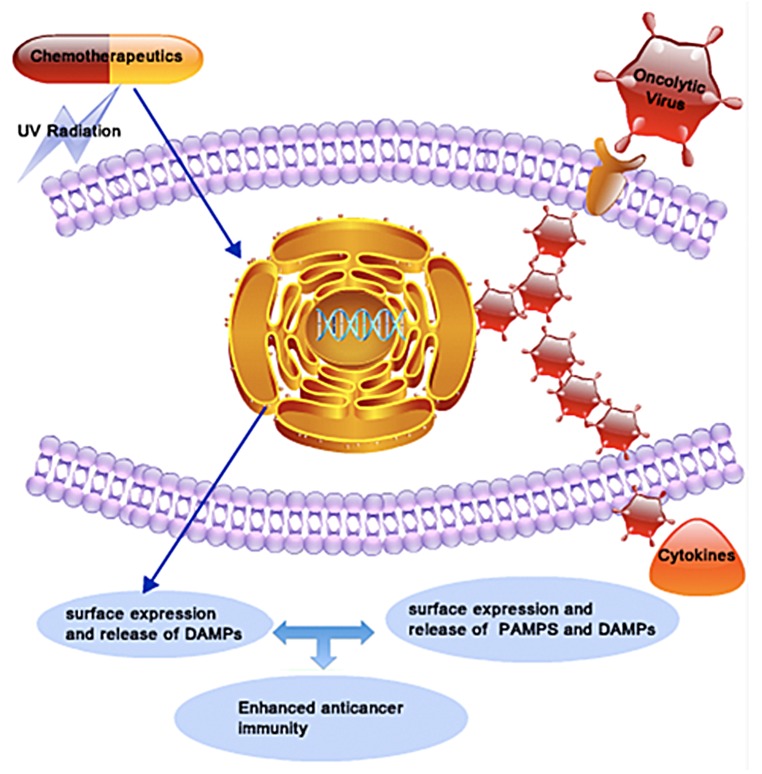
Figure 1. Combinatorial immunochemotherapy based on immunogenic cell death inducers and oncolytic viruses exerts synergistic anticancer activity. Conventional immunogenic cell death (ICD) inducers such as anthracyclines and UV radiation indirectly provoke an endoplasmic reticulum (ER) stress, leading to the release of damage-associated molecular patterns (DAMPs) within the tumor microenvironment. Oncolytic viruses (OVs) overload the protein translation machinery of malignant cells to directly cause an ER stress and potentially release DAMPs. In addition, the replication of OVs within neoplastic lesions leads to release of foreign viral proteins and nucleic acids that activate immune cells to release cytokines. At least theoretically, the combined administration of ICD inducers and OVs might activate synergistic immunological cascades culminating in improved anticancer immune responses.
References
LinkOut - more resources
Full Text Sources
Other Literature Sources
