


A novel approach to predict sudden cardiac death (SCD) using nonlinear and time-frequency analyses from HRV signals
- PMID: 24504331
- PMCID: PMC3913584
- DOI: 10.1371/journal.pone.0081896
A novel approach to predict sudden cardiac death (SCD) using nonlinear and time-frequency analyses from HRV signals
Abstract
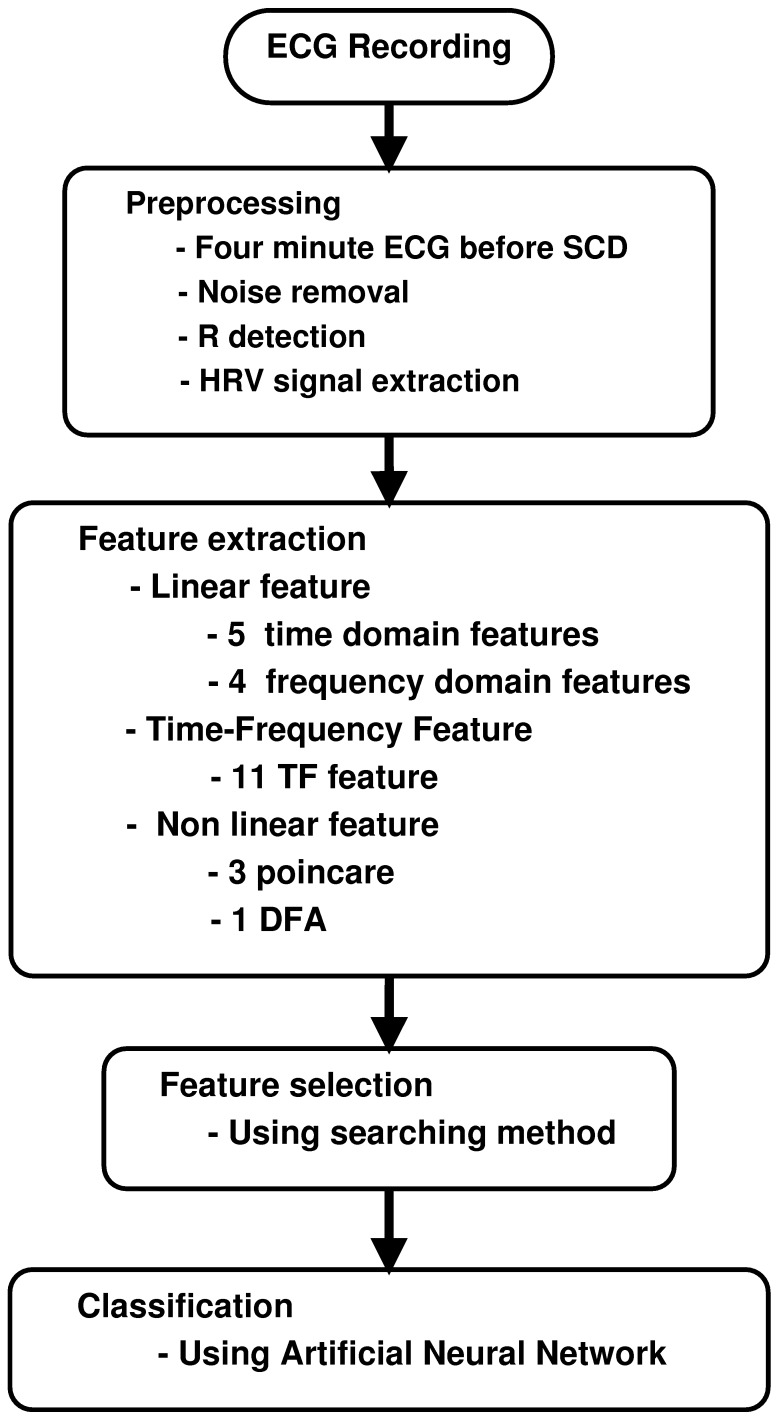
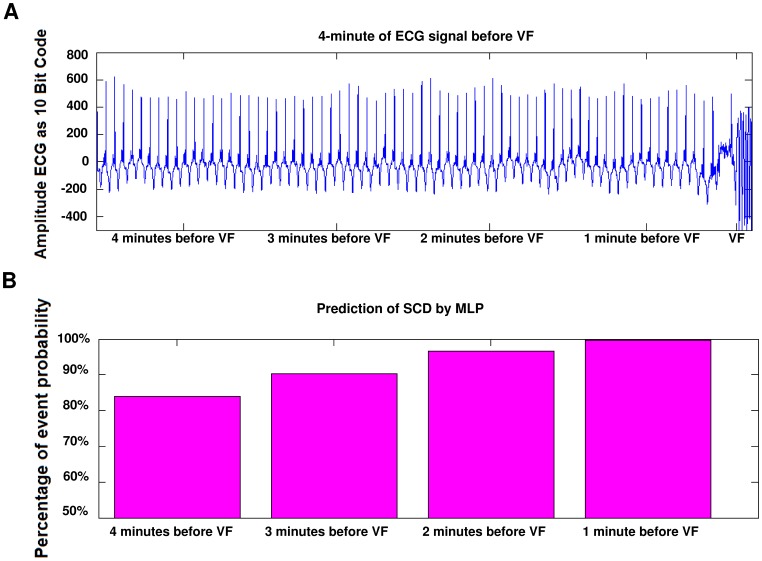
Investigations show that millions of people all around the world die as the result of sudden cardiac death (SCD). These deaths can be reduced by using medical equipment, such as defibrillators, after detection. We need to propose suitable ways to assist doctors to predict sudden cardiac death with a high level of accuracy. To do this, Linear, Time-Frequency (TF) and Nonlinear features have been extracted from HRV of ECG signal. Finally, healthy people and people at risk of SCD are classified by k-Nearest Neighbor (k-NN) and Multilayer Perceptron Neural Network (MLP). To evaluate, we have compared the classification rates for both separate and combined Nonlinear and TF features. The results show that HRV signals have special features in the vicinity of the occurrence of SCD that have the ability to distinguish between patients prone to SCD and normal people. We found that the combination of Time-Frequency and Nonlinear features have a better ability to achieve higher accuracy. The experimental results show that the combination of features can predict SCD by the accuracy of 99.73%, 96.52%, 90.37% and 83.96% for the first, second, third and forth one-minute intervals, respectively, before SCD occurrence.
Conflict of interest statement
Figures
References
-
- Myerburg RJ (2005) Cardiac Arrest and Sudden Cardiac Death in Heart Disease: A Textbook of Cardiovascular Medicine, 7th edition. Philadelphia: WB Saunders.
-
- Chen X (2000) The patient with high risk of sudden cardiac death. The Chinese Journal of Arrhythmia, 4(4), 307–308.
-
- Fox CS, Evans JC, Larson MG, Kannel WB, Levy D (2004) Temporal trends in coronary heart disease mortality and sudden cardiac death from 1950 to 1999: the Framingham Heart Study. Circulation, 110, 522–527. - PubMed
-
- Lloyd-Jones D, Adams RJ, Brown TM, Carnethon M, Dai S, et al. (2010) American Heart Association Statistics Committee and Stroke Statistics Subcommittee. Heart disease and stroke statistics2010 update: a report from the American Heart Association. Circulation 121: e46e215. - PubMed
-
- Byrne R, Constant O, Smyth Y, Callagy G, Nash P, et al.. (2008) Multiple source surveillance incidence and aetiology of out-of-hospital sudden cardiac death in a rural population in the West of Ireland. Eur Heart J., 29, 1418–1423. - PubMed
MeSH terms
LinkOut - more resources
Full Text Sources
Other Literature Sources
Miscellaneous
