


Whey protein improves exercise performance and biochemical profiles in trained mice
- PMID: 24504433
- PMCID: PMC4186725
- DOI: 10.1249/MSS.0000000000000272
Whey protein improves exercise performance and biochemical profiles in trained mice
Abstract
Purpose: The objective of this study is to verify the beneficial effects of whey protein (WP) supplementation on health promotion and enhance exercise performance in an aerobic-exercise training protocol.
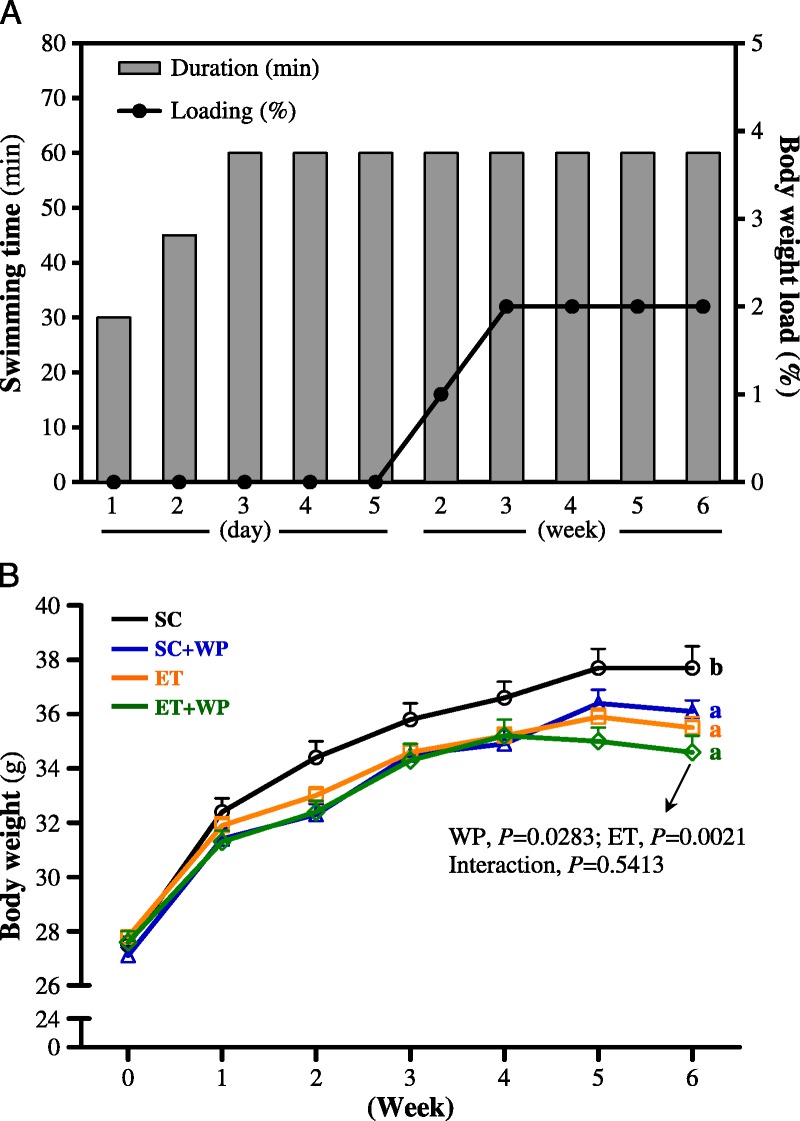
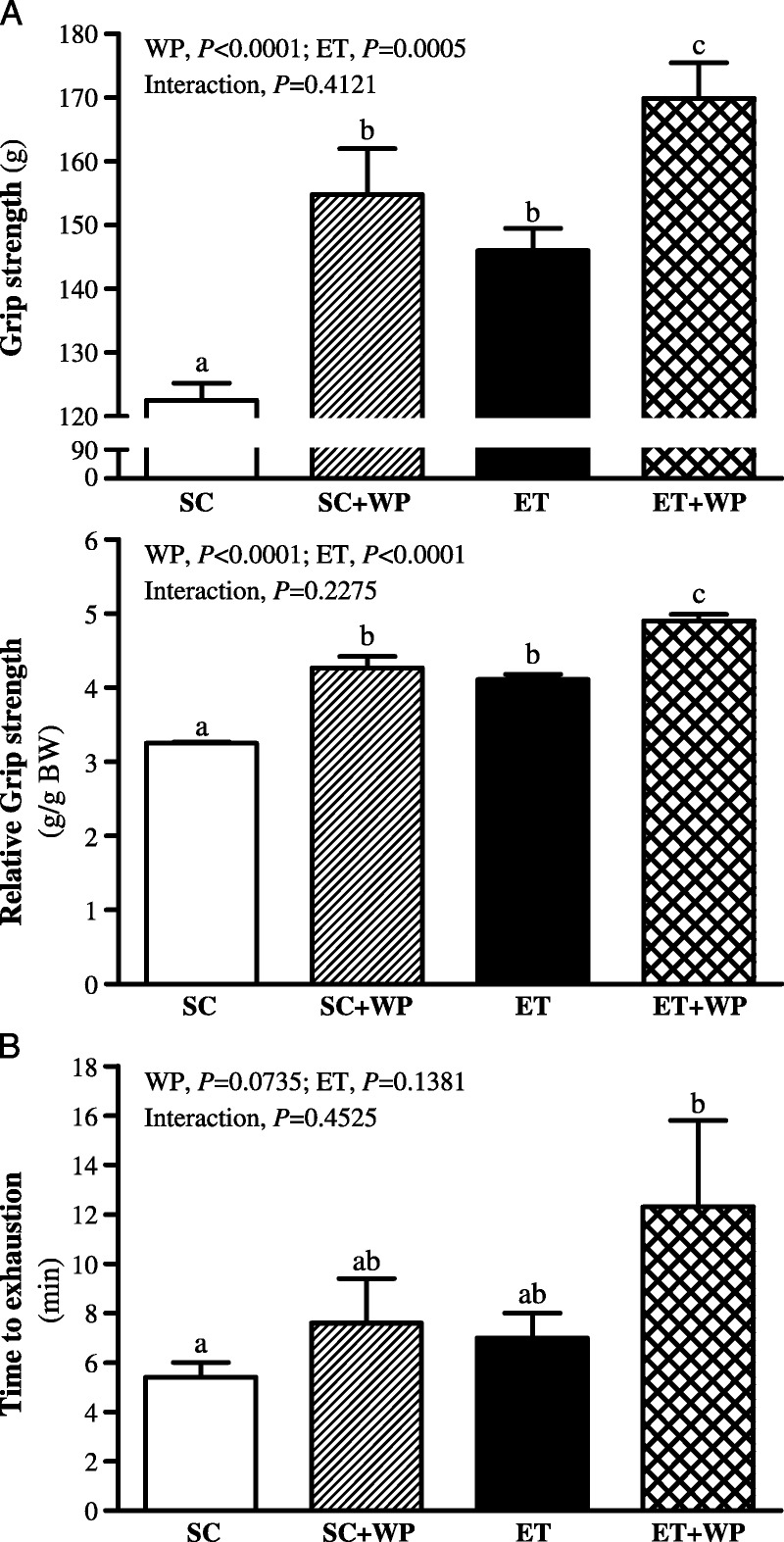
Methods: In total, 40 male Institute of Cancer Research mice (4 wk old) were divided into four groups (n = 10 per group): sedentary control with vehicle (SC) or WP supplementation (4.1 g·kg, SC + WP), and exercise training with vehicle (ET) or WP supplementation (4.1 g·kg, ET + WP). Animals in the ET and ET + WP groups underwent swimming endurance training for 6 wk, 5 d·wk. Exercise performance was evaluated by forelimb grip strength and exhaustive swimming time as well as by changes in body composition and biochemical parameters at the end of the experiment.
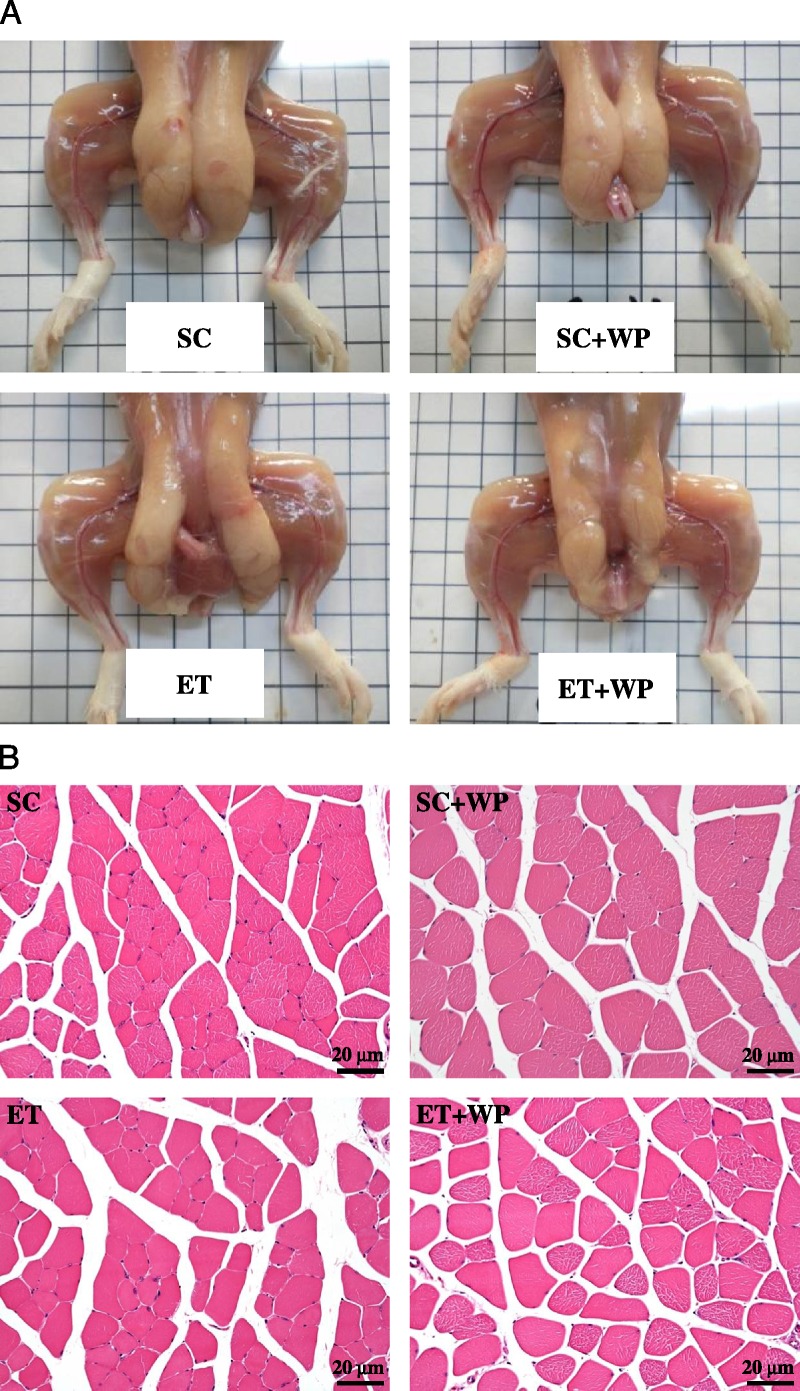
Results: ET significantly decreased final body and muscle weight and levels of albumin, total protein, blood urea nitrogen, creatinine, total cholesterol, and triacylglycerol. ET significantly increased grip strength; relative weight (%) of liver, heart, and brown adipose tissue (BAT); and levels of aspartate aminotransferase, alanine aminotransferase, alkaline phosphatase, lactate dehydrogenase, creatine kinase, and total bilirubin. WP supplementation significantly decreased final body, muscle, liver, BAT, and kidney weight and relative weight (%) of muscle, liver, and BAT as well as levels of aspartate aminotransferase, lactate dehydrogenase, creatine kinase, and uric acid. In addition, WP supplementation slightly increased endurance time and significantly increased grip strength and levels of albumin and total protein.
Conclusion: WP supplementation improved exercise performance, body composition, and biochemical assessments in mice and may be an effective ergogenic aid in aerobic exercise training.
Figures
References
-
- Anadón A, Martínez MA, Ares I, et al. Acute and repeated dose (28 days) oral safety studies of ALIBIRD in rats. J Food Prot. 2013; 76: 1226– 39 - PubMed
-
- Aparicio VA, Sánchez C, Ortega FB, et al. Effects of the dietary amount and source of protein, resistance training and anabolic–androgenic steroids on body weight and lipid profile of rats. Nutr Hosp. 2013; 28: 127– 36 - PubMed
-
- Appuhamy JA, Knoebel NA, Nayananjalie WA, Escobar J, Hanigan MD. Isoleucine and leucine independently regulate mTOR signaling and protein synthesis in MAC-T cells and bovine mammary tissue slices. J Nutr. 2012; 142: 484– 91 - PubMed
-
- Armstrong RB. Initial events in exercise-induced muscular injury. Med Sci Sports Exerc. 1990; 22 (4): 429– 35 - PubMed
-
- Banfi G, Colombini A, Lombardi G, Lubkowska A. Metabolic markers in sports medicine. Adv Clin Chem. 2012; 56: 1– 54 - PubMed
Publication types
MeSH terms
Substances
LinkOut - more resources
Full Text Sources
Other Literature Sources
Medical
