


Liver volume in the cirrhotic patient: does size matter?
- PMID: 24504591
- PMCID: PMC4565509
- DOI: 10.1007/s10620-014-3038-1
Liver volume in the cirrhotic patient: does size matter?
Abstract
Background: While it is established that cirrhosis results in a decrease in liver volume (LV), whether LV itself predicts patient survival is unknown. We hypothesize that estimated LV is an important prognostic indicator in patients with cirrhosis.
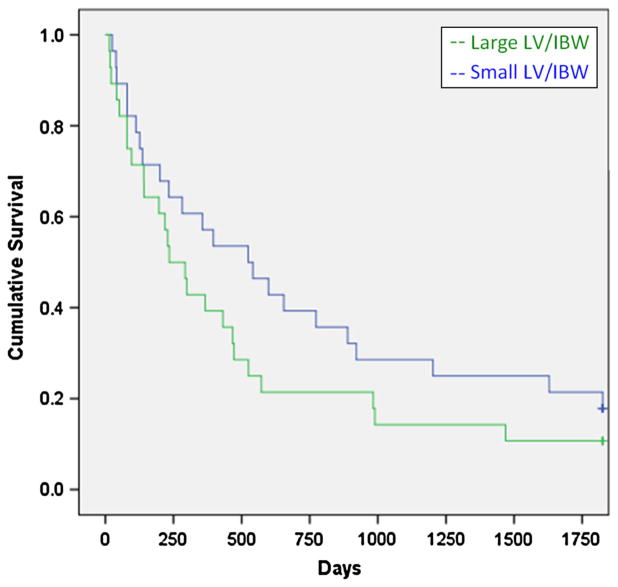
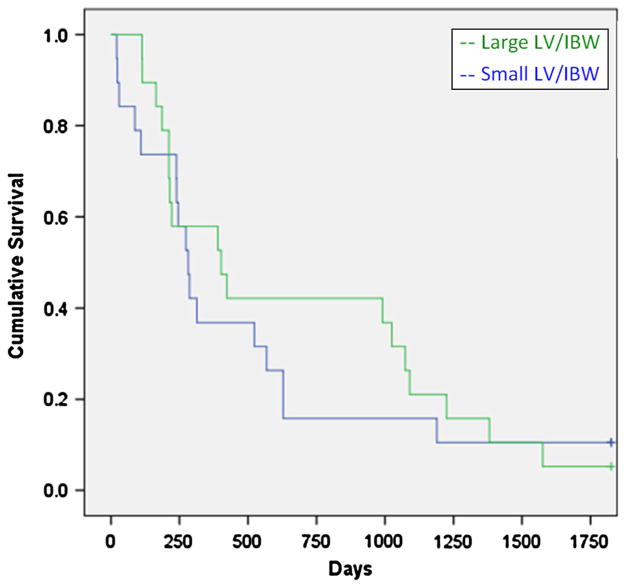
Methods: Data was gathered retrospectively from consecutive patients evaluated for a liver transplant from January 2001 to June 2006. Of 500 patients identified, 323 patients met both inclusion and exclusion criteria. LV per ideal body weight (IBW) was used to correct for body size, and LV/IBW was stratified by median split for survival analyses. Patients were classified into one of three clinical groups: hepatocellular disease (n = 229), cholestatic disease (n = 56), and miscellaneous (n = 38). One of three possible clinical outcomes (survival, liver transplantation, or death) was recorded during the 5-year follow-up, the latter two grouped together as "transplant/death."
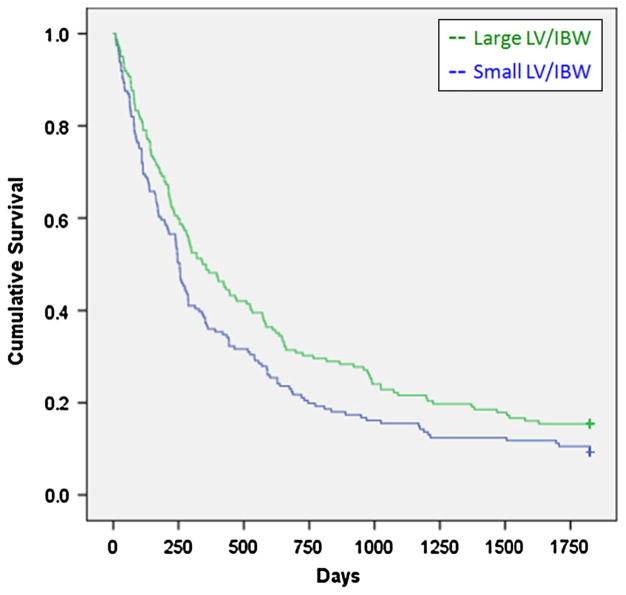
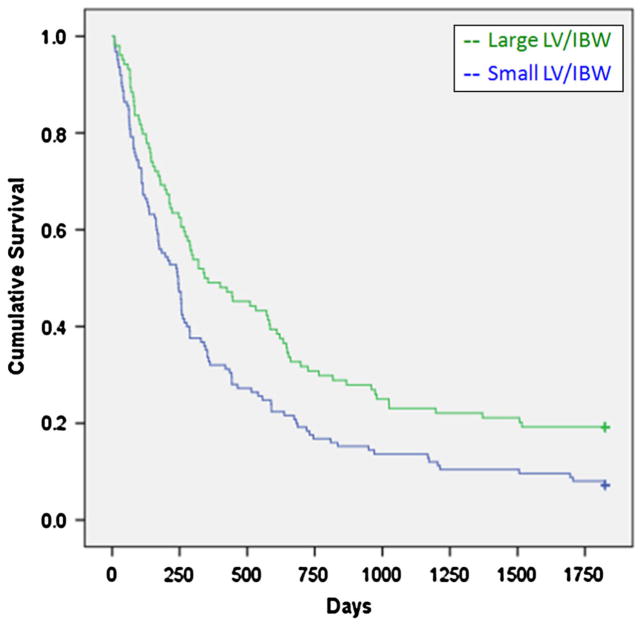
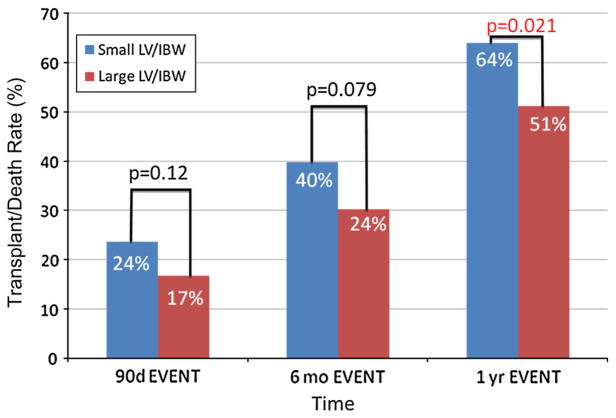
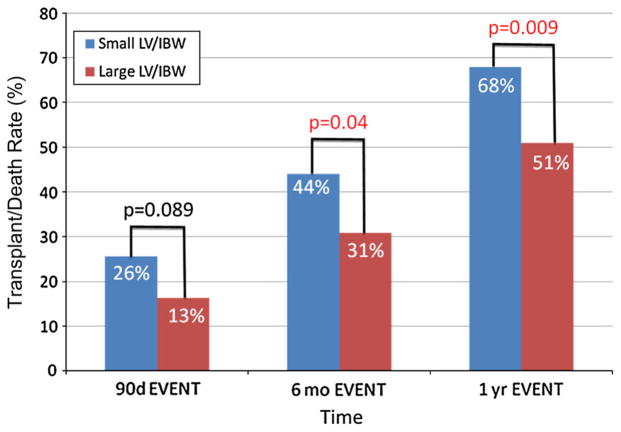
Results: Transplant/death occurred in 283 (88 %) subjects. Overall, there was a significant increase in transplant/death in those with lower LV/IBW (χ(2) = 5.27, p = 0.022). When considering the subset with hepatocellular disease, lower LV/IBW was a robust predictor of transplant/death (χ(2) = 9.62, p = 0.002). In multivariate analyses, the LV/IBW trended toward predicting transplant/death (ExpB = 0.943, p = 0.053) independent of Model for End stage Liver Disease (MELD) (ExpB = 1.13, p = 0.001).
Discussion: LV has important predictive value in patients with cirrhosis from hepatocellular disease. This observation appears to be independent of MELD, suggesting LV may impart important prognostic information that is not captured by the MELD score alone. Thus, LV may serve as an important adjunct to the MELD score in patients with hepatocellular disease.
Conflict of interest statement
Figures
References
-
- Lin XZ, Sun YN, et al. Liver volume in patients with or without chronic liver diseases. Hepatogastroenterology. 1998;45:1069–1074. - PubMed
-
- Yamagishi Y, Saito H, et al. A new prognostic formula for adult acute liver failure using computer tomography-derived hepatic volumetric analysis. J Gastroenterol. 2009;44:615–623. - PubMed
-
- Kubota K, Makuuchi M, Kusaka K, et al. Measurement of liver volume and hepatic functional reserve as a guide to decision-making in resectional surgery for hepatic tumors. Hepatology. 1997;26:1176–1181. - PubMed
Publication types
MeSH terms
Grants and funding
LinkOut - more resources
Full Text Sources
Other Literature Sources
Medical
Miscellaneous
