


Human red blood cell-adapted Plasmodium knowlesi parasites: a new model system for malaria research
- PMID: 24506567
- PMCID: PMC4004062
- DOI: 10.1111/cmi.12275
Human red blood cell-adapted Plasmodium knowlesi parasites: a new model system for malaria research
Abstract
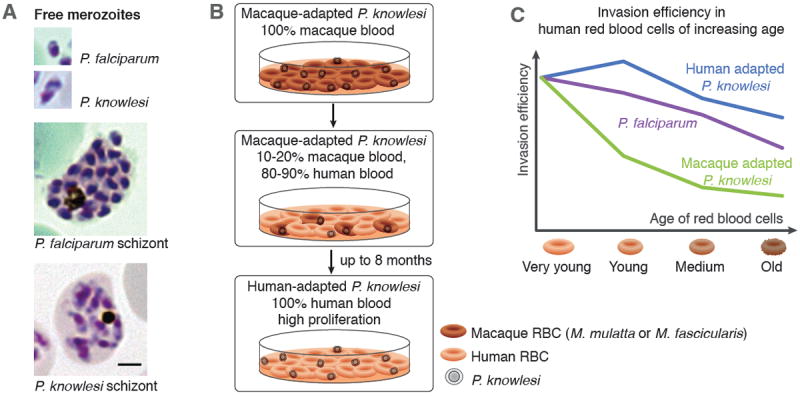
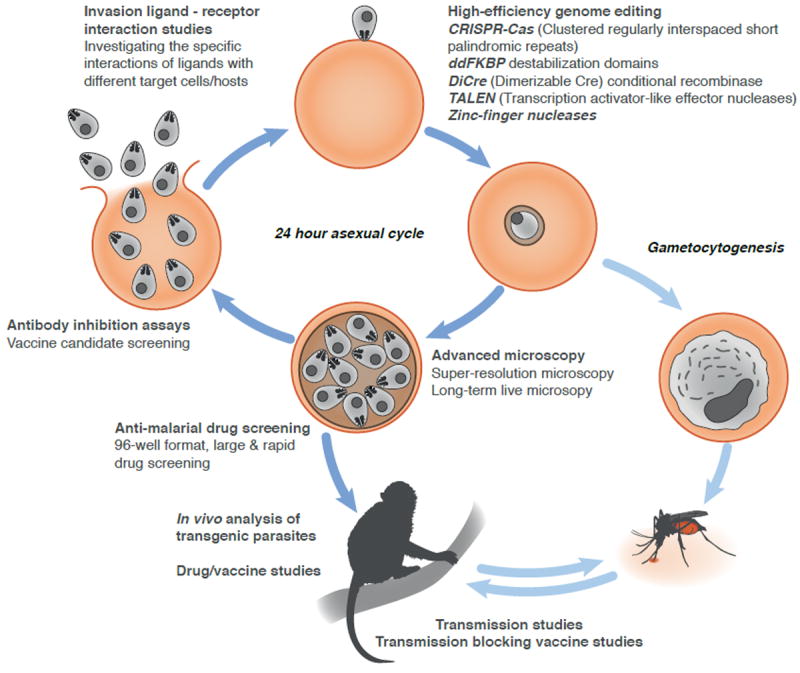
Plasmodium knowlesi is a simian malaria parasite primarily infecting macaque species in Southeast Asia. Although its capacity to infect humans has been recognized since the early part of the last century, it has recently become evident that human infections are widespread and potentially life threatening. Historically, P. knowlesi has proven to be a powerful tool in early studies of malaria parasites, providing key breakthroughs in understanding many aspects of Plasmodium biology. However, the necessity to grow the parasite either in macaques or in vitro using macaque blood restricted research to laboratories with access to these resources. The recent adaptation of P. knowlesi to grow and proliferate in vitro in human red blood cells (RBCs) is therefore a substantial step towards revitalizing and expanding research on P. knowlesi. Furthermore, the development of a highly efficient transfection system to genetically modify the parasite makes P. knowlesi an ideal model to study parasite biology. In this review, we elaborate on the importance of P. knowlesi in earlier phases of malaria research and highlight the future potential of the newly available human adapted P. knowlesi parasite lines.
© 2014 John Wiley & Sons Ltd.
Figures
References
-
- Adams JH, Hudson DE, Torii M, Ward GE, Wellems TE, Aikawa M, et al. The Duffy receptor family of Plasmodium knowlesi is located within the micronemes of invasive malaria merozoites. Cell. 1990;63:141–153. - PubMed
-
- Armstrong CM, Goldberg DE. An FKBP destabilization domain modulates protein levels in Plasmodium falciparum. Nat Meth. 2007;4:1007–1009. - PubMed
Publication types
MeSH terms
Grants and funding
LinkOut - more resources
Full Text Sources
Other Literature Sources
