


Effect of low dose ω-3 poly unsaturated fatty acids on cognitive status among older people: a double-blind randomized placebo-controlled study
- PMID: 24507770
- PMCID: PMC3937051
- DOI: 10.1186/2251-6581-13-34
Effect of low dose ω-3 poly unsaturated fatty acids on cognitive status among older people: a double-blind randomized placebo-controlled study
Abstract
Background: Cognitive impairment is a prevalent health problem in older people and its global prevalence tends to increase parallel to the extended life expectancy in world. The beneficial effect of ω-3 PUFAs on cognitive impairment has been demonstrated in some experimental and cohort studies. In this study we aimed to assess the effect of low dose docosahexaenoic acid (DHA) and eicosapentaenoic acid (EPA) supplementation on cognitive status in the elderly.
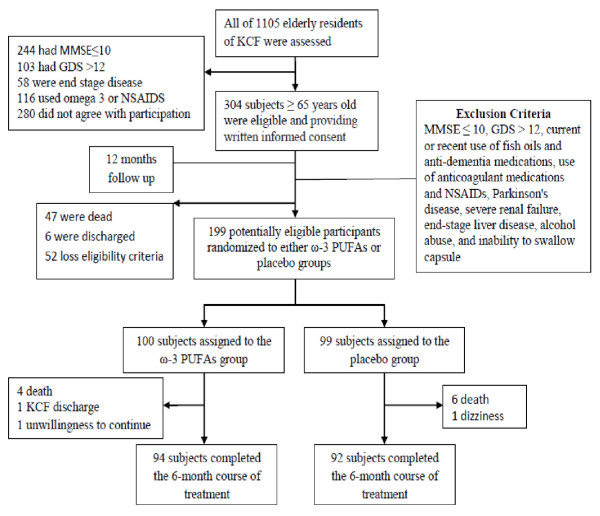
Methods: In a double-blind, randomized placebo-controlled study, 199 individuals aged ≥65 years with normal or mild to moderate cognition impairment were assigned to receive either 180 mg of DHA plus 120 mg of EPA or placebo for 180 days. Cognitive status was assessed using Mini-Mental State Examination (MMSE) and Abbreviated Mental Test (AMT) score.
Results: MMSE and AMT scores were not different at the time of allocation [18.84 (5.37), 18.55 (5.12), (P = 0.70) and 4.81 (2.79) and 4.64 (2.77), (P = 0.67) respectively] and over 6 months between the ω-3 PUFA- and placebo- treated groups [18.57 (5.21), 18.39 (5.10), (P = 0.80) and 4.64 (2.77) and 4.48 (2.69) and (P = 0.67)]. The participants were categorized based on MMSE score into normal cognition, mild and moderate cognitive impairment. After multivariate adjustment, there was no significant difference among categorized groups regarding the ω-3 PUFA effect except in normal cognition group, that amount of decline in AMT in ω-3 poly unsaturated fatty acids (PUFAs) was less than placebo group.
Conclusions: It seems that prescription of low dose ω-3 PUFAs for 6 months had no significant beneficial effects on improvement of cognition or prevention of cognitive decline in older people.
Figures
References
LinkOut - more resources
Full Text Sources
Other Literature Sources
Research Materials
