


Oophorectomy, estrogen, and dementia: a 2014 update
- PMID: 24508665
- PMCID: PMC4040304
- DOI: 10.1016/j.mce.2014.01.020
Oophorectomy, estrogen, and dementia: a 2014 update
Abstract
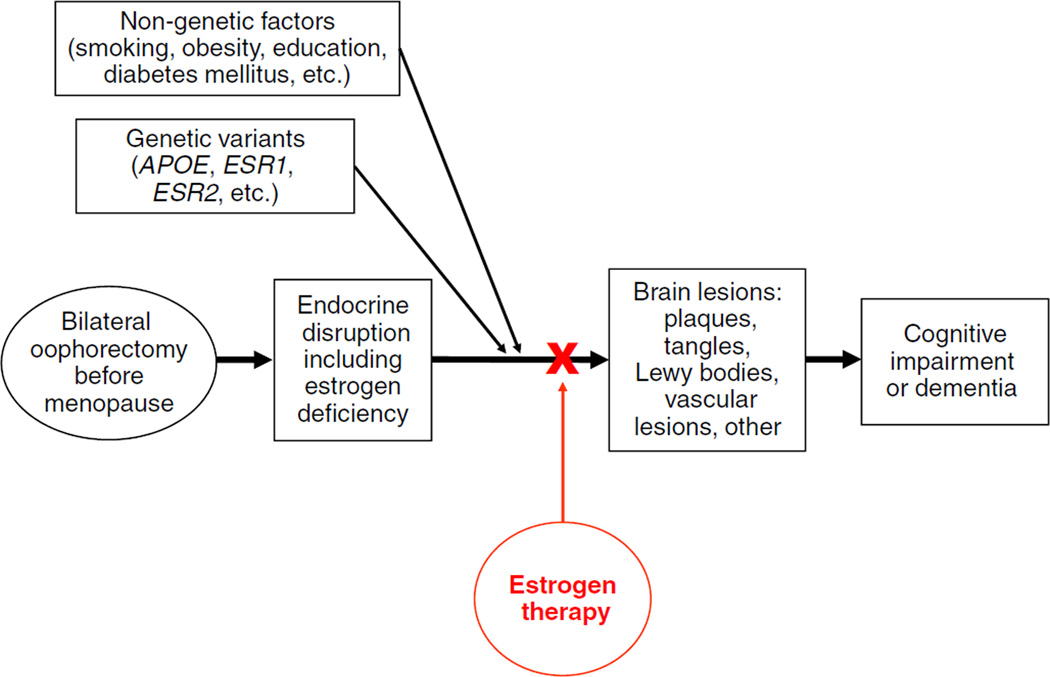
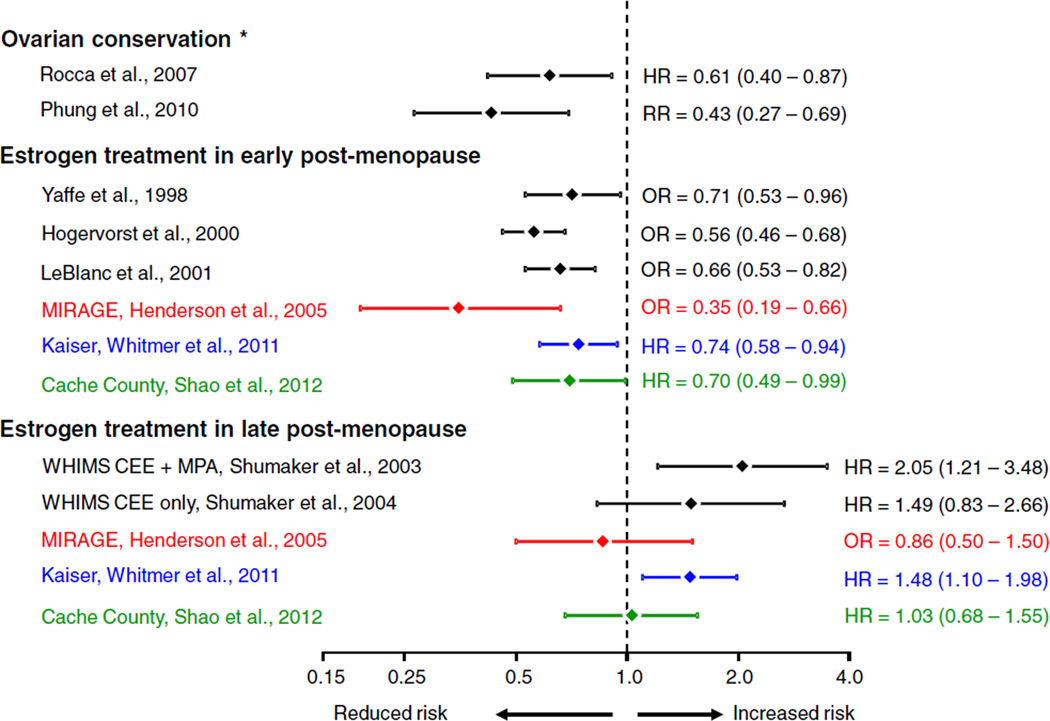
Current evidence suggests that estrogen may have beneficial, neutral, or detrimental effects on the brain depending on age, type of menopause (natural versus induced), or stage of menopause (early versus late), consistent with the timing hypothesis. Three studies have now compared women who underwent bilateral oophorectomy before menopause with referent women and consistently showed an increased risk of cognitive decline and dementia. These studies suggest a sizeable neuroprotective effect of estrogen naturally produced by the ovaries before age 50 years. In this article, we focus on neuroprotection as related to cognitive decline and dementia. Several case-control studies and cohort studies also showed neuroprotective effects in women who received estrogen treatment (ET) in the early postmenopausal stage (most commonly at ages 50-60 years). The majority of women in those observational studies had undergone natural menopause and were treated for the relief of menopausal symptoms. However, the clinical trials by the Women's Health Initiative showed that women who initiated ET alone or in combination with a progestin in the late postmenopausal stage (ages 65-79 years) experienced an increased risk of dementia and cognitive decline regardless of the type of menopause. Three observational studies have now formally tested the timing hypothesis, and showed that the neuroprotective or harmful effects of estrogen depend on age at the time of initiation of treatment and on stage of menopause. Therefore, women who undergo bilateral oophorectomy before the onset of menopause or women who experience premature or early natural menopause should be considered for hormonal treatment until the average age of natural menopause (around age 50 years). Recommendations for the use of ET by women who experience natural menopause at typical ages remain less certain, and more research is needed.
Keywords: Cognitive impairment; Dementia; Estrogen; Menopause; Oophorectomy; Timing hypothesis.
Copyright © 2014 Elsevier Ireland Ltd. All rights reserved.
Figures
References
-
- Armstrong K, Schwartz JS, Randall T, Rubin SC, Weber B. Hormone replacement therapy and life expectancy after prophylactic oophorectomy in women with BRCA1/2 mutations: a decision analysis. J Clin Oncol. 2004;22:1045–1054. - PubMed
-
- Buist DS, Newton KM, Miglioretti DL, Beverly K, Connelly MT, Andrade S, Hartsfield CL, Wei F, Chan KA, Kessler L. Hormone therapy prescribing patterns in the United States. Obstet Gynecol. 2004;104:1042–1050. - PubMed
-
- Espeland MA, Rapp SR, Shumaker SA, Brunner R, Manson JE, Sherwin BB, Hsia J, Margolis KL, Hogan PE, Wallace R, Dailey M, Freeman R, Hays J. Conjugated equine estrogens and global cognitive function in postmenopausal women: Women's Health Initiative Memory Study. JAMA. 2004;291:2959–2968. - PubMed
Publication types
MeSH terms
Substances
Grants and funding
LinkOut - more resources
Full Text Sources
Other Literature Sources
Medical
