


Night-time immobilization of the distal interphalangeal joint reduces pain and extension deformity in hand osteoarthritis
- PMID: 24509405
- PMCID: PMC4023558
- DOI: 10.1093/rheumatology/ket455
Night-time immobilization of the distal interphalangeal joint reduces pain and extension deformity in hand osteoarthritis
Abstract
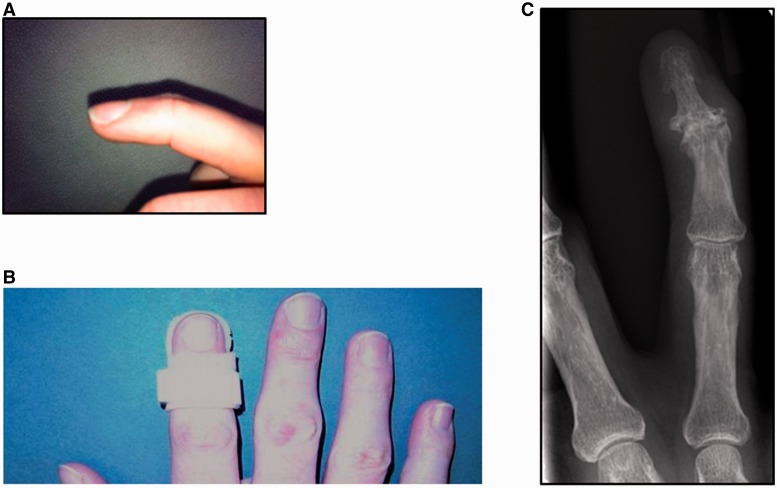
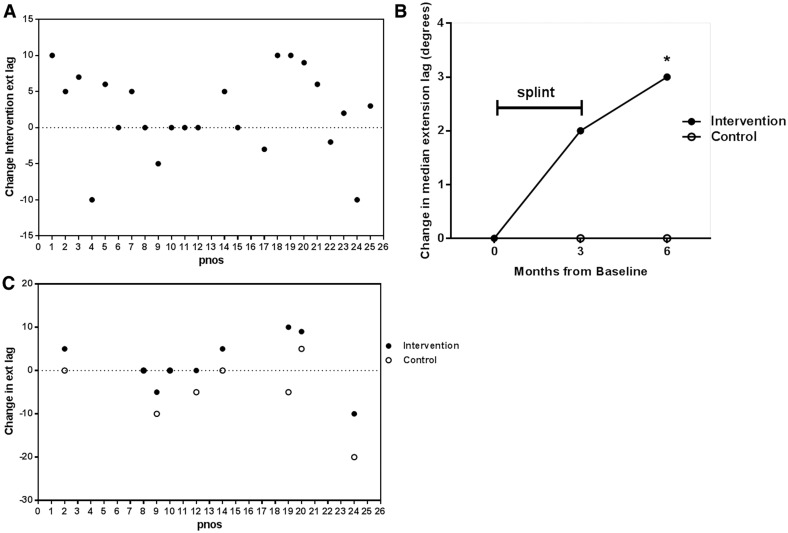
Objective: DIP joint OA is common but has few cost-effective, evidence-based interventions. Pain and deformity [radial or ulnar deviation of the joint or loss of full extension (extension lag)] frequently lead to functional and cosmetic issues. We investigated whether splinting the DIP joint would improve pain, function and deformity.
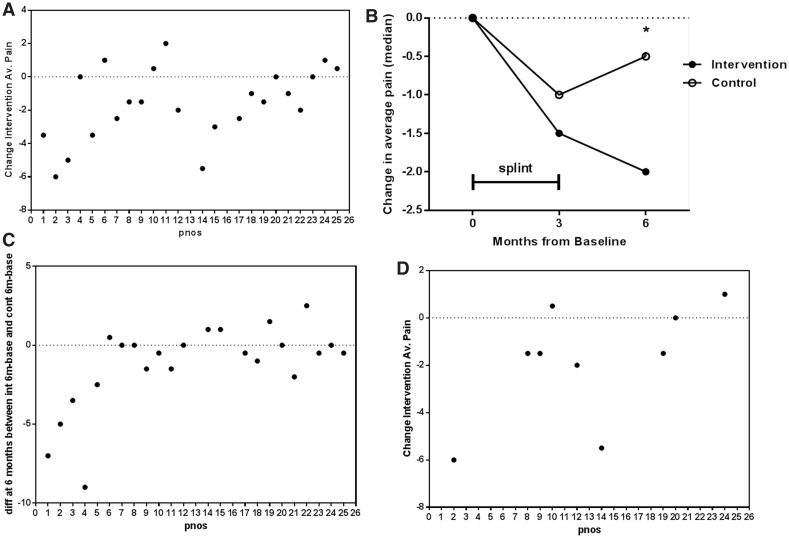
Methods: A prospective, radiologist-blinded, non-randomized, internally controlled trial of custom splinting of the DIP joint was carried out. Twenty-six subjects with painful, deforming DIP joint hand OA gave written, informed consent. One intervention joint and one control joint were nominated. A custom gutter splint was worn nightly for 3 months on the intervention joint, with clinical and radiological assessment at baseline, 3 and 6 months. Differences in the change were compared by the Wilcoxon signed rank test.
Results: The median average pain at baseline was similar in the intervention (6/10) and control joints (5/10). Average pain (primary outcome measure) and worst pain in the intervention joint were significantly lower at 3 months compared with baseline (P = 0.002, P = 0.02). Differences between intervention and control joint average pain reached significance at 6 months (P = 0.049). Extension lag deformity was significantly improved in intervention joints at 3 months and in splinted joints compared with matched contralateral joints (P = 0.016).
Conclusion: Short-term night-time DIP joint splinting is a safe, simple treatment modality that reduces DIP joint pain and improves extension of the digit, and does not appear to give rise to non-compliance, increased stiffness or joint restriction.
Trial registration: clinical trials.gov, http://clinicaltrials.gov, NCT01249391.
Keywords: distal; interphalangeal; non-pharmacological therapy; osteoarthritis; pain; splint.
© The Author 2014. Published by Oxford University Press on behalf of the British Society for Rheumatology.
Figures
References
-
- Bagis S, Sahin G, Yapici Y, et al. The effect of hand osteoarthritis on grip and pinch strength and hand function in postmenopausal women. Clin Rheumatol. 2003;22:420–4. - PubMed
-
- Slatkowsky-Christensen B, Mowinckel P, Loge JH, et al. Health-related quality of life in women with symptomatic hand osteoarthritis: a comparison with rheumatoid arthritis patients, healthy controls, and normative data. Arthritis Rheum. 2007;57:1404–9. - PubMed
-
- Hodkinson B, Maheu E, Michon M, et al. Assessment and determinants of aesthetic discomfort in hand osteoarthritis. Ann Rheum Dis. 2012;71:45–9. - PubMed
Publication types
MeSH terms
Associated data
Grants and funding
LinkOut - more resources
Full Text Sources
Other Literature Sources
Medical
