


Germline mutations in oncogene-induced senescence pathways are associated with multiple sessile serrated adenomas
- PMID: 24512911
- PMCID: PMC3978775
- DOI: 10.1053/j.gastro.2013.10.045
Germline mutations in oncogene-induced senescence pathways are associated with multiple sessile serrated adenomas
Abstract
Background & aims: Little is known about the genetic factors that contribute to the development of sessile serrated adenomas (SSAs). SSAs contain somatic mutations in BRAF or KRAS early in development. However, evidence from humans and mouse models indicates that these mutations result in oncogene-induced senescence (OIS) of intestinal crypt cells. Progression to serrated neoplasia requires cells to escape OIS via inactivation of tumor suppressor pathways. We investigated whether subjects with multiple SSAs carry germline loss-of function mutations (nonsense and splice site) in genes that regulate OIS: the p16-Rb and ATM-ATR DNA damage response pathways.
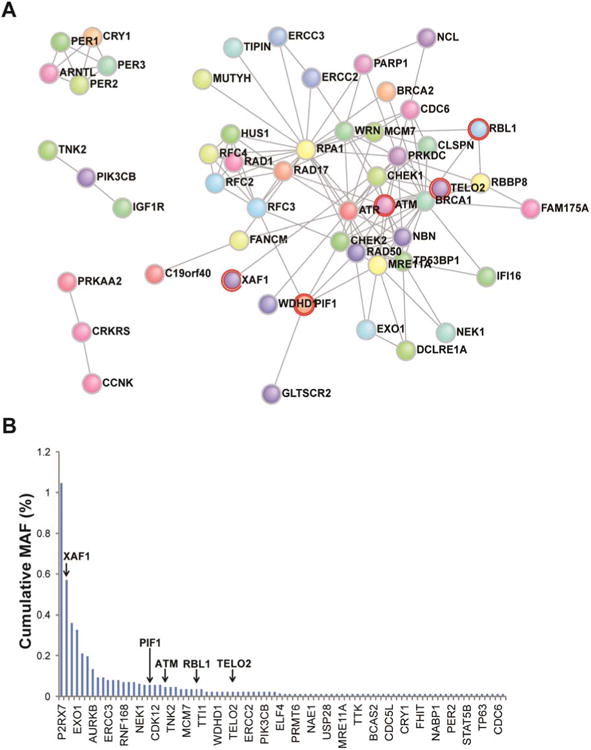
Methods: Through a bioinformatic analysis of the literature, we identified a set of genes that function at the main nodes of the p16-Rb and ATM-ATR DNA damage response pathways. We performed whole-exome sequencing of 20 unrelated subjects with multiple SSAs; most had features of serrated polyposis. We compared sequences with those from 4300 subjects matched for ethnicity (controls). We also used an integrative genomics approach to identify additional genes involved in senescence mechanisms.
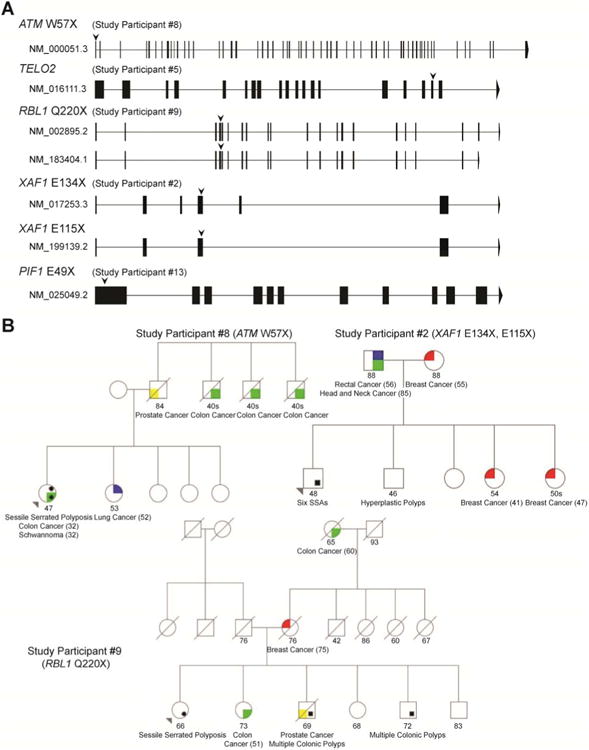
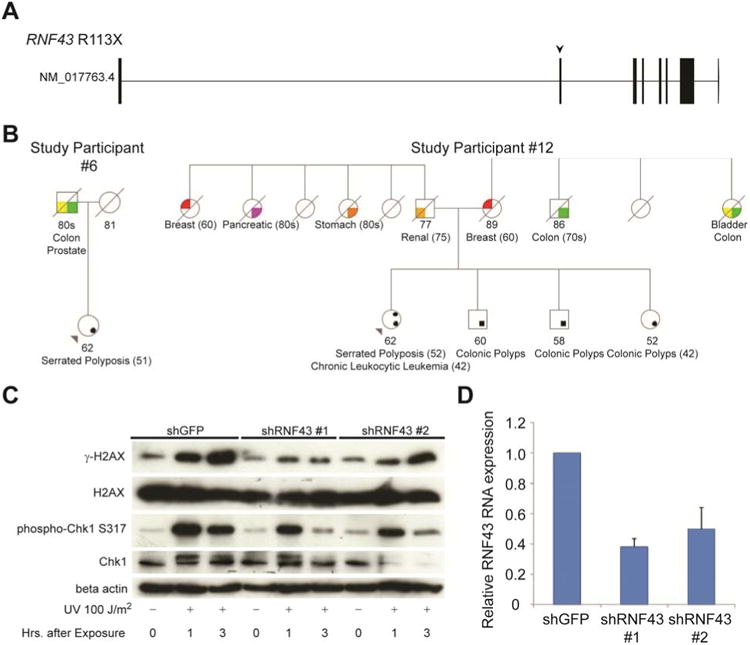
Results: We identified mutations in genes that regulate senescence (ATM, PIF1, TELO2,XAF1, and RBL1) in 5 of 20 subjects with multiple SSAs (odds ratio, 3.0; 95% confidence interval, 0.9–8.9; P =.04). In 2 subjects,we found nonsense mutations in RNF43, indicating that it is also associated with multiple serrated polyps (odds ratio, 460; 95% confidence interval, 23.1–16,384; P = 6.8 x 10(-5)). In knockdown experiments with pancreatic duct cells exposed to UV light, RNF43 appeared to function as a regulator of ATMATRDNA damage response.
Conclusions: We associated germline loss-of-function variants in genes that regulate senescence pathways with the development of multiple SSAs.We identified RNF43 as a regulator of the DNA damage response and associated nonsense variants in this gene with a high risk of developing SSAs.
Conflict of interest statement
Figures
References
-
- Patil DT, Shadrach BL, Rybicki LA, et al. Proximal colon cancers and the serrated pathway: a systematic analysis of precursor histology and BRAF mutation status. Mod Pathol. 2012;25:1423–31. - PubMed
-
- Leggett B, Whitehall V. Role of the serrated pathway in colorectal cancer pathogenesis. Gastroenterology. 2010;138:2088–100. - PubMed
-
- Snover DC. Update on the serrated pathway to colorectal carcinoma. Hum Pathol. 2011;42:1–10. - PubMed
-
- Fu X, Li L, Peng Y. Wnt signalling pathway in the serrated neoplastic pathway of the colorectum: possible roles and epigenetic regulatory mechanisms. J Clin Pathol. 2012;65:675–9. - PubMed
Publication types
MeSH terms
Substances
Grants and funding
LinkOut - more resources
Full Text Sources
Other Literature Sources
Molecular Biology Databases
Research Materials
Miscellaneous
