


Characterization of ovarian aging and reproductive senescence in vervet monkeys (Chlorocebus aethiops sabaeus)
- PMID: 24512962
- PMCID: PMC3929220
Characterization of ovarian aging and reproductive senescence in vervet monkeys (Chlorocebus aethiops sabaeus)
Abstract
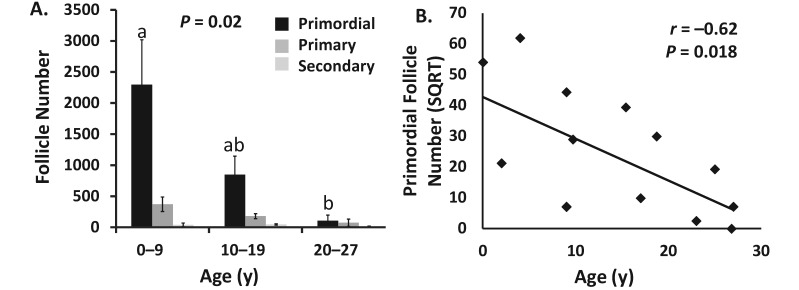
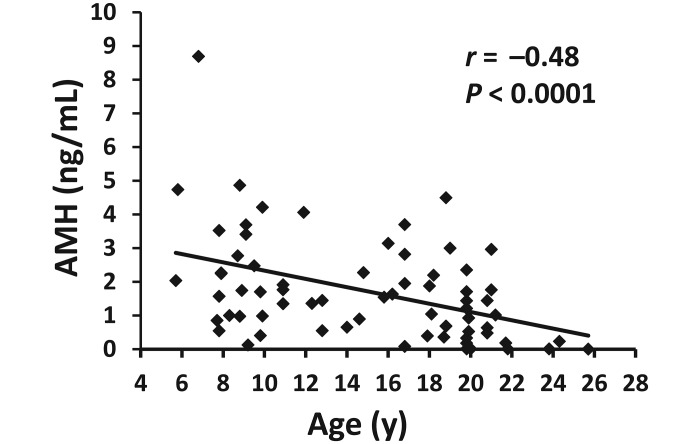
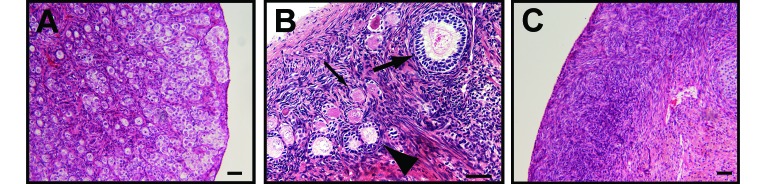
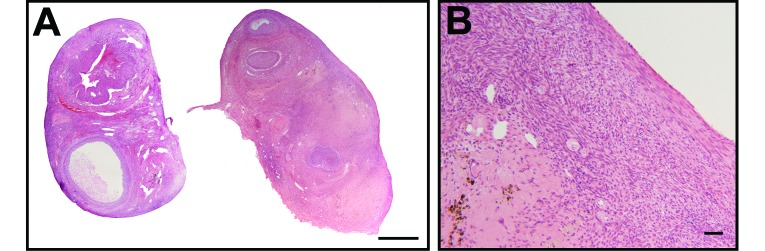
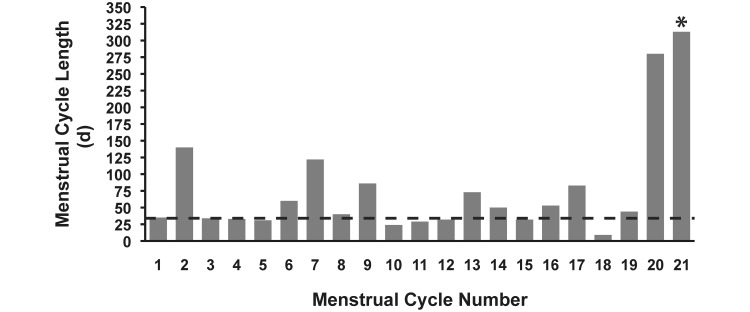
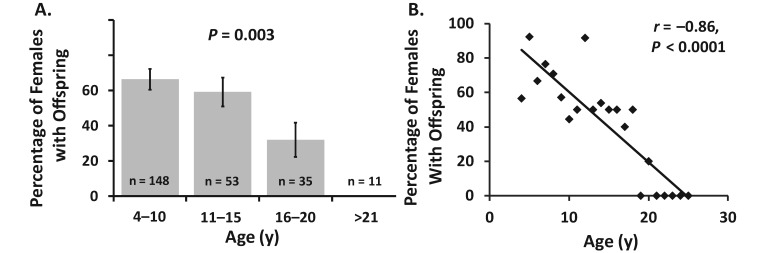
Female vervet monkeys (Chlorocebus aethiops sabaeus) are used as an experimental model for chronic diseases relevant to women's health. However, reproductive senescence (menopause) has not yet been characterized for vervet monkeys. Here we describe the histologic, hormonal, and menstrual markers of reproductive senescence in vervet monkeys from the Wake Forest Vervet Research Colony. Ovaries from monkeys (age, 0 to 27 y) were serially sectioned (5 μm), stained, and photographed. In every 100th section, the numbers of primordial, primary, and secondary follicles were determined, and triplicate measurements were used to calculate mean numbers of follicles per ovary. Antimüllerian hormone (AMH), follicle stimulating hormone, and menstrual cycle length were measured in additional monkeys. Primordial follicles and AMH decreased significantly with age, and significant correlations between numbers of primordial and primary follicles and between numbers of primary and secondary follicles were noted. Histologic evaluation revealed that ovaries from 4 aged monkeys (older than 23 y) were senescent. One aged monkey transitioned to menopause, experiencing cycle irregularity over 4 y, eventual cessation of menses, and plasma AMH below the level of detection. Finally, with increasing age, the percentage of female vervets with offspring declined significantly. The present study provides insight into ovarian aging and reproductive senescence in vervet monkeys. Results highlight the importance of considering this nonhuman primate as a model to investigate the relationships between ovarian aging and chronic disease risk.
Figures
References
-
- Al-Gubory KH, Martinet J. 1986. Comparison of the total ovarian follicular populations at day 140 of pregnancy and at day 5 postpartum in ewes. Theriogenology 25:795–808
-
- Adams MR, Kaplan JR, Koritnik DR. 1985. Psychosocial influences on ovarian endocrine and ovulatory function in Macaca fascicularis. Physiol Behav 35:935–940 - PubMed
-
- Buse E, Zöller M, Esch EV. 2008. The macaque ovary, with special reference to the cynomolgus macaque (Macaca fascicularis). Toxicol Pathol 36:24S–66S
Publication types
MeSH terms
Substances
Grants and funding
LinkOut - more resources
Full Text Sources
Medical