


The dynamics of diabetes among birth cohorts in the U.S
- PMID: 24513590
- PMCID: PMC3964490
- DOI: 10.2337/dc13-1982
The dynamics of diabetes among birth cohorts in the U.S
Abstract
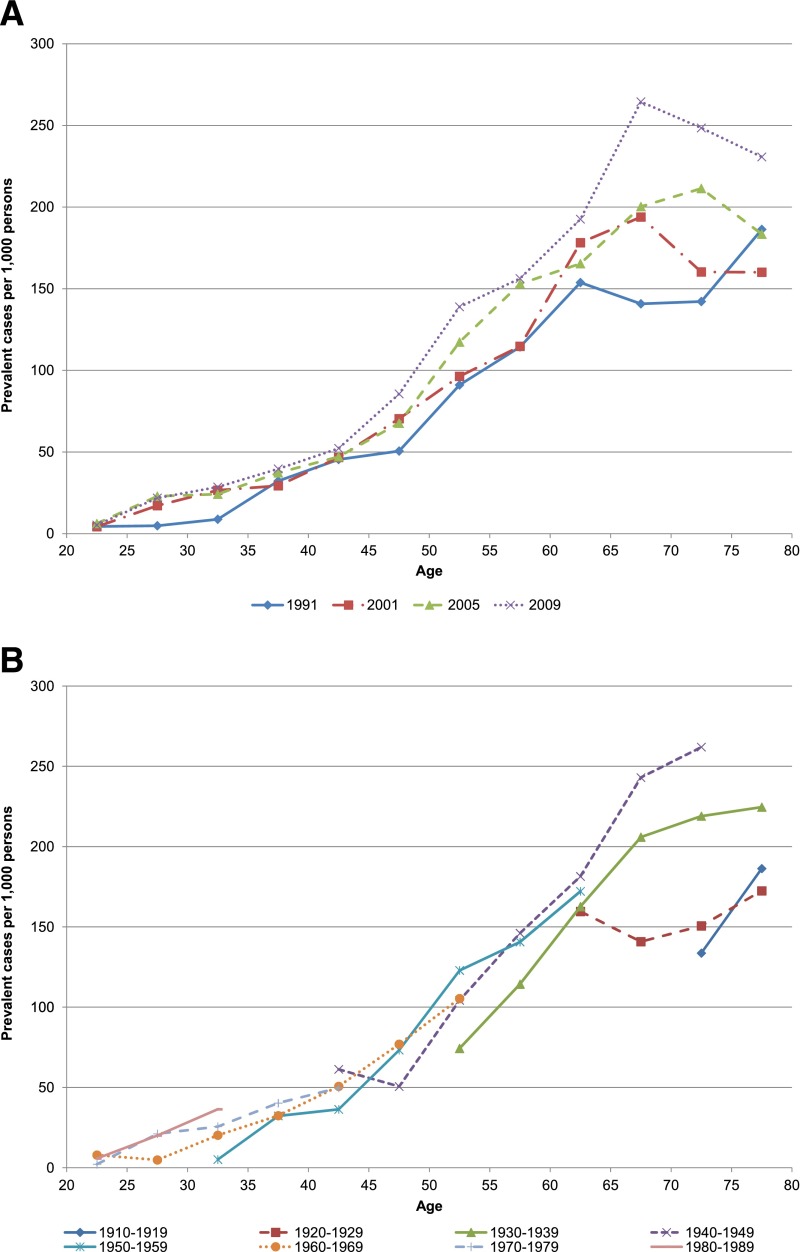
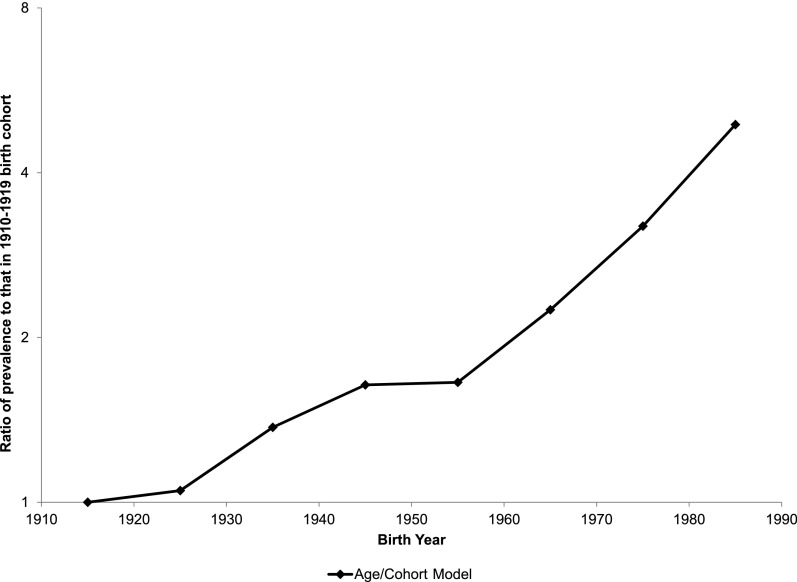
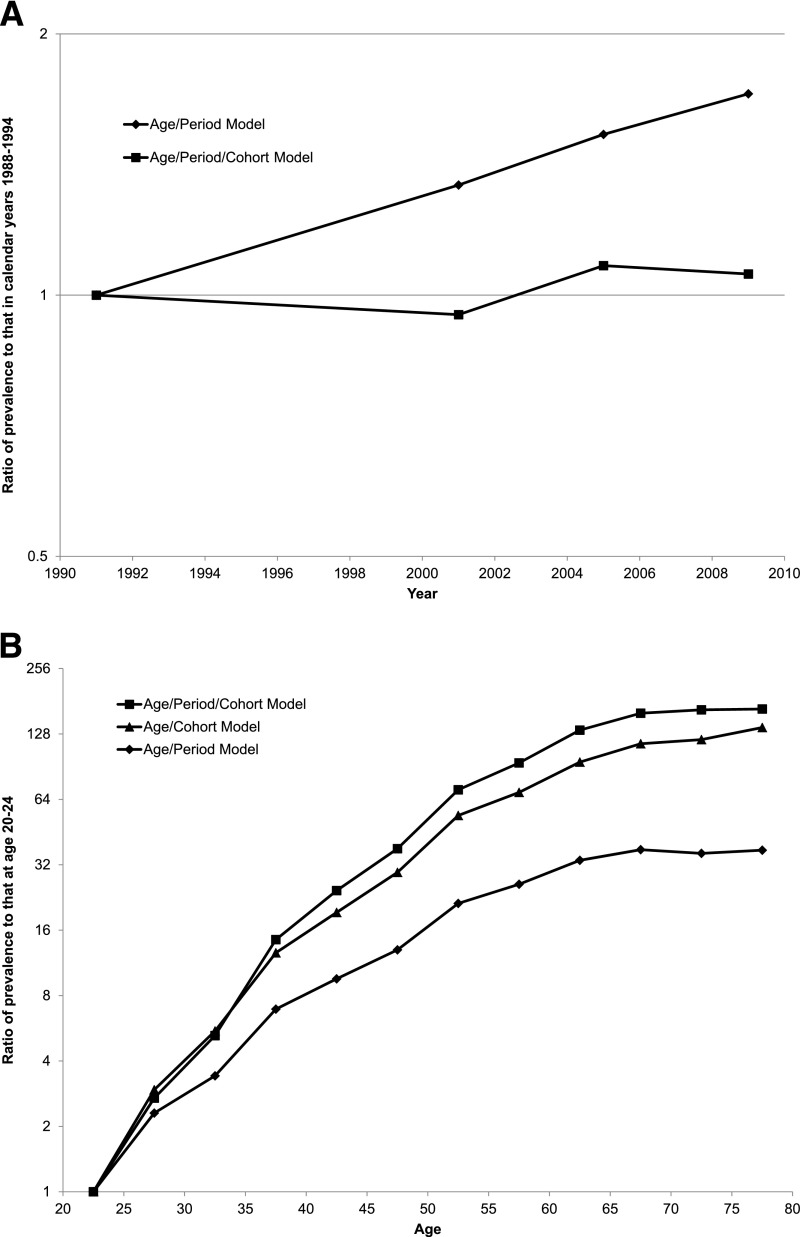
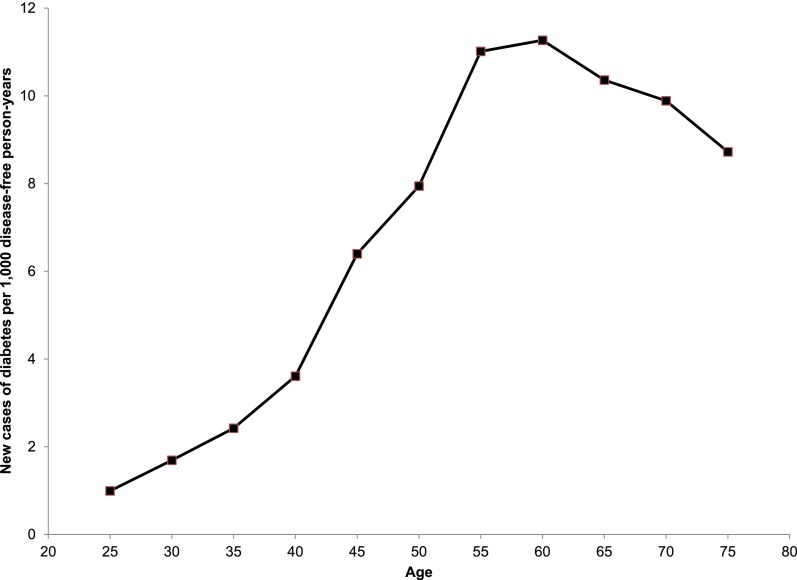
OBJECTIVE Using a nationally representative sample of the civilian noninstitutionalized U.S. population, we estimated trends in diabetes prevalence across cohorts born 1910-1989 and provide the first estimates of age-specific diabetes incidence using nationally representative, measured data. RESEARCH DESIGN AND METHODS Data were from 40,130 nonpregnant individuals aged 20-79 years who participated in the third National Health and Nutrition Examination Survey (NHANES III), 1988-1994, and the continuous 1999-2010 NHANES. We defined diabetes as HbA1c ≥6.5% (48 mmol/mol) or taking diabetes medication. We estimated age-specific diabetes prevalence for the 5-year age-groups 20-24 through 75-79 for cohorts born 1910-1919 through 1980-1989 and calendar periods 1988-1994, 1999-2002, 2003-2006, and 2007-2010. We modeled diabetes prevalence as a function of age, calendar year, and birth cohort, and used our cohort model to estimate age-specific diabetes incidence. RESULTS Age-adjusted diabetes prevalence rose by a factor of 4.9 between the birth cohorts of 1910-1919 and 1980-1989. Diabetes prevalence rose with age within each birth cohort. Models based on birth cohorts show a steeper age pattern of diabetes prevalence than those based on calendar years. Diabetes incidence peaks at 55-64 years of age. CONCLUSIONS Diabetes prevalence has risen across cohorts born through the 20th century. Changes across birth cohorts explain the majority of observed increases in prevalence over time. Incidence peaks between 55 and 64 years of age and then declines at older ages.
Figures
References
-
- Murphy SL, Xu J, Kochanek KD. Deaths: Final Data for 2010. Hyattsville, MD, National Center for Health Statistics, 2013 - PubMed
-
- Wong E, Backholer K, Gearon E, et al. Diabetes and risk of physical disability in adults: a systematic review and meta-analysis. Lancet Diabetes Endocrinol. 2013;1:106–114 - PubMed
Publication types
MeSH terms
Grants and funding
LinkOut - more resources
Full Text Sources
Other Literature Sources
Medical
