


Polyketide construction via hydrohydroxyalkylation and related alcohol C-H functionalizations: reinventing the chemistry of carbonyl addition
- PMID: 24514754
- PMCID: PMC3954971
- DOI: 10.1039/c3np70076c
Polyketide construction via hydrohydroxyalkylation and related alcohol C-H functionalizations: reinventing the chemistry of carbonyl addition
Abstract
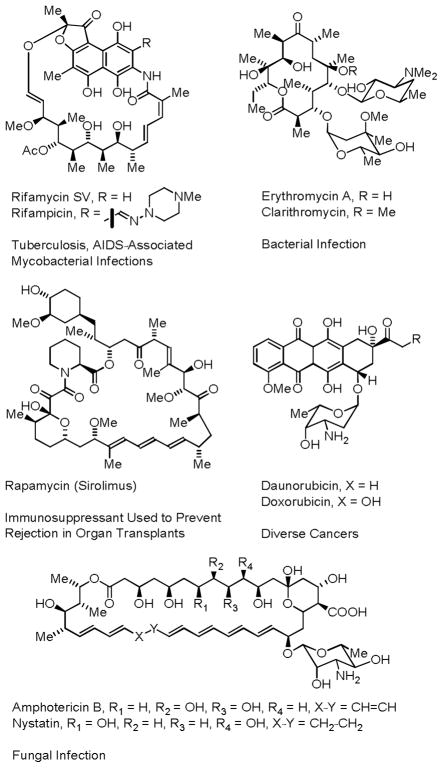
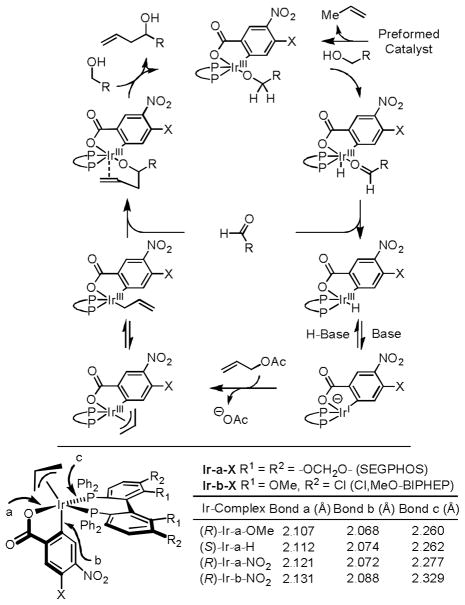
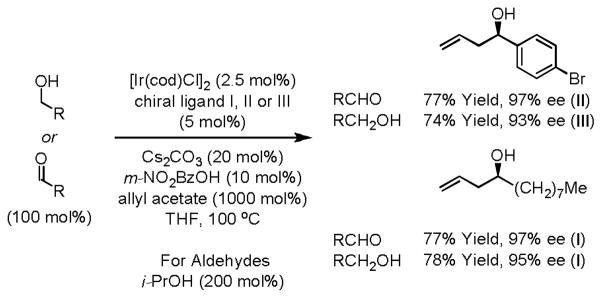
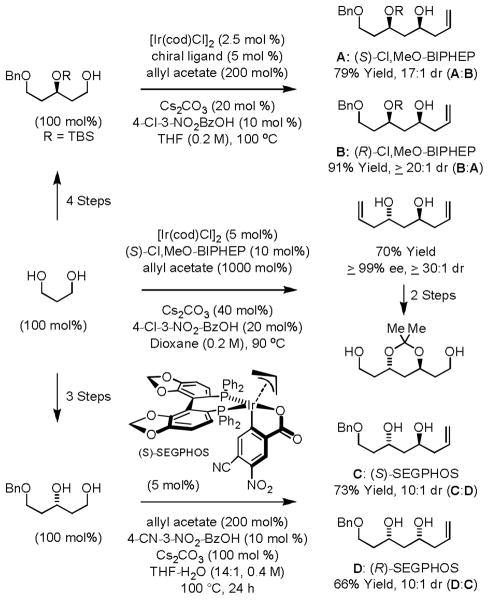
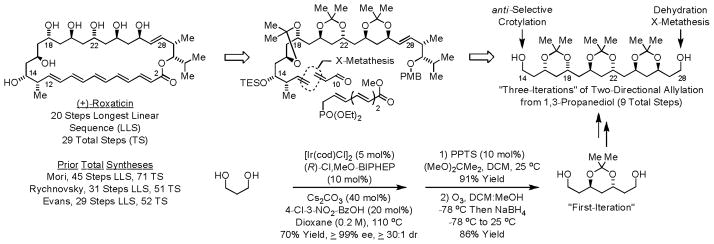
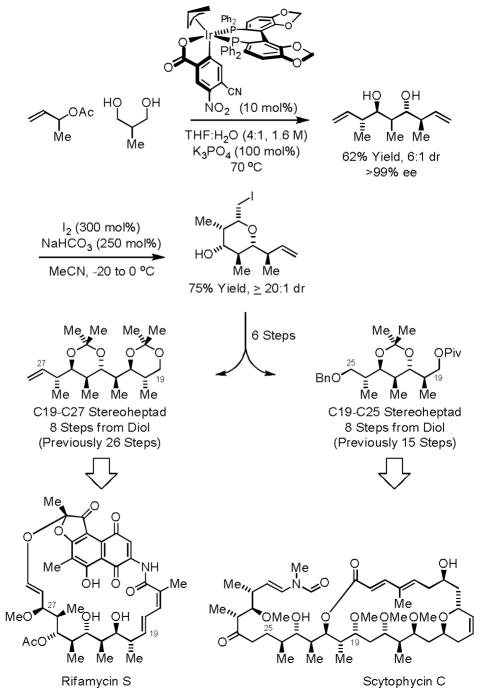
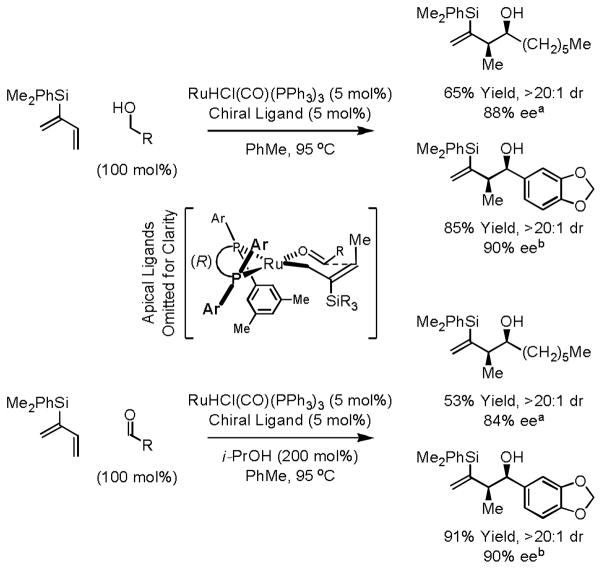
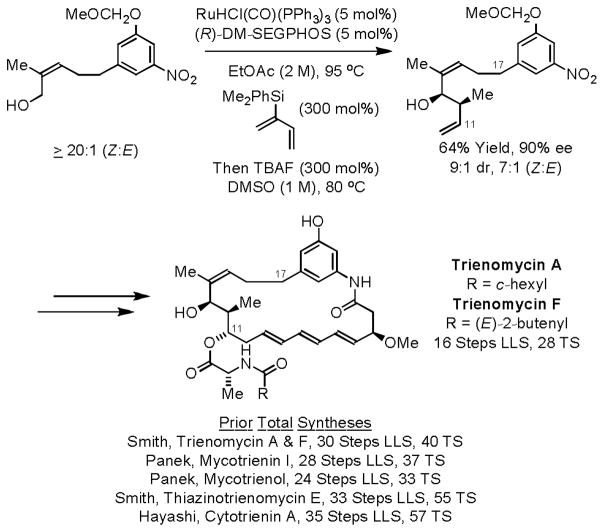
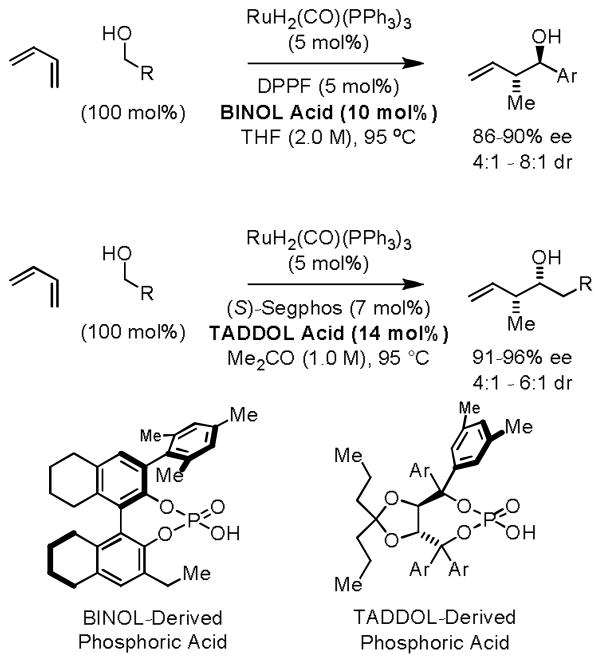
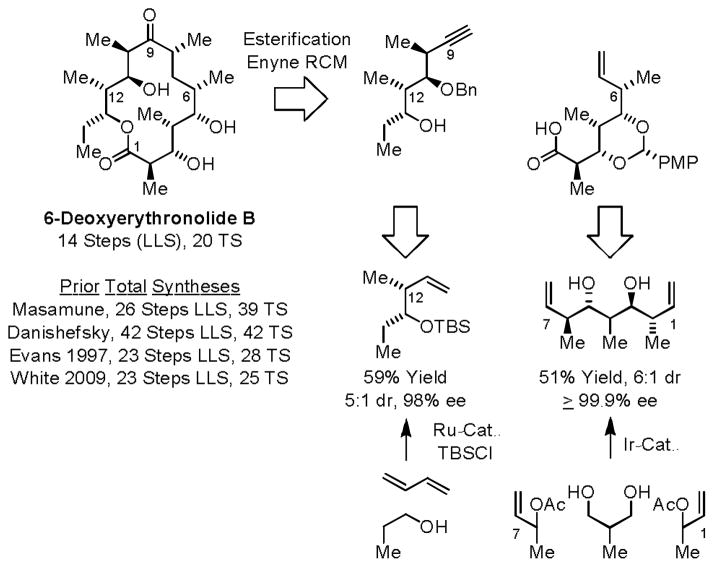
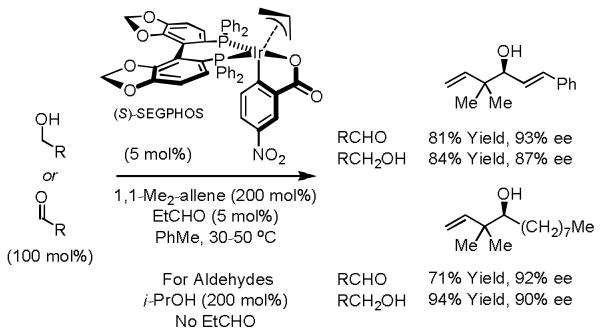
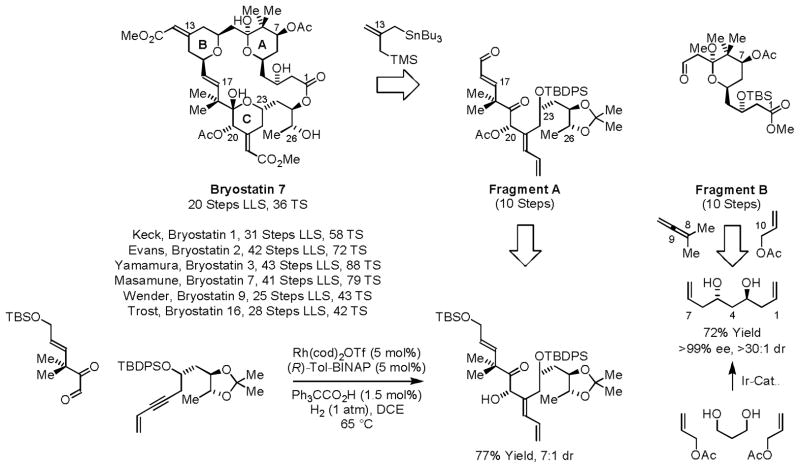
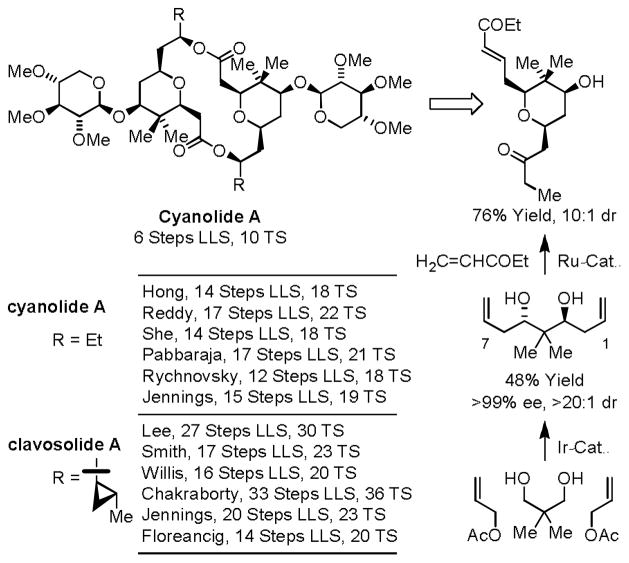
Despite the longstanding importance of polyketide natural products in human medicine, nearly all commercial polyketide-based drugs are prepared through fermentation or semi-synthesis. The paucity of manufacturing routes involving de novo chemical synthesis reflects the inability of current methods to concisely address the preparation of these complex structures. Direct alcohol C-H bond functionalization via"C-C bond forming transfer hydrogenation" provides a powerful, new means of constructing type I polyketides that bypasses stoichiometric use of chiral auxiliaries, premetallated C-nucleophiles, and discrete alcohol-to-aldehyde redox reactions. Using this emergent technology, total syntheses of 6-deoxyerythronolide B, bryostatin 7, trienomycins A and F, cyanolide A, roxaticin, and formal syntheses of rifamycin S and scytophycin C, were accomplished. These syntheses represent the most concise routes reported to any member of the respective natural product families.
Figures
References
-
-
For selected reviews on polyketide natural products, see: O’Hagan D. The Polyketide Metabolites. Ellis Horwood; Chichester: 1991. Rimando AM, Baerson SR. ACS Symposium Series 955. American Chemical Society; 2007. Polyketides Biosynthesis, Biological Activity, and Genetic Engineering.
-
-
- Rohr J. Angew Chem Int Ed. 2000;39:2847. - PubMed
-
-
Isolation of erythromycin A: McGuire JM, Bunch RL, Anderson RC, Boaz HE, Flynn EH, Powell HM, Smith JW. Antibiot Chemother. 1952;2:281.
-
-
-
Isolation of amphotericin B: Vandeputte J, Watchtel JL, Stiller ET. Antibior Annu. 1956:587.<underline>X-ray structure</underline>: Mechinski W, Shaffner CP, Ganis P, Avitabile G. Tetrahedron Lett. 1970;11:3873.Ganis P, Avitabile G, Mechinski W, Shaffner CP. J Am Chem Soc. 1971;93:4560.
-
Publication types
MeSH terms
Substances
Grants and funding
LinkOut - more resources
Full Text Sources
Other Literature Sources
