


The role of Purkinje-myocardial coupling during ventricular arrhythmia: a modeling study
- PMID: 24516576
- PMCID: PMC3917859
- DOI: 10.1371/journal.pone.0088000
The role of Purkinje-myocardial coupling during ventricular arrhythmia: a modeling study
Abstract
The Purkinje system is the fast conduction network of the heart which couples to the myocardium at discrete sites called Purkinje-Myocyte Junctions (PMJs). However, the distribution and number of PMJs remains elusive, as does whether a particular PMJ is functional. We hypothesized that the Purkinje system plays a role during reentry and that the number of functional PMJs affect reentry dynamics. We used a computer finite element model of rabbit ventricles in which we varied the number of PMJs. Sustained, complex reentry was induced by applying an electric shock and the role of the Purkinje system in maintaining the arrhythmia was assessed by analyzing phase singularities, frequency of activation, and bidirectional propagation at PMJs. For larger junctional resistances, increasing PMJ density increased the mean firing rate in the Purkinje system, the percentage of successful retrograde conduction at PMJs, and the incidence of wave break on the epicardium. However, the mean firing of the ventricles was not affected. Furthermore, increasing PMJ density above 13/[Formula: see text] did not alter reentry dynamics. For lower junctional resistances, the trend was not as clear. We conclude that Purkinje system topology affects reentry dynamics and conditions which alter PMJ density can alter reentry dynamics.
Conflict of interest statement
Figures
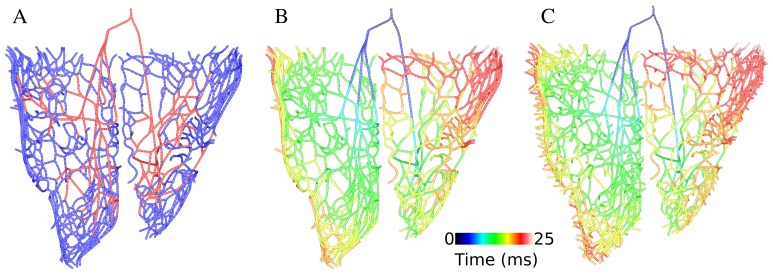
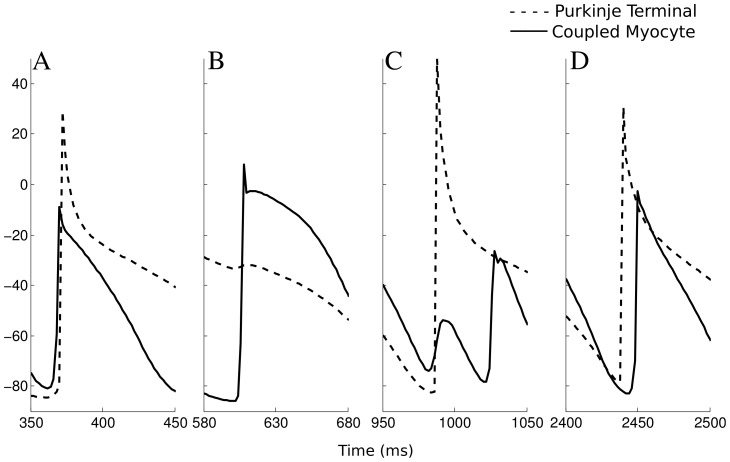
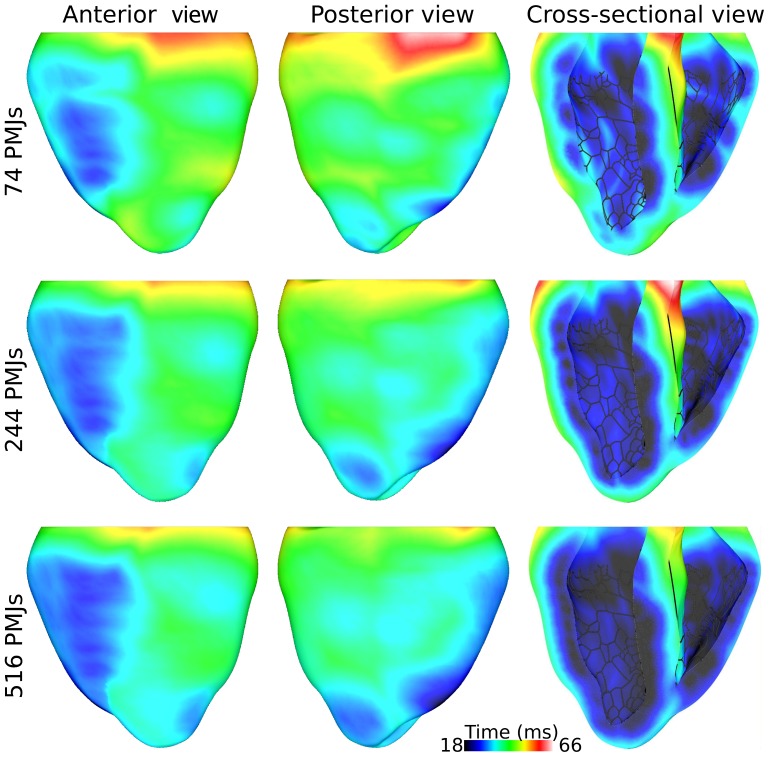
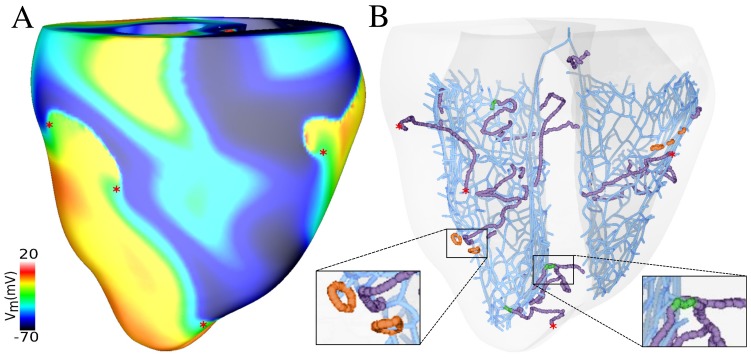
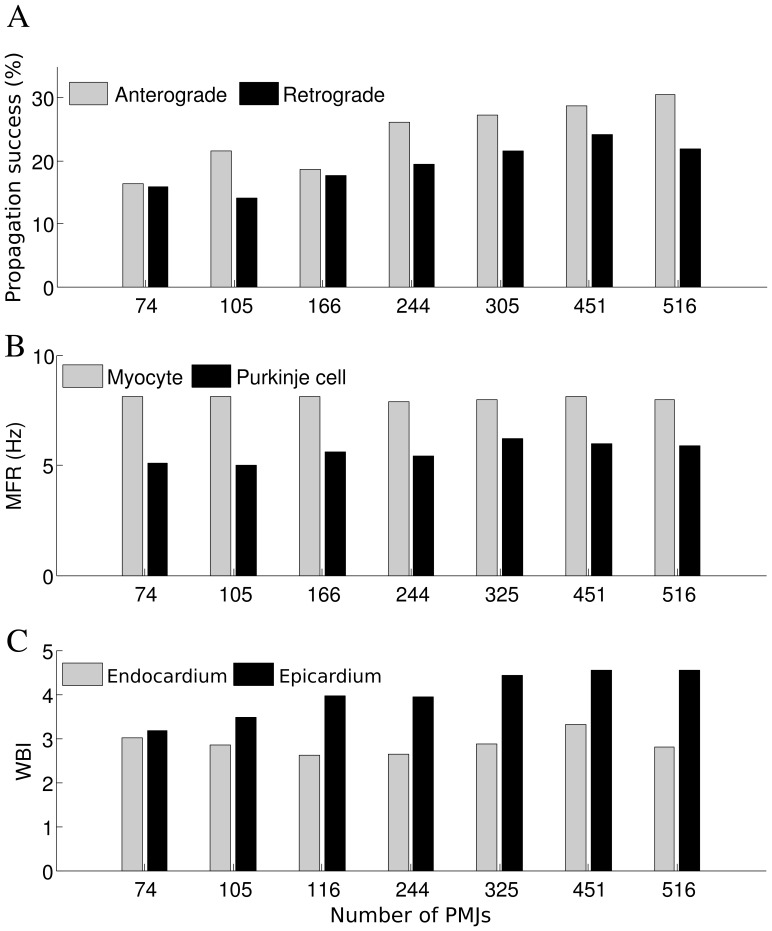
 = 20 M
 ,
,  = 20).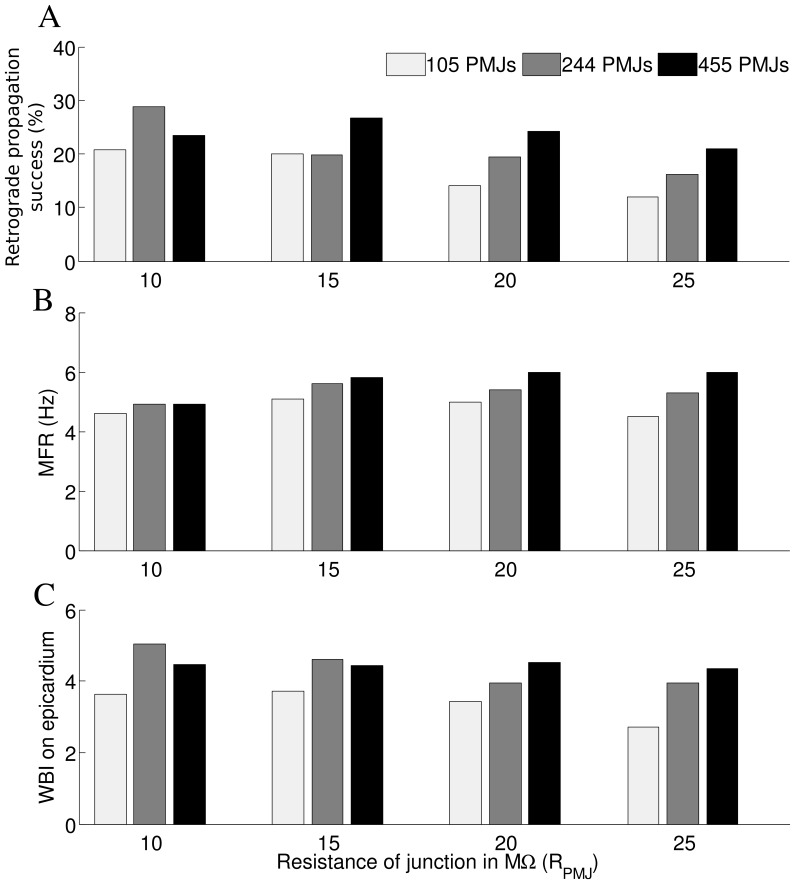
 = 20).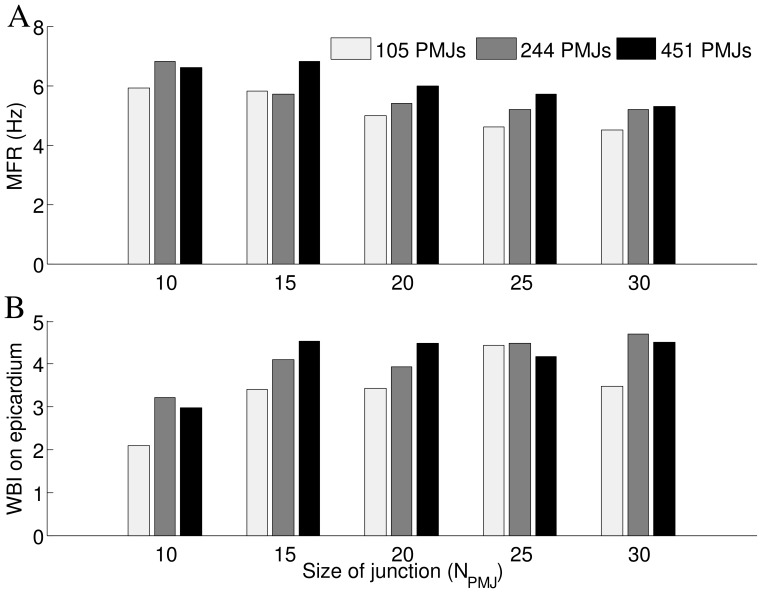
 = 20 M
 ).
).References
-
- Tabereaux PB, Walcott GP, Rogers JM, Kim J, Dosdall DJ, et al. (2007) Activation patterns of Purkinje fibers during long-duration ventricular fibrillation in an isolated canine heart model. Circulation 116: 1113–9. - PubMed
-
- Janse MJ, Wilms-Schopman FJ, Coronel R (1995) Ventricular fibrillation is not always due to multiple wavelet reentry. Journal of cardiovascular electrophysiology 6: 512–21. - PubMed
-
- Dosdall DJ, Tabereaux PB, Kim JJ, Walcott GP, Rogers JM, et al. (2008) Chemical ablation of the Purkinje system causes early termination and activation rate slowing of long-duration ventricular fibrillation in dogs. American journal of physiology Heart and circulatory physiology 295: H883–9. - PMC - PubMed
Publication types
MeSH terms
Grants and funding
LinkOut - more resources
Full Text Sources
Other Literature Sources
