


Breast cancer: trends in international incidence in men and women
- PMID: 24518595
- PMCID: PMC3974084
- DOI: 10.1038/bjc.2014.66
Breast cancer: trends in international incidence in men and women
Abstract
Background: The age-standardised incidence of breast cancer varies geographically, with rates in the highest-risk countries more than five times those in the lowest-risk countries.
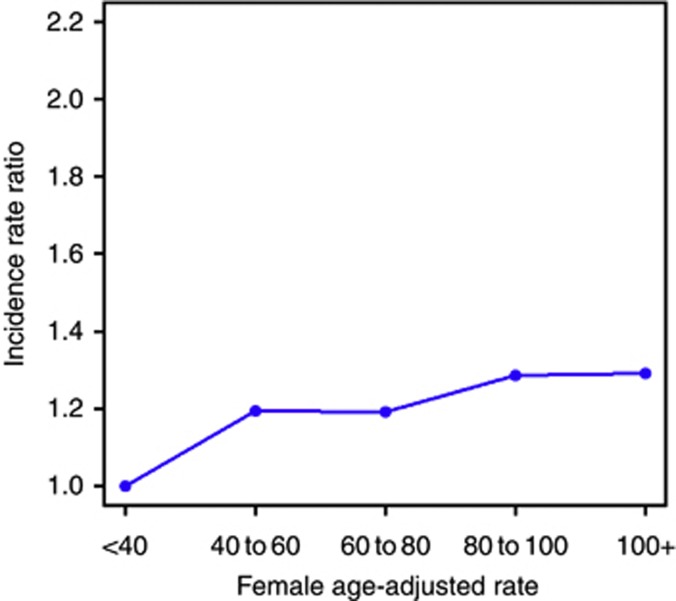
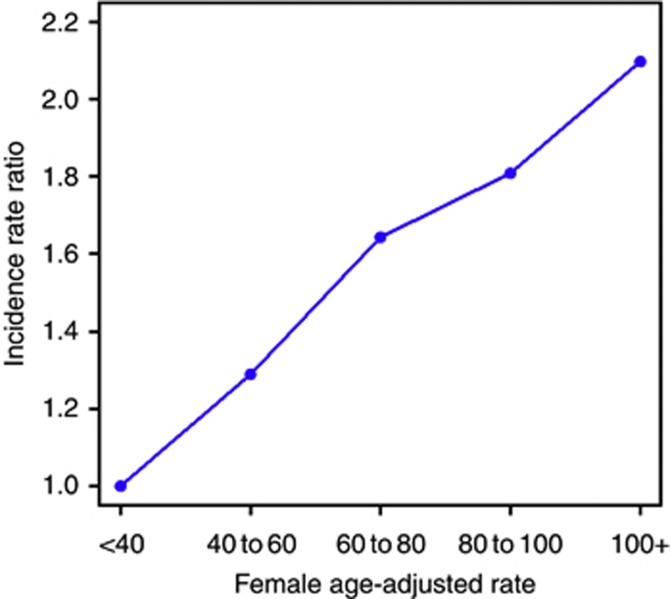
Methods: We investigated the correlation between male (MBC) and female breast cancer (FBC) incidence stratified by female age-group (<50 years, and ≥50 years) and used Poisson regression to examine male incidence rate ratios according to female incidence rates.
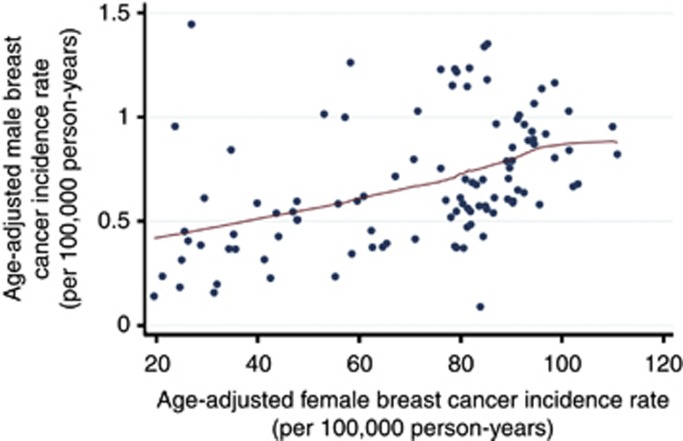
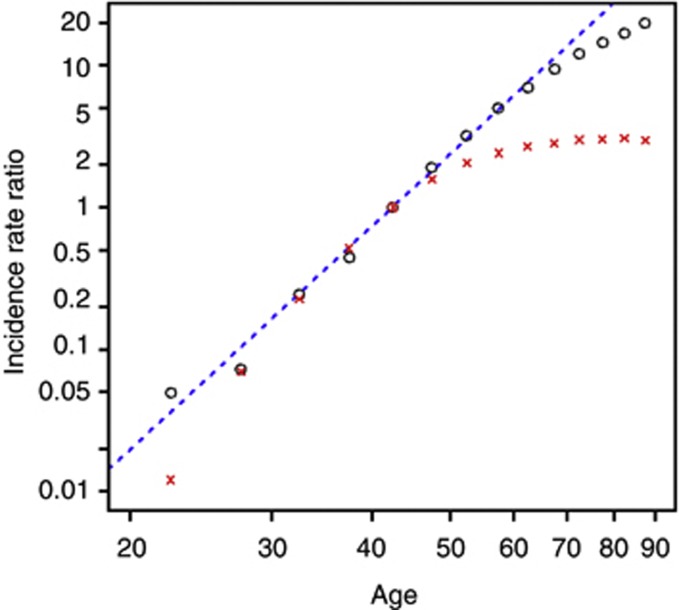
Results: Age-adjusted breast cancer incidence rates for males and females share a similar geographic distribution (Spearman's correlation=0.51; P<0.0001). A correlation with male incidence rates was found for the entire female population and for women aged 50 years and over. Breast cancer incidence rates in males aged <50 years were not associated with FBC incidence, whereas those in males aged 50 years were. MBC incidence displays a small 'hook' similar to the Clemmesen's hook for FBC, but at a later age than the female hook.
Interpretation: Further investigation of possible explanations for these patterns is warranted. Although the incidence of breast cancer is much lower in men than in women, it may be possible to identify a cause common to both men and women.
Figures
References
-
- Ahmad OB, Boschi-Pinto C, Lopez AD, Murray CJL, Lozano R, Inouye M. GPE Discussion Paper Series. World Health Organization: Geneva; 2001. Age standardization of rates: a new WHO standard.
-
- Anderson WF, Althuis MD, Brinton LA, Devesa SS. Is male breast cancer similar or different than female breast cancer. Breast Cancer Res Treat. 2004;83 (1:77–86. - PubMed
-
- Anderson WF, Pfeiffer RM, Dores GM, Sherman ME. Comparison of age distribution patterns for different histopathologic types of breast carcinoma. Cancer Epidemiol Biomarkers Prev. 2006;15 (10:1899–1905. - PubMed
-
- Armstrong B, Doll R. Environmental factors and cancer incidence and mortality in different countries, with special reference to dietary practices. Int J Cancer. 1975;15 (4:617–631. - PubMed
Publication types
MeSH terms
LinkOut - more resources
Full Text Sources
Other Literature Sources
Medical
