


Calcified giant thoracic disc herniations: considerations and treatment strategies
- PMID: 24519360
- PMCID: PMC3946103
- DOI: 10.1007/s00586-014-3210-5
Calcified giant thoracic disc herniations: considerations and treatment strategies
Abstract
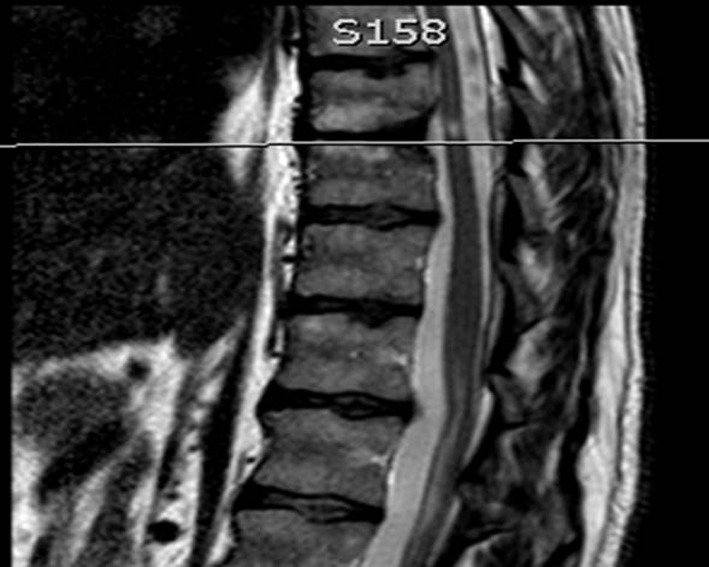
Introduction: Giant herniated thoracic discs (GHTD) remain a surgical challenge. When combined with calcification, these discs require altered surgical strategies and have only been infrequently described. Our objective was to describe our surgical approaches in the management of calcified GHTD.
Methods: This was a retrospective cohort study of all patients with calcified GHTD operated between 2004 and 2012. Data were collected from review of patients' notes and radiographs and included basic demographic and radiological data, clinical presentation and outcome, operative procedure and complications.
Results: During the study period, there were 13 patients with calcified GHTD, including 6 males and 7 females (mean age 55 years, range 31-83 years). The average canal encroachment was 62% (range 40-90%); mean follow-up 37 months (12-98). All patients were treated with anterior thoracotomy, varying degrees of vertebral resection, removal of calcified disc and with or without reconstruction. The average time for surgery was 344 min (range 212-601 min) and estimated blood loss 1,230 ml (range 350-3,000 ml). Post-operatively, 8 patients improved by 1 Frankel grade (62%), 2 improved by 2 grades (15%) and 3 did not change their grade (23%). The complication rate was 4/13 (31%; 3 patients with durotomies (2 incidental, 1 intentional) and 1 with recurrence).
Discussion: Calcified GHTD remain a surgical challenge. Anterior decompression through a thoracotomy approach, and varying degrees of vertebral resection with or without reconstruction allowed us to safely remove the calcified fragment. All patients remained the same (23%) or improved by at least 1 grade (77%) neurologically, without radiographic failure at final follow-up.
Figures
Comment in
-
Reviewer's comment concerning "Calcified giant thoracic disc herniations--considerations and treatment strategies" (DOI 10.1007/s00586-014-3210-5 by N.A. Quraishi et al.).Eur Spine J. 2014 Apr;23 Suppl 1(Suppl 1):S84-5. doi: 10.1007/s00586-014-3215-0. Epub 2014 Feb 1. Eur Spine J. 2014. PMID: 24487559 Free PMC article. No abstract available.
References
-
- Vollmer DG, Simmons NE. Transthoracic approaches to thoracic disc herniations. Neurosurg Focus. 2000;2000(9):e8. - PubMed
-
- Barbanera A, Serchi E, Fiorenza V, Nina P, Andreoli A. Giant calcified thoracic herniated disc: considerations aiming a proper surgical strategy. J Neurosurg Sci. 2009;53(1):19–25. - PubMed
Publication types
MeSH terms
LinkOut - more resources
Full Text Sources
Other Literature Sources
Medical
