


Antagonistic lactic acid bacteria isolated from goat milk and identification of a novel nisin variant Lactococcus lactis
- PMID: 24521354
- PMCID: PMC3930553
- DOI: 10.1186/1471-2180-14-36
Antagonistic lactic acid bacteria isolated from goat milk and identification of a novel nisin variant Lactococcus lactis
Abstract
Background: The raw goat milk microbiota is considered a good source of novel bacteriocinogenic lactic acid bacteria (LAB) strains that can be exploited as an alternative for use as biopreservatives in foods. The constant demand for such alternative tools justifies studies that investigate the antimicrobial potential of such strains.
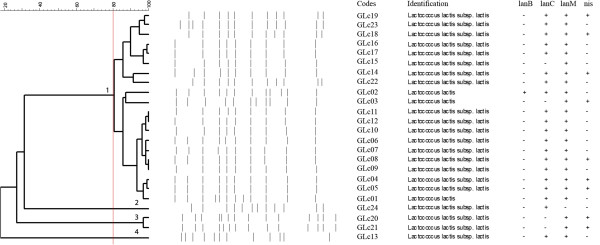
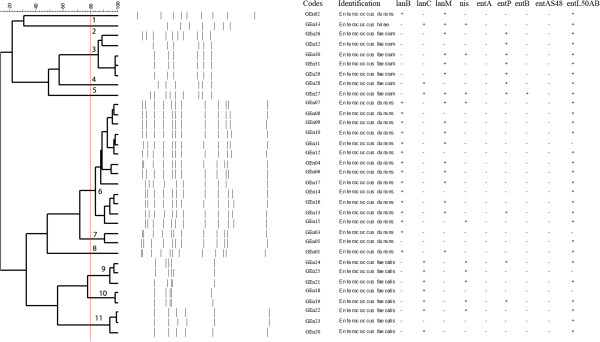
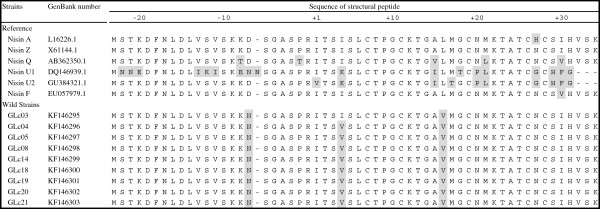
Results: The obtained data identified a predominance of Lactococcus and Enterococcus strains in raw goat milk microbiota with antimicrobial activity against Listeria monocytogenes ATCC 7644. Enzymatic assays confirmed the bacteriocinogenic nature of the antimicrobial substances produced by the isolated strains, and PCR reactions detected a variety of bacteriocin-related genes in their genomes. Rep-PCR identified broad genetic variability among the Enterococcus isolates, and close relations between the Lactococcus strains. The sequencing of PCR products from nis-positive Lactococcus allowed the identification of a predicted nisin variant not previously described and possessing a wide inhibitory spectrum.
Conclusions: Raw goat milk was confirmed as a good source of novel bacteriocinogenic LAB strains, having identified Lactococcus isolates possessing variations in their genomes that suggest the production of a nisin variant not yet described and with potential for use as biopreservatives in food due to its broad spectrum of action.
Figures
References
-
- Food and Agriculture Organization of the United Nations. http://faostat3.fao.org/faostat-gateway/go/to/download/Q/QI/E.
-
- Haenlein G. Goat milk in human nutrition. Small Ruminant Res. 2004;51(2):155–163. doi: 10.1016/j.smallrumres.2003.08.010. - DOI
-
- Asteri I, Kittaki N, Tsakalidou E. The effect of wild lactic acid bacteria on the production of goat’s milk soft cheese. Int J Dairy Technol. 2010;63(2):234–242. doi: 10.1111/j.1471-0307.2010.00564.x. - DOI
-
- Colombo E, Franzetti L, Frusca M, Scarpellini M. Phenotypic and genotypic characterization of lactic acid bacteria isolated from artisanal italian goat cheese. J Food Prot. 2010;73(4):657–662. - PubMed
Publication types
MeSH terms
Substances
Associated data
- Actions
- Actions
- Actions
- Actions
- Actions
- Actions
- Actions
- Actions
- Actions
LinkOut - more resources
Full Text Sources
Other Literature Sources
Molecular Biology Databases
Miscellaneous
