


Using mixed methods to select optimal mode of administration for a patient-reported outcome instrument for people with pressure ulcers
- PMID: 24521512
- PMCID: PMC3928606
- DOI: 10.1186/1471-2288-14-22
Using mixed methods to select optimal mode of administration for a patient-reported outcome instrument for people with pressure ulcers
Abstract
Background: When developing new measuring instruments or deciding upon one for research, consideration of the 'best' method of administration for the target population should be made. Current evidence is inconsistent in differentiating superiority of any one method in terms of quantity and quality of response. We trialed a novel mixed methods approach in early scale development to determine the best administration method for a new patient-reported outcome instrument for people with pressure ulcers (the PU-QOL).
Methods: Cognitive interviews were undertaken with 35 people with pressure ulcers to determine appropriateness of a self-completed version of the PU-QOL instrument. Quantitative analysis, including Rasch analysis, was carried out on PU-QOL data from 70 patients with pressure ulcers, randomised to self-completed or interview-administered groups, to examine data quality and differential item functioning (DIF).
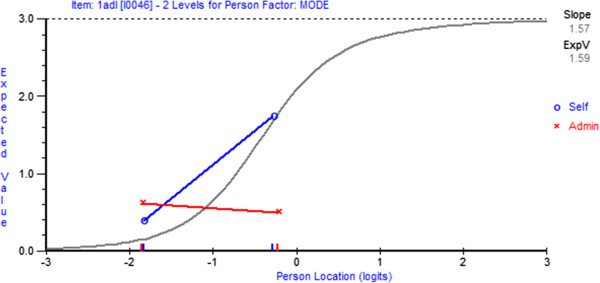
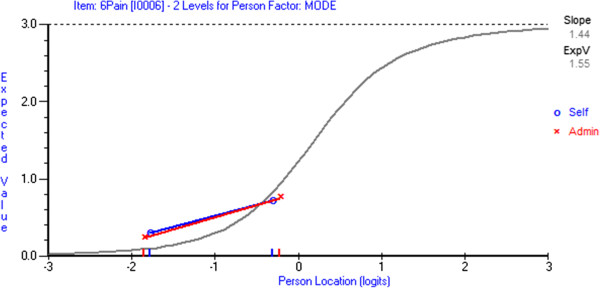
Results: Cognitive interviews identified issues with PU-QOL self-completion. Quantitative analysis supported these findings with a large proportion of self-completed PU-QOLs returned with missing data. DIF analysis indicated administration methods did not impact the way patients from community care settings responded, supporting the equivalence of both administration versions.
Conclusions: Obtaining the best possible health outcomes data requires use of appropriate methods to ensure high quality data with minimal bias. Mixed methods, with the inclusion of Rasch, provided valuable evidence to support selection of the 'best' administration method for people with PUs during early PRO instrument development. We consider our approach to be generic and widely applicable to other elderly or chronically ill populations or suitable for use in limited samples where recruitment to large field tests is often difficult.
Figures
References
-
- Greenfield S, Nelson E. Recent developments and future issues in the use of health status assessment measures in clinical settings. Med Care. 1992;20:S23–41. - PubMed
-
- US Department of Health & Human Services FDA. Patient reported outcome measures: use in medical product development to support labelling claims. http://www.fda.gov/downloads/drugs/guidancecomplianceregulatoryinformati.... 2009. MD, US Department of Health & Human Support Food & Drug Administration.
-
- McColl E, Jacoby A, Thomas L, Soutter J, Bamford C, Steen N. et al. Design and use of questionnaires: a review of best practice applicable to surveys of health service staff and patients. Health Technol Assess. 2001;5:1–256. - PubMed
Publication types
MeSH terms
Grants and funding
LinkOut - more resources
Full Text Sources
Other Literature Sources
Medical
