


The impact of childhood abuse on inpatient substance users: specific links with risky sex, aggression, and emotion dysregulation
- PMID: 24521524
- PMCID: PMC4065225
- DOI: 10.1016/j.chiabu.2013.12.007
The impact of childhood abuse on inpatient substance users: specific links with risky sex, aggression, and emotion dysregulation
Abstract
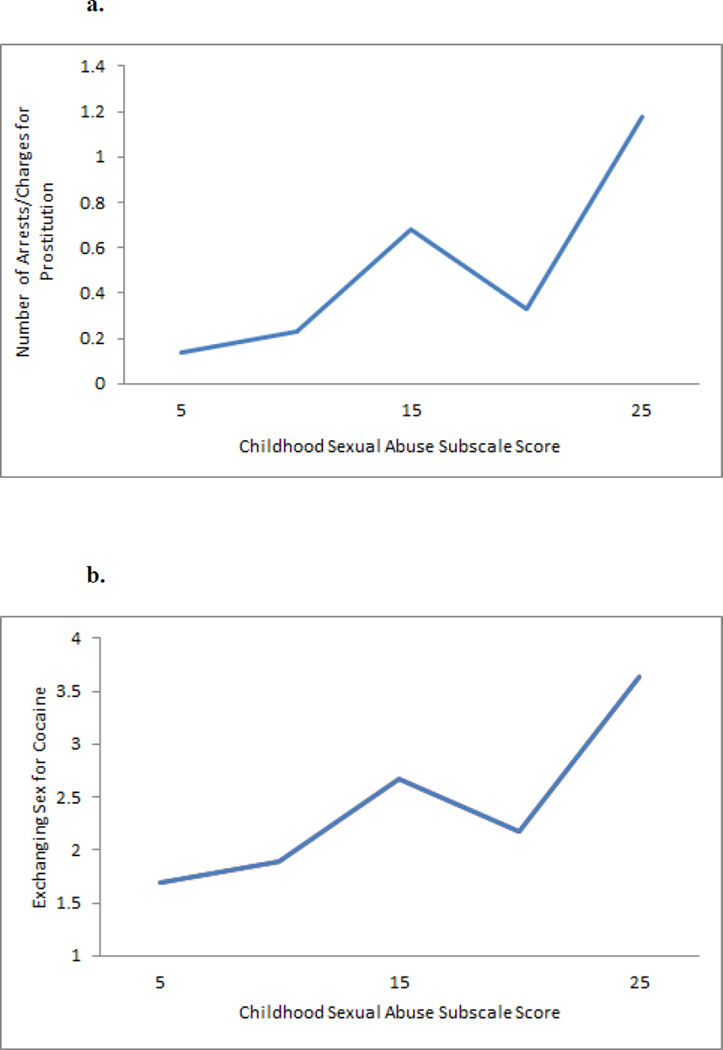
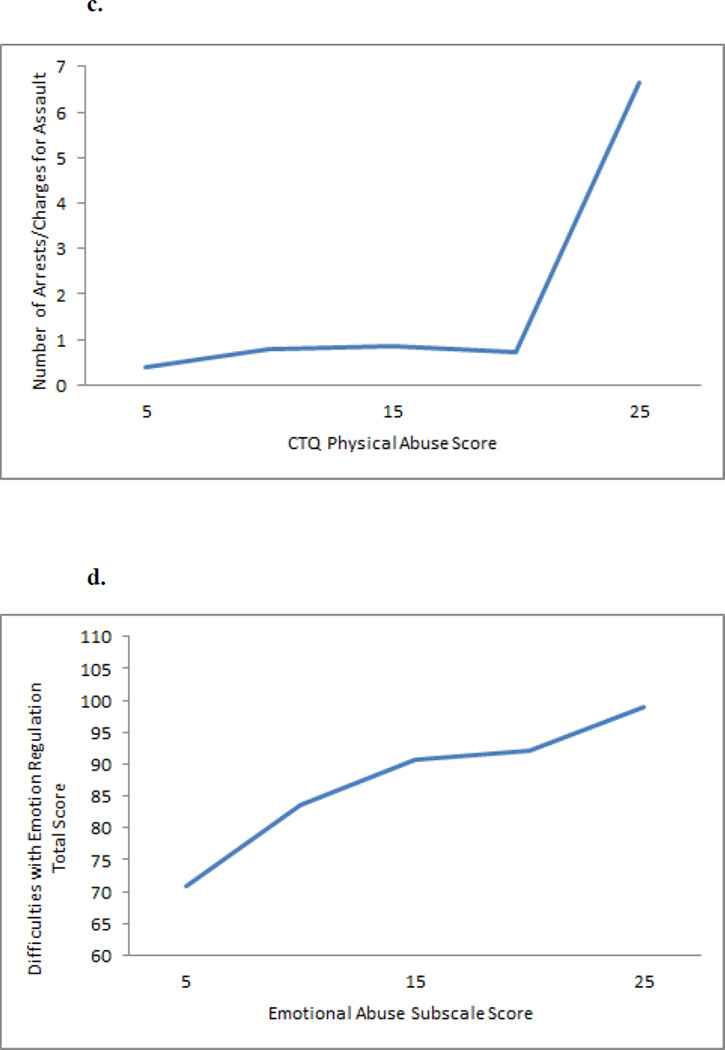
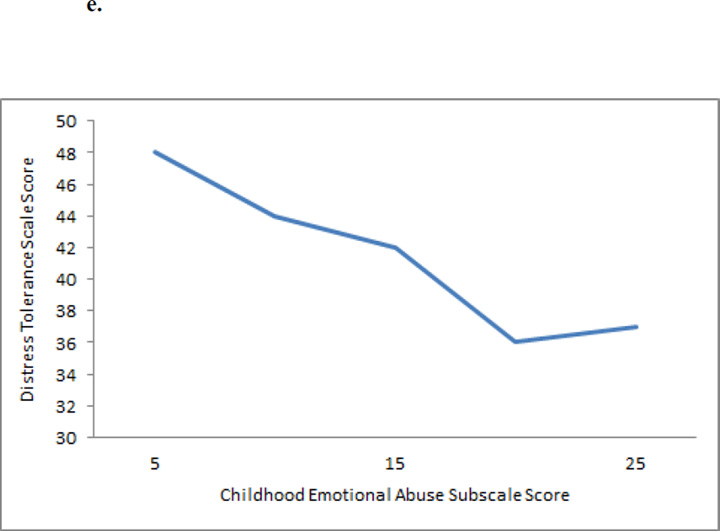
Adults with substance use disorders (SUDs) report a high prevalence of childhood abuse. Research in the general population suggests specific types of abuse lead to particular negative outcomes; it is not known whether this pattern holds for adults with SUDs. We hypothesized that specific types of abuse would be associated with particular behavioral and emotional outcomes among substance users. That is, childhood sexual abuse would be associated with risky sex behaviors, childhood physical abuse with aggression, and childhood emotional abuse with emotion dysregulation. 280 inpatients (M age=43.3; 69.7% male; 88.4% African American) in substance use treatment completed the Childhood Trauma Questionnaire (CTQ), HIV Risk-Taking Behavior Scale, Addiction Severity Index, Difficulties with Emotion Regulation Scale (DERS), Distress Tolerance Scale (DTS), and Affect Intensity and Dimensions of Affiliation Motivation (AIM). Consistent with our hypotheses, the CTQ sexual abuse subscale uniquely predicted exchanging sex for cocaine and heroin, number of arrests for prostitution, engaging in unprotected sex with a casual partner during the prior year, and experiencing low sexual arousal when sober. The physical abuse subscale uniquely predicted number of arrests for assault and weapons offenses. The emotional abuse subscale uniquely predicted the DERS total score, AIM score, and DTS score. Among substance users, different types of abuse are uniquely associated with specific negative effects. Assessment of specific abuse types among substance users may be informative in treatment planning and relapse prevention.
Keywords: Aggression; Child abuse; Emotion dysregulation; Risky sex; Substance use.
Copyright © 2014 Elsevier Ltd. All rights reserved.
Figures
References
-
- Arata CM, Langhinrichsen-Rohling J, Bowers D, O’Farrill-Swails L. Single versus multi-type maltreatment: An examination of the long-term effects of child abuse. Journal of Aggression, Maltreatment, and Trauma. 2005;11:29–52.
-
- Arnow BA, Blasey CM, Hunkeler EM, Lee J, Hayward C. Does gender moderate the relationship between childhood maltreatment and adult epression? Child Maltreatment. 2011;16:175–183. - PubMed
-
- Beitchman JH, Zucker KJ, Hood JE, DaCosta GA, Akman D, Cassavia E. A review of the long-term effects of child sexual abuse. Child abuse & neglect. 1992;16:101–118. - PubMed
-
- Beitchman JH, Zucker KJ, Hood JE, DaCosta GA, Akman D. A review of the short-term effects of child sexual abuse. Child Abuse & Neglect. 1991;15:537–556. - PubMed
-
- Bensley LS, Van Eenwyk J, Spieker SJ, Schoder J. Self-reported abuse history and adolescent problem behavior. I. Antisocial and suicidal behaviors. Journal of Adolescent Health. 1999;24:163–172. - PubMed
Publication types
MeSH terms
Grants and funding
LinkOut - more resources
Full Text Sources
Other Literature Sources
Medical
