


Dietary lipids are differentially associated with hippocampal-dependent relational memory in prepubescent children
- PMID: 24522447
- PMCID: PMC3985209
- DOI: 10.3945/ajcn.113.079624
Dietary lipids are differentially associated with hippocampal-dependent relational memory in prepubescent children
Abstract
Background: Studies in rodents and older humans have shown that the hippocampus-a brain structure critical to relational/associative memory-has remarkable plasticity as a result of lifestyle factors (eg, exercise). However, the effect of dietary intake on hippocampal-dependent memory during childhood has remained unexamined.
Objective: We investigated the cross-sectional relation of dietary components characteristic of the Western diet, including saturated fatty acids (SFAs), omega-3 (n-3) fatty acids, and refined sugar, with hippocampal-dependent relational memory in prepubescent children.
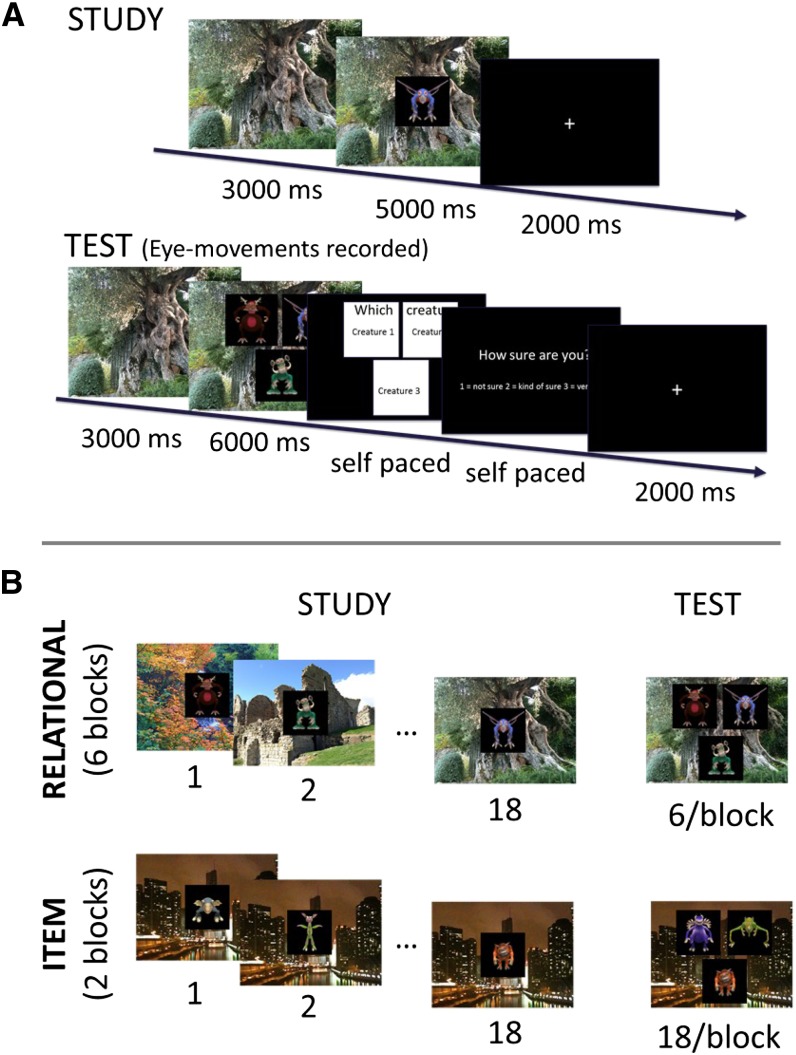
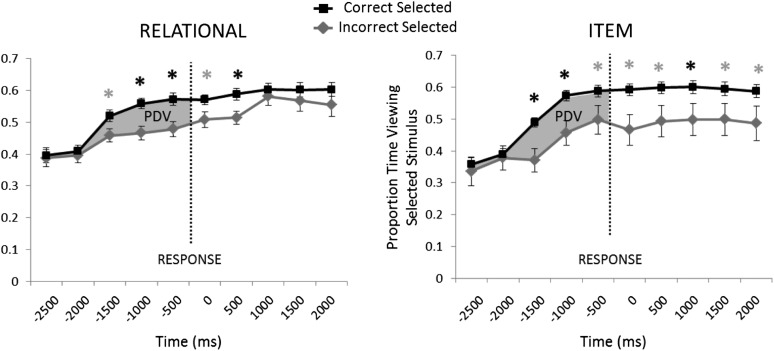
Design: Participants aged 7-9 y (n = 52) reported their dietary intake by using the Youth-Adolescent Food-Frequency Questionnaire and completed memory tasks designed to assess relational (hippocampal-dependent) and item (hippocampal-independent) memory. Performance on the memory tasks was assessed with both direct (accuracy) and indirect (eye movement) measures.
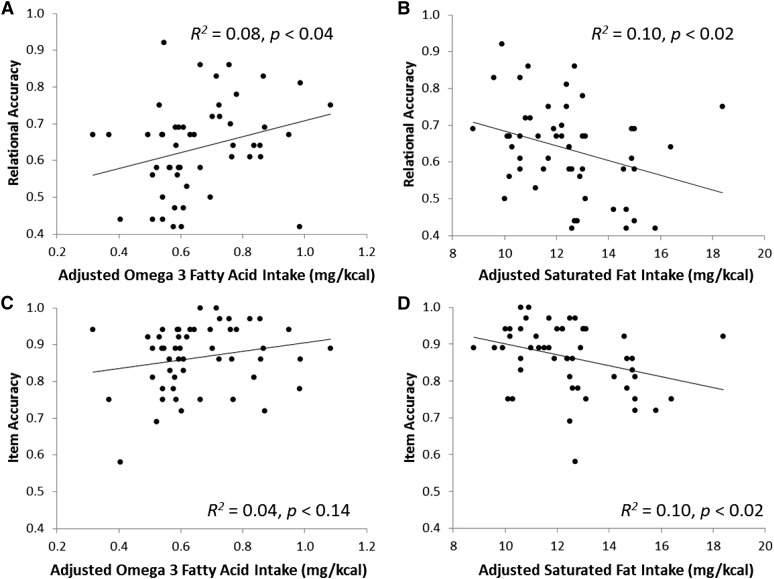
Results: Partial correlations adjusted for body mass index showed a positive relation between relational memory accuracy and intake of omega-3 fatty acids and a negative relation of both relational and item memory accuracy with intake of SFAs. Potential confounding factors of age, sex, intelligence quotient, socioeconomic status, pubertal timing, and aerobic fitness (maximal oxygen volume) were not significantly related to any of the dietary intake measures. Eye movement measures of relational memory (preferential viewing to the target stimulus) showed a negative relation with intake of added sugar.
Conclusions: SFA intake was negatively associated with both forms of memory, whereas omega-3 fatty acid intake was selectively positively associated with hippocampal-dependent relational memory. These findings are among the first to show a link between habitual dietary intake and cognitive health as pertaining to hippocampal function in childhood. The Fitness Improves Thinking Kids (FITKids) and FITKids2 trials were registered at www.clinicaltrials.gov as NCT01334359 and NCT01619826, respectively.
Figures
Comment in
-
Do impaired memory and body weight regulation originate in childhood with diet-induced hippocampal dysfunction?Am J Clin Nutr. 2014 May;99(5):971-2. doi: 10.3945/ajcn.114.086462. Epub 2014 Mar 26. Am J Clin Nutr. 2014. PMID: 24670945 Free PMC article. No abstract available.
References
Publication types
MeSH terms
Substances
Associated data
Grants and funding
LinkOut - more resources
Full Text Sources
Other Literature Sources
Medical
