. 2014 Feb 11;9(2):e88591.
doi: 10.1371/journal.pone.0088591. eCollection 2014.

Biomarker evidence of axonal injury in neuroasymptomatic HIV-1 patients

Affiliations

Biomarker evidence of axonal injury in neuroasymptomatic HIV-1 patients

Jan Jessen Krut et al. PLoS One. .

Abstract

Background: Prevalence of neurocognitive impairment in HIV-1 infected patients is reported to be high. Whether this is a result of active HIV-related neurodegeneration is unclear. We examined axonal injury in HIV-1 patients by measuring the light subunit of neurofilament protein (NFL) in CSF with a novel, sensitive method.

Methods: With a cross-sectional design, CSF concentrations of neurofilament protein light (NFL) (marker of neuronal injury), neopterin (intrathecal immunoactivation) and CSF/Plasma albumin ratio (blood-brain barrier integrity) were analyzed on CSF from 252 HIV-infected patients, subdivided into untreated neuroasymptomatics (n = 200), HIV-associated dementia (HAD) (n = 14) and on combinations antiretroviral treatment (cART) (n = 85), and healthy controls (n = 204). 46 HIV-infected patients were included in both treated and untreated groups, but sampled at different timepoints. Furthermore, 78 neuroasymptomatic patients were analyzed before and after treatment initiation.

Results: While HAD patients had the highest NFL concentrations, elevated CSF NFL was also found in 33% of untreated neuroasymptomatic patients, mainly in those with blood CD4+ cell counts below 250 cells/μL. CSF NFL concentrations in the untreated neuroasymptomatics and treated groups were equivalent to controls 18.5 and 3.9 years older, respectively. Neopterin correlated with NFL levels in untreated groups while the albumin ratio correlated with NFL in both untreated and treated groups.

Conclusions: Increased CSF NFL indicates ongoing axonal injury in many neuroasymptomatic patients. Treatment decreases NFL, but treated patients retain higher levels than controls, indicating either continued virus-related injury or an aging-like effect of HIV infection. NFL correlates with neopterin and albumin ratio, suggesting an association between axonal injury, neuroinflammation and blood-brain barrier permeability. NFL appears to be a sensitive biomarker of subclinical and clinical brain injury in HIV and warrants further assessment for broader clinical use.


Conflict of interest statement

Competing Interests: Dr Jan Krut, Dr Tomas Mellberg, Dr Dietmar Fuchs, Dr Lars Rosengren, Dr Staffan Nilsson and Dr Henrik Zetterberg have all declared that no competing interests exist. Dr Richard W Price has the following conflicts: Serving as a Consultant to Merck & Co and receiving honoraria and travel reimbursement for meeting presentations from AbbVie. Dr Lars Hagberg has the following conflicts: Payment for lecture for infectious specialists and GP:s from Roche, Meda. Dr Magnus Gisslén has the following conflicts: Money paid by BMS, Gilead, Janssen, GSK and Abbott for scientific advisory board and educational lectures. This does not alter the authors' adherence to all the PLOS ONE policies on sharing data and materials.

Figures

Figure 1
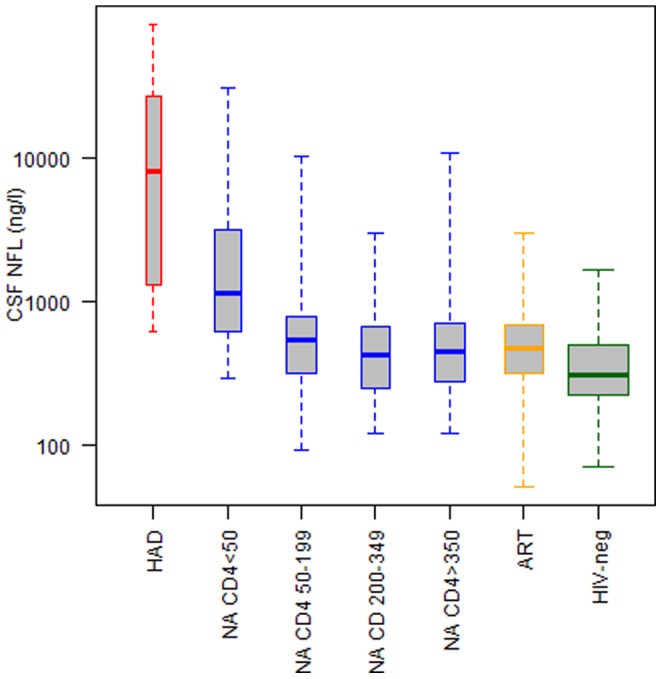
Figure 1. Cross-sectional analysis of CSF NFL in HIV disease.
Included were 14 subjects diagnosed with HIV-associated dementia (HAD); HIV positive neuroasymptomatic subjects (NA) without antiretroviral treatment stratified according to levels of blood CD4 T-cells <50 (n = 42), 50–199 (n = 49), 200–349 (n = 52) and >350 (n = 57); 85 subjects on combination antiretroviral treatment (ART) for at least one year and plasma HIV-RNA <50 copies/ml and 204 HIV seronegative volunteers (HIV-neg). CSF NFL concentrations were higher in patients with HAD compared to all other groups. Elevated levels of CSF NFL was also found in subjects with a CD4+ T-cell count below 50 cells/mL compared to groups in higher CD4+ T-cell count strata. Whiskers represent full range
Figure 2
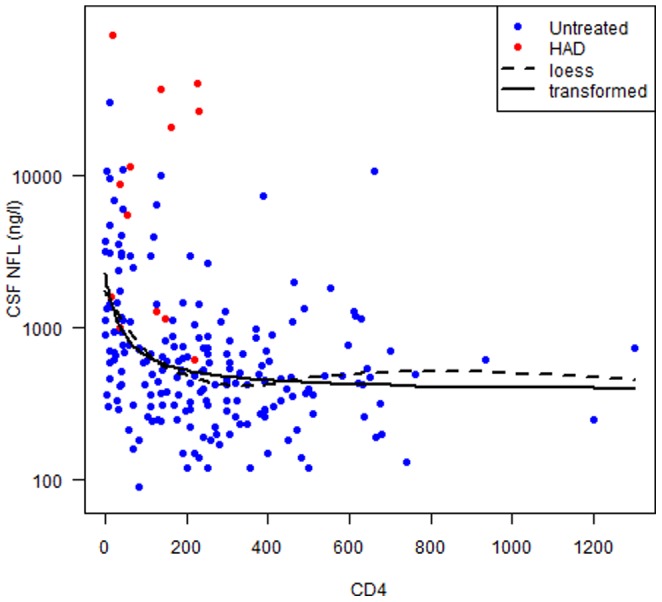
Figure 2. Correlations with CD4 T-cell counts and CSF NFL.
A loess regression (dotted line) suggested an inverse transformation of CD4+ T-cell counts. Visual inspection reveals a rapid decline with increasing CD4+ T-cell counts that flattens out at around 250 cells/mL. The relationship between log10 CSF NFL levels and CD4+ cell counts were fitted with non-linear regression using the function Log CSF NFL  =  b1 + b2/(CD4 + b3) (filled line). CSF NFL concentrations in patients with HIV-associated dementia (HAD) diagnosis, marked with red color in the figure were significantly elevated also compared to untreated neuroasymptomatic patients with equivalently low CD4+ T-cell counts, p<0.001.
Figure 3
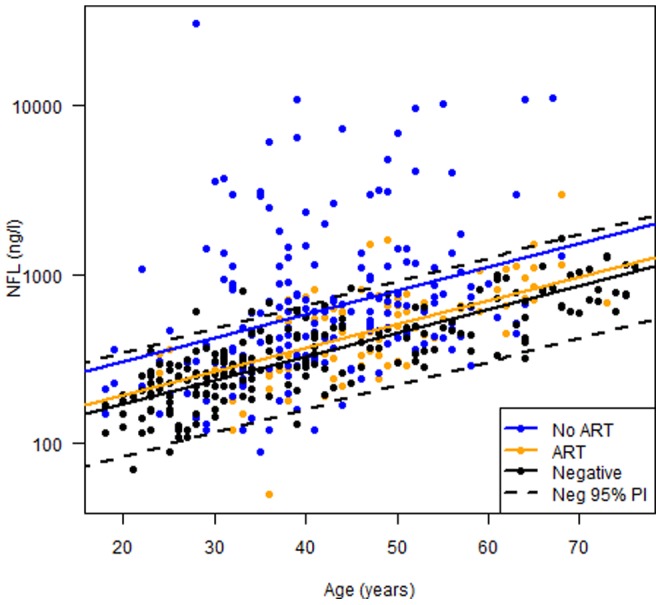
Figure 3. CSF NFL related to age and treatment effect.
Since CSF NFL increases with age, we analyzed the group differences with a linear mixed effects model with age as covariate. This implies a model with three parallel regression lines where the group differences correspond to the vertical distances between the regression lines. The group differences can be expressed as the corresponding age increase needed for an equivalent difference. The 95% prediction interval of CSF NFL levels of HIV-negative controls is demonstrated as dotted lines (Neg 95% PI). Concentrations of CSF NFL in neuroasymptomatic untreated HIV-infected subjects (No ART) were equivalent to those of HIV-negative subjects (negative) who were 18.5 years older (p<0.001). CSF NFL concentrations in the treated group (ART) were equivalent to those of HIV-negative subjects who were 3.9 years older (p<0.01).
Figure 4
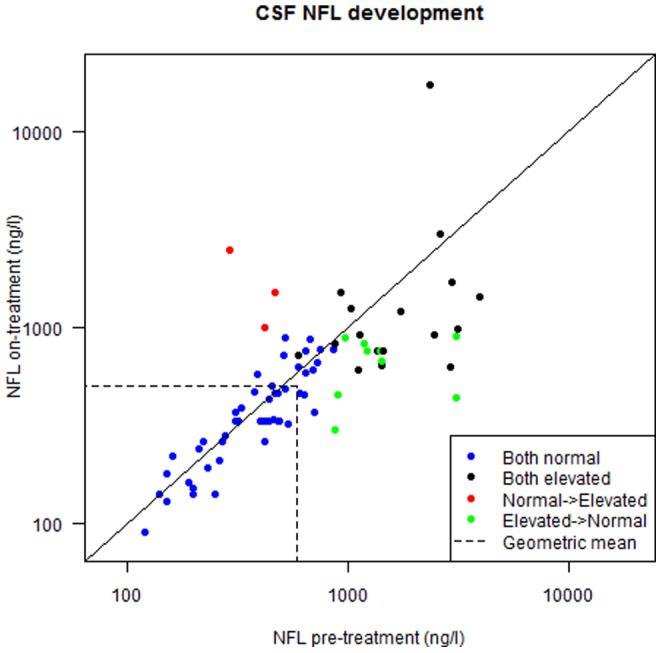
Figure 4. CSF NFL levels before-after combination antiretroviral treatment (cART) initiation.
Overall CSF NFL levels decreased in 63% of the patients after initiation of cART (p<0.01), demonstrated as a lower CSF NFL geometric mean (dotted line) after initiation of cART. 33% of the patents had elevated levels of CSF NFL at baseline and 81% of those exhibited reduction in their CSF NFL levels after treatment (p<0.01). 35% of patients with pathological CSF NFL at baseline normalized their levels (green colored). Those with normal CSF NFL at baseline exhibited no significant reduction in CSF NFL (blue colored). Three patients with normal baseline CSF NFL exhibited elevated levels of CSF NFL after cART initiation (red colored).

References

    1. Valcour V, Chalermchai T, Sailasuta N, Marovich M, Lerdlum S, et al. (2012) Central nervous system viral invasion and inflammation during acute HIV infection. J Infect Dis 206: 275–282. - PMC - PubMed
    1. Spudich SS, Nilsson AC, Lollo ND, Liegler TJ, Petropoulos CJ, et al. (2005) Cerebrospinal fluid HIV infection and pleocytosis: relation to systemic infection and antiretroviral treatment. BMC Infect Dis 5: 98. - PMC - PubMed
    1. Gisslen M, Fuchs D, Svennerholm B, Hagberg L (1999) Cerebrospinal fluid viral load, intrathecal immunoactivation, and cerebrospinal fluid monocytic cell count in HIV-1 infection. J Acquir Immune Defic Syndr 21: 271–276. - PubMed
    1. Portegies P, de Gans J, Lange JM, Derix MM, Speelman H, et al. (1989) Declining incidence of AIDS dementia complex after introduction of zidovudine treatment. BMJ 299: 819–821. - PMC - PubMed
    1. Lescure FX, Omland LH, Engsig FN, Roed C, Gerstoft J, et al. (2011) Incidence and impact on mortality of severe neurocognitive disorders in persons with and without HIV infection: a Danish nationwide cohort study. Clin Infect Dis 52: 235–243. - PubMed

Publication types