


Extinction resistant changes in the human auditory association cortex following threat learning
- PMID: 24525224
- PMCID: PMC4053499
- DOI: 10.1016/j.nlm.2014.01.016
Extinction resistant changes in the human auditory association cortex following threat learning
Abstract
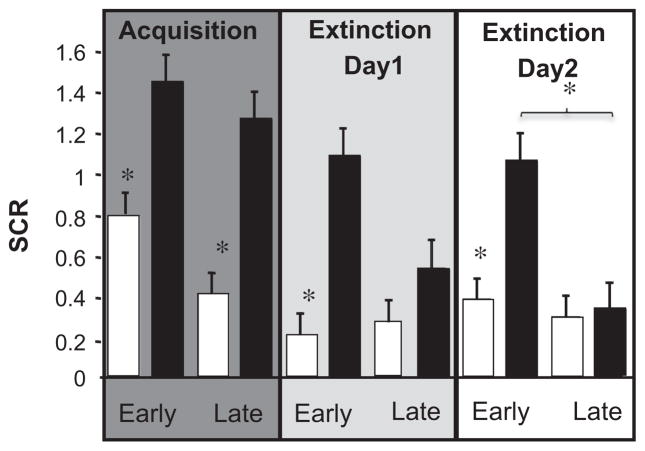
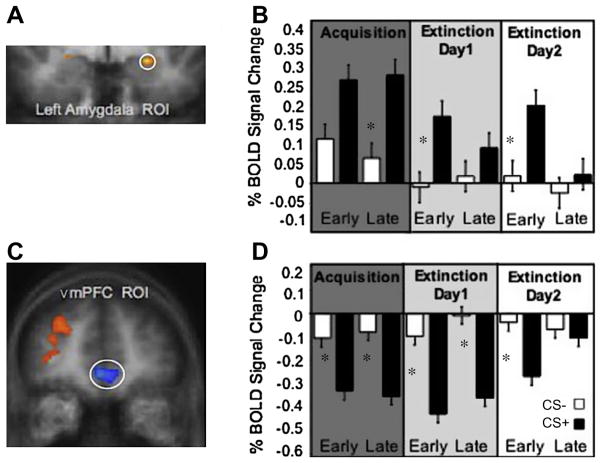
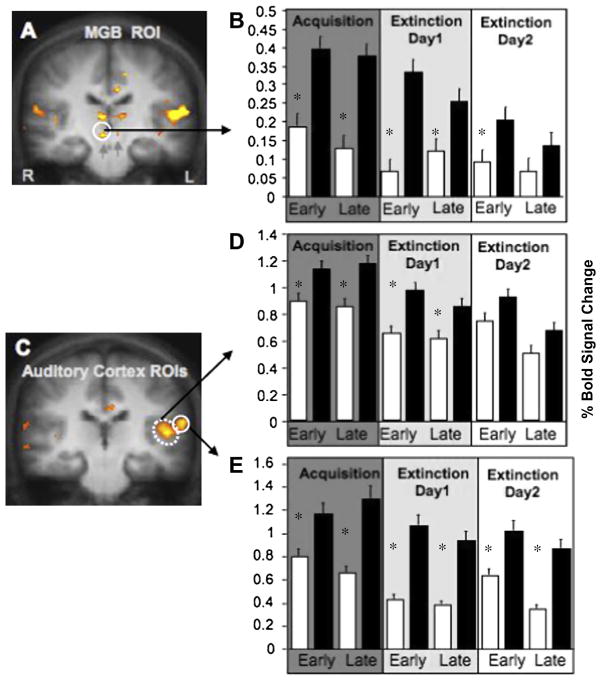
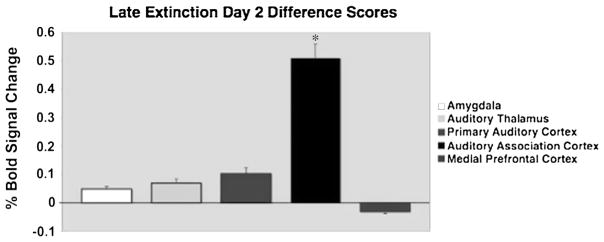
Research in humans has highlighted the importance of the amygdala for transient modulation of cortical areas for enhanced processing of emotional stimuli. However, non-human animal data has shown that amygdala dependent threat (fear) learning can also lead to long lasting changes in cortical sensitivity, persisting even after extinction of fear responses. The neural mechanisms of long-lasting traces of such conditioning in humans have not yet been explored. We used functional magnetic resonance imaging (fMRI) and assessed skin conductance responses (SCR) during threat acquisition, extinction learning and extinction retrieval. We provide evidence of lasting cortical plasticity in the human brain following threat extinction and show that enhanced blood oxygen level-dependent (BOLD) signal to the learned threat stimulus in the auditory association cortex is resistant to extinction. These findings point to a parallel avenue by which cortical processing of potentially dangerous stimuli can be long lasting, even when immediate threat and the associated amygdala modulation have subsided.
Keywords: Auditory fear conditioning; Fear conditioning; Fear extinction.
Copyright © 2014. Published by Elsevier Inc.
Figures
References
-
- Bouton ME. Context, time, and memory retrieval in the interference paradigms of Pavlovian learning. Psychological Bulletin. 1993;114:80–99. Review. - PubMed
-
- Bouton ME. Context and behavioral processes in extinction. Learning & Memory. 2004;11:485–494. Review. - PubMed
-
- Bush DE, Sotres-Bayon F, LeDoux JE. Individual differences in fear: Isolating fear reactivity and fear recovery phenotypes. Journal of Traumatic Stress. 2007;20:413–422. - PubMed
Publication types
MeSH terms
Grants and funding
LinkOut - more resources
Full Text Sources
Other Literature Sources
