


Consensus on context-specific strategies for reducing the stigma of human immunodeficiency virus/acquired immunodeficiency syndrome in Zambézia Province, Mozambique
- PMID: 24527744
- PMCID: PMC4039134
- DOI: 10.1080/17290376.2014.885847
Consensus on context-specific strategies for reducing the stigma of human immunodeficiency virus/acquired immunodeficiency syndrome in Zambézia Province, Mozambique
Abstract
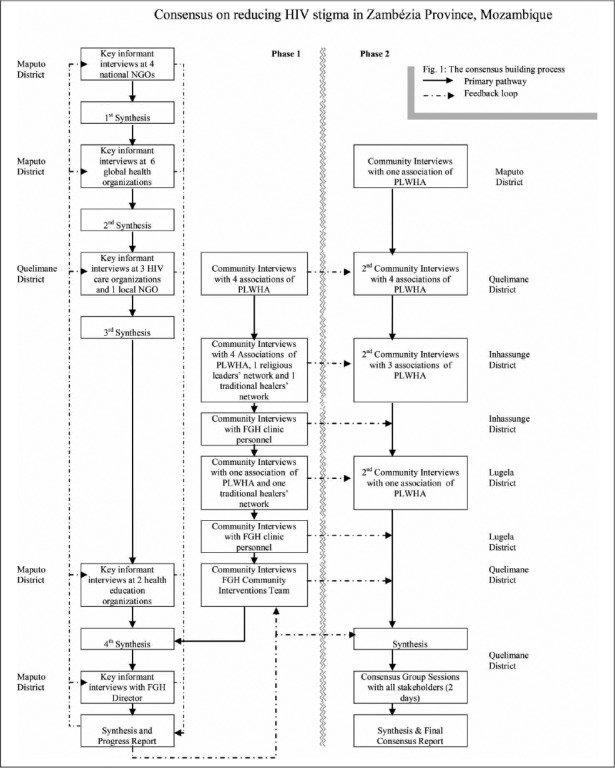
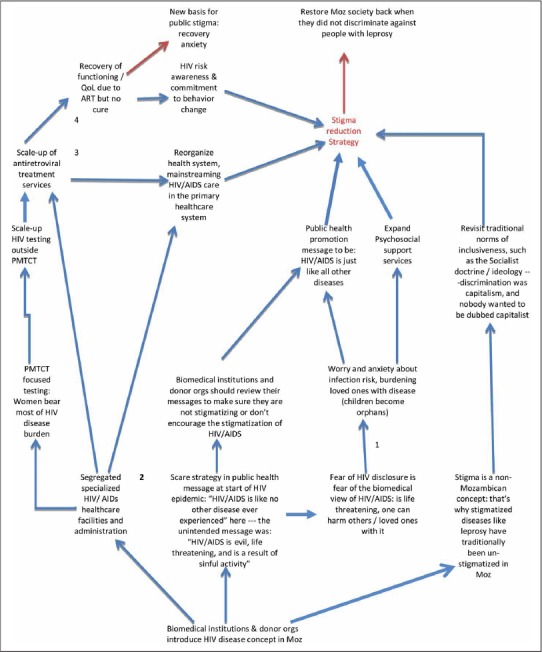
Stigma has been implicated in poor outcomes of human immunodeficiency virus (HIV)/acquired immunodeficiency syndrome (AIDS) care. Reducing stigma is important for HIV prevention and long-term treatment success. Although stigma reduction interventions are conducted in Mozambique, little is known about the current nature of stigma and the efficacy and effectiveness of stigma reduction initiatives. We describe action research to generate consensus on critical characteristics of HIV stigma and anti-stigma interventions in Zambézia Province, Mozambique. Qualitative data gathering methods, including in-depth key-informant interviews, community interviews and consensus group sessions, were utilized. Delphi methods and the strategic options development analysis technique were used to synthesize qualitative data. Key findings are that stigma enacted by the general public might be declining in tandem with the HIV/AIDS epidemic in Mozambique, but there is likely excessive residual fear of HIV disease and community attitudes that sustain high levels of perceived stigma. HIV-positive women accessing maternal and child health services appear to shoulder a disproportionate burden of stigma. Unintentional biases among healthcare providers are currently the critical frontier of stigmatization, but there are few interventions designed to address them. Culturally sensitive psychotherapies are needed to address psychological distress associated with internalized stigma and these interventions should complement current supports for voluntary counseling and testing. While advantageous for defining stakeholder priorities for stigma reduction efforts, confirmatory quantitative studies of these consensus positions are needed before the launch of specific interventions.
La stigmatisation a été impliquée dans de piètres résultats des soins VIH/SIDA. Réduire la stigmatisation est important pour la prévention du VIH et le succès thérapeutique à long terme. Bien que les interventions visant à réduire la stigmatisation sont menées au Mozambique, on en sait peu sur la nature réelle de la stigmatisation et de l'efficacité des initiatives visant à réduire la stigmatisation. Nous décrivons la recherche-action afin de générer un consensus sur les caractéristiques essentielles de la stigmatisation et des interventions contre la stigmatisation dans la province du Zambèze, au Mozambique. Les méthodes qualitatives de collecte de données, y compris des entretiens en profondeur avec des informateurs clés, les interviews communautaires et des séances de groupe de consensus, ont été utilisées. Méthodes Delphi et la technique de l'analyse des options stratégiques de développement (SODA) ont été utilisées dans la synthèse de données qualitatives. Les principales conclusions sont que la stigmatisation promulguée par le public a diminué en tandem avec l'épidémie de VIH/SIDA au Mozambique, mais il est probable que la peur résiduelle excessive de l'infection à VIH et des attitudes de la communauté persiste. Les femmes séropositives qui ont accès aux services de santé maternelle et infantile semblent assumer une part disproportionnée de la stigmatisation. Biais non intentionnelles chez les fournisseurs de soins de santé sont maintenant une frontière critique de la stigmatisation, mais il y a peu d'interventions pour y faire face. Des psychothérapies culturellement sensibles sont nécessaires pour répondre à la détresse psychologique associée à la stigmatisation intériorisée et ces interventions devraient compléter le soutien existant de conseils et de dépistage volontaires. Alors que bénéfique pour prioriser les intérêts des parties prenantes dans les efforts visant à réduire la stigmatisation, la confirmation quantitative de ces positions de consensus sont nécessaires avant le lancement d'interventions spécifiques.
Keywords: HIV/AIDS; Mozambique; consensus; le VIH/SIDA; réduction de la stigmatisation; stigma reduction.
Figures
References
-
- Alonzo A. A., Reynolds N. R. Stigma, HIV and AIDS: An Exploration and Elaboration of a Stigma Trajectory. Social Science & Medicine. 1995;41(3):303–315. doi: 0277953694003846. - PubMed
-
- Arendt G. Affective Disorders in Patients with HIV Infection: Impact of Antiretroviral Therapy. CNS Drugs. 2006;20(6):507–518. doi: 2065[pii] - PubMed
Publication types
MeSH terms
Substances
Grants and funding
LinkOut - more resources
Full Text Sources
Other Literature Sources
Medical
