Review
. 2014 Feb 13;156(4):633-48.
doi: 10.1016/j.cell.2014.01.052.

Structural insights on the role of antibodies in HIV-1 vaccine and therapy

Affiliations
Review

Structural insights on the role of antibodies in HIV-1 vaccine and therapy

Anthony P West Jr et al. Cell. .

Abstract

Despite 30 years of effort, there is no effective vaccine for HIV-1. However, antibodies can prevent HIV-1 infection in humanized mice and macaques when passively transferred. New single-cell-based methods have uncovered many broad and potent donor-derived antibodies, and structural studies have revealed the molecular bases for their activities. The new data suggest why such antibodies are difficult to elicit and inform HIV-1 vaccine development efforts. In addition to protecting against infection, the newly identified antibodies can suppress active infections in mice and macaques, suggesting they could be valuable additions to anti-HIV-1 therapies and to strategies to eradicate HIV-1 infection.


Figures

Figure 1
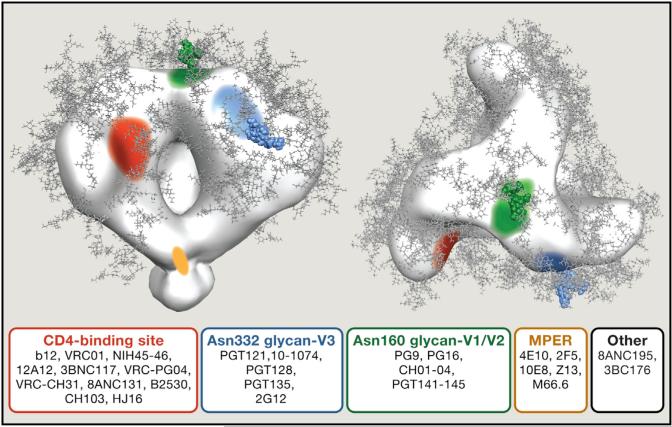
Figure 1. Epitopes of Broadly Neutralizing Antibodies on HIV-1 Env
Electron microscopy structure of Env trimer (Liu et al., 2008) with approximate locations of epitopes highlighted on surface representation (each epitope is shown once per trimer): CD4-binding site Ab epitope (red), V3 loop/Asn332 Ab epitope (glycan attached to Asn332 as space filling model) (blue), V1/V2 loop/Asn160 Ab epitope (glycan attached to Asn160 as space filling model) (green), MPER epitope (yellow). N-linked glycans are shown as gray sticks and were added to all potential N-linked glycosylation sites present in the coordinates for BG505 SOSIP Env (PDB 4NCO) using the GlyProt server.
Figure 2
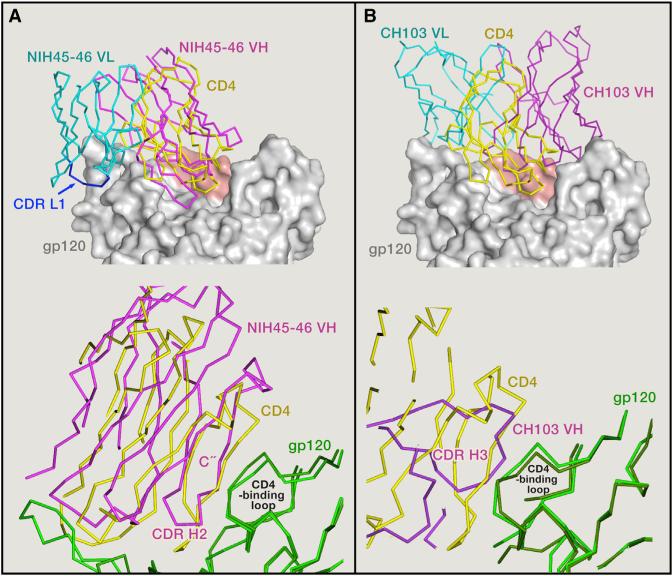
Figure 2. bNAb Recognition Modes for the CD4-Binding Site
(A) CD4-mimetic: NIH45-46 (magenta) (Diskin et al., 2011) versus CD4 (yellow). (B) CDR H3 loop-based: CH103 (purple) (Liao et al., 2013) versus CD4 (yellow). Structures of the complexes are shown as Cα traces aligned on gp120. The top views display gp120 in a surface representation with the CD4 binding-loop highlighted (salmon). The bottom views display closeup views showing the Cα trace of gp120 (green).
Figure 3
Figure 3. Multiple Approach Angles for Antibodies Targeting the N-Linked Glycan Attached to Asn332
Surface overlay of aligned complexes. Structures shown: gp140, gray (Liu et al., 2008); Asn332 glycan, yellow; PGT128, green (Pejchal et al., 2011); 2G12, magenta (Calarese et al., 2003); and PGT135, blue (Kong et al., 2013).
Figure 4
Figure 4. Antibody Structure Showing FWR and CDR Regions
(A) Side + top view of ribbon diagram with color-coded FWR and CDR regions. (B) Side + top view of surface diagram with color-coded FWR and CDR regions. HC, dark blue, LC, light blue; CDRHs, magenta; CDRLs, teal. (C) Map of the FWR and CDR regions of the heavy and light variable domains.
Figure 5
Figure 5. Arms Race between Antibodies and HIV
(A) Interplay between evolving antibody response and Env trimer. Antibodies acquire a growing number of somatic mutations, shown as colored bars in the antigen binding region of the antibody. The mutations arise in germinal centers and are responsible for increasing breadth and potency. Rapid escape by mutation in Env is shown as a color change in the trimer. (B) Successive emergence of broadly neutralizing antibodies (Wibmer et al., 2013). Following an initial strain-specific antibody response, a V2-specific bNAb emerges (red wave). Escape from the initial bNAb produces a mutant virus that elicits a CD4-binding site bNAb (blue wave). This response is followed by a third wave against an unknown epitope, shown as a green wave.

References

    1. Alam SM, Morelli M, Dennison SM, Liao HX, Zhang R, Xia SM, Rits-Volloch S, Sun L, Harrison SC, Haynes BF, Chen B. Role of HIV membrane in neutralization by two broadly neutralizing antibodies. Proc. Natl. Acad. Sci. USA. 2009;106:20234–20239. - PMC - PubMed
    1. Alam SM, Liao HX, Dennison SM, Jaeger F, Parks R, Anasti K, Foulger A, Donathan M, Lucas J, Verkoczy L, et al. Differential reactivity of germ line allelic variants of a broadly neutralizing HIV-1 antibody to a gp41 fusion intermediate conformation. J. Virol. 2011;85:11725–11731. - PMC - PubMed
    1. Alam SM, Dennison SM, Aussedat B, Vohra Y, Park PK, Fernández-Tejada A, Stewart S, Jaeger FH, Anasti K, Blinn JH, et al. Recognition of synthetic glycopeptides by HIV-1 broadly neutralizing antibodies and their unmutated ancestors. Proc. Natl. Acad. Sci. USA. 2013;110:18214–18219. - PMC - PubMed
    1. Balazs AB, Chen J, Hong CM, Rao DS, Yang L, Baltimore D. Antibody-based protection against HIV infection by vectored immunoprophylaxis. Nature. 2012;481:81–84. - PMC - PubMed
    1. Bar KJ, Tsao CY, Iyer SS, Decker JM, Yang Y, Bonsignori M, Chen X, Hwang KK, Montefiori DC, Liao HX, et al. Early low-titer neutralizing antibodies impede HIV-1 replication and select for virus escape. PLoS Pathog. 2012;8:e1002721. - PMC - PubMed

Publication types

MeSH terms

Substances