


Microneedle patches: usability and acceptability for self-vaccination against influenza
- PMID: 24530146
- PMCID: PMC3979961
- DOI: 10.1016/j.vaccine.2014.01.076
Microneedle patches: usability and acceptability for self-vaccination against influenza
Abstract
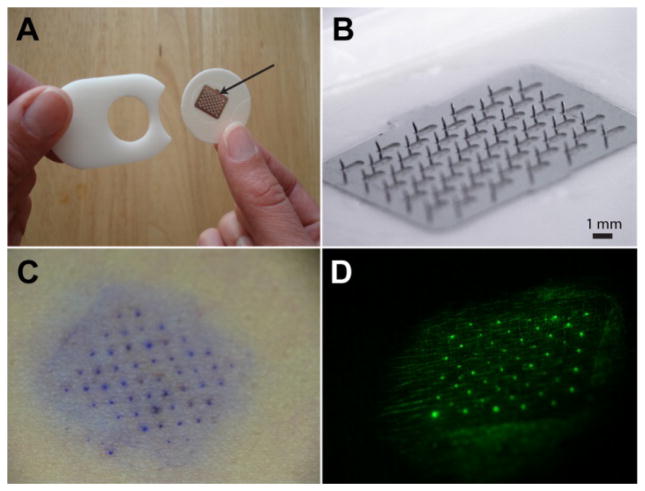
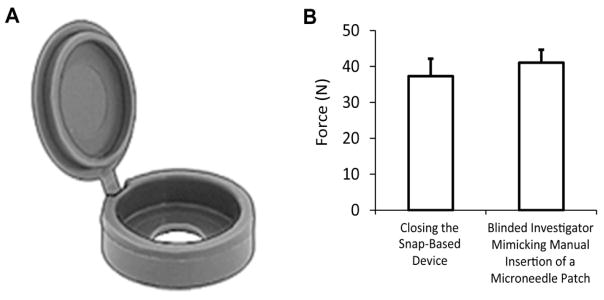
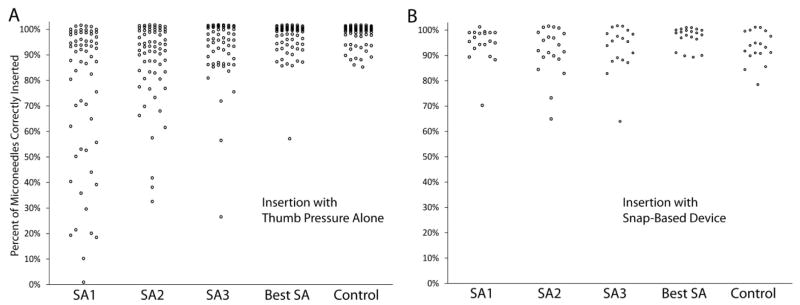
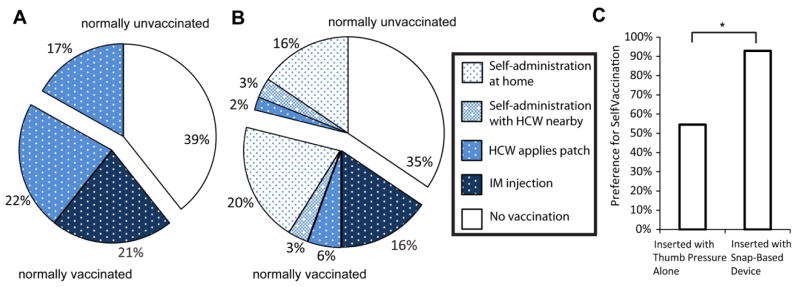
While therapeutic drugs are routinely self-administered by patients, there is little precedent for self-vaccination. Convenient self-vaccination may expand vaccination coverage and reduce administration costs. Microneedle patches are in development for many vaccines, but no reports exist on usability or acceptability. We hypothesized that naïve patients could apply patches and that self-administered patches would improve stated intent to receive an influenza vaccine. We conducted a randomized, repeated measures study with 91 venue-recruited adults. To simulate vaccination, subjects received placebo microneedle patches given three times by self-administration and once by the investigator, as well as an intramuscular injection of saline. Seventy participants inserted patches with thumb pressure alone and the remainder used snap-based devices that closed shut at a certain force. Usability was assessed by skin staining and acceptability was measured with an adaptive-choice analysis. The best usability was seen with the snap device, with users inserting a median value of 93-96% of microneedles over three repetitions. When a self-administered microneedle patch was offered, intent to vaccinate increased from 44% to 65% (CI: 55-74%). The majority of those intending vaccination would prefer to self-vaccinate: 64% (CI: 51-75%). There were no serious adverse events associated with use of microneedle patches. The findings from this initial study indicate that microneedle patches for self-vaccination against influenza are usable and may lead to improved vaccination coverage.
Keywords: Acceptability; Influenza; Microneedle, Human study; Usability.
Copyright © 2014 Elsevier Ltd. All rights reserved.
Conflict of interest statement
This potential conflict of interest has been disclosed and is managed by Georgia Tech and Emory University.
Figures
References
-
- World Health Organization. [Accessed Dec 1, 2013];Seasonal Influenza Fact Sheet. 2009 http://www.who.int/mediacentre/factsheets/fs211/en/
-
- McIntyre AF, Gonzalez-Feliciano AG, Santibanez TA, Bryan LN, Greby SM, Biggers BB, et al. [Accessed Dec 1, 2013];Flu Vaccination Coverage, United States, 2011–12 Influenza Season. 2012 http://www.cdc.gov/flu/fluvaxview/coverage_1112estimates.htm.
-
- O’Flanagan D, Cotter S, Mereckiene J. [Accessed Dec 1, 2013];Seasonal influenza vaccination in EU/EEA, influenza season 2011–12. 2013 http://venice.cineca.org/VENICE_Seasonal_Influenza_2011-12_1.0v.pdf.
-
- Taddio A, Ipp M, Thivakaran S, Jamal A, Parikh C, Smart S, et al. Survey of the prevalence of immunization non-compliance due to needle fears in children and adults. Vaccine. 2012;30:4807–12. - PubMed
-
- Harris KM, Maurer J, Uscher-Pines L, Kellerman AL, Lurie N. Seasonal Flu Vaccination: Why Don’t More Americans Get It? [Accessed Dec 1, 2013];RAND Corp Res Briefs. 2011 http://www.rand.org/content/dam/rand/pubs/research_briefs/2011/RAND_RB95....
Publication types
MeSH terms
Substances
Grants and funding
LinkOut - more resources
Full Text Sources
Other Literature Sources
Medical
