


Maternal short-chain fatty acids are associated with metabolic parameters in mothers and newborns
- PMID: 24530607
- PMCID: PMC4156825
- DOI: 10.1016/j.trsl.2014.01.012
Maternal short-chain fatty acids are associated with metabolic parameters in mothers and newborns
Abstract
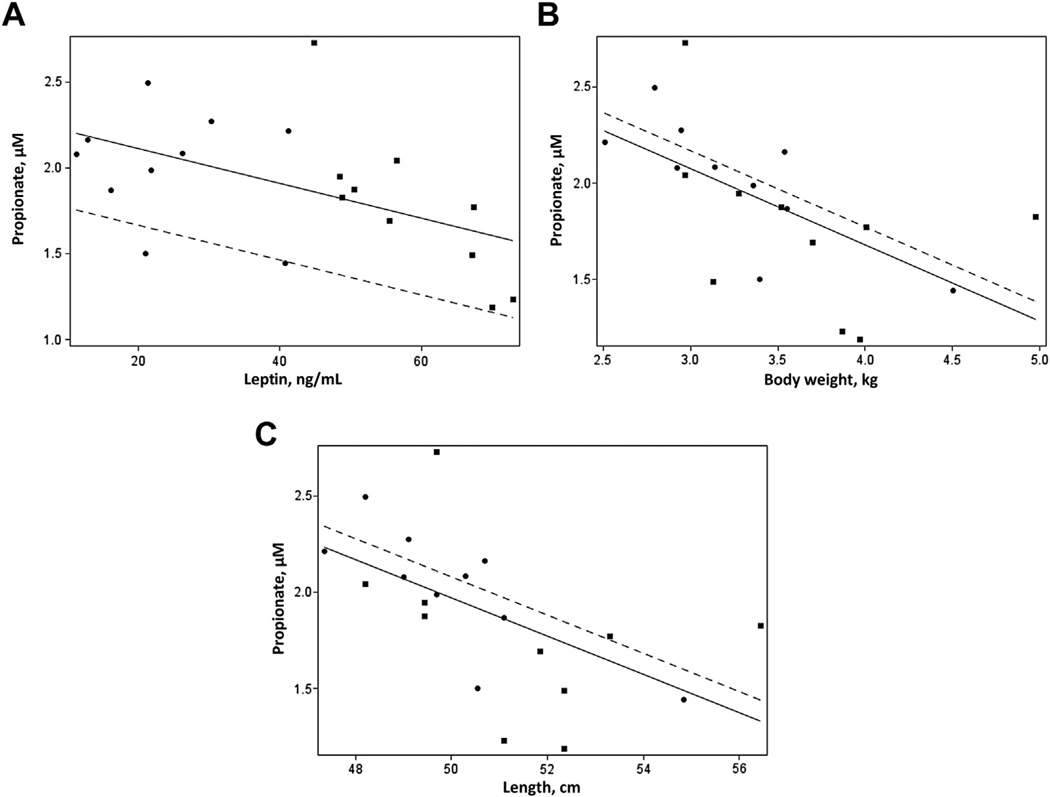
During the course of pregnancy, dynamic remodeling of the gut microbiota occurs and contributes to maternal metabolic changes through an undefined mechanism. Because short chain fatty acids (SCFAs) are a major product of gut microbiome fermentation, we investigated whether serum SCFA levels during pregnancy are related to key metabolic parameters in mothers and newborns. In this prospective study, 20 pregnant women without gestational diabetes were evaluated at 36-38 weeks of gestation, and their newborns were assessed after parturition. In this cohort, which included normal (n = 10) and obese (n = 10) subjects based on prepregnancy body mass index, serum levels of SCFAs (acetate, propionate, and butyrate), maternal adipokines, maternal glucose, and C-peptide were measured at 36-38 weeks of gestation. Maternal weight gain and newborn anthropometrics were also determined. Data were analyzed using linear regression to test for associations, adjusting for prepregnancy obesity. In this cohort, serum acetate levels were associated with maternal weight gain and maternal adiponectin levels. In addition, serum propionate correlated negatively with maternal leptin levels, newborn length, and body weight. Taken together, this study observed that novel relationships exist among maternal SCFA levels and multiple interrelated maternal/newborn metabolic parameters.
Published by Mosby, Inc.
Conflict of interest statement
Conflicts of Interest: The authors have read the journal’s policy on disclosure of potential conflicts of interest and have none to declare.
Figures
References
-
- Ramos MP, Crespo-Solans MD, del Campo S, Cacho J, Herrera E. Fat accumulation in the rat during early pregnancy is modulated by enhanced insulin responsiveness. Am J Physiol. 2003;285:E318–E328. - PubMed
-
- Zavalza-Gomez AB, Anaya-Prado R, Rincon-Sanchez AR, Mora-Martinez JM. Adipokines and insulin resistance during pregnancy. Diabetes Res Clin Pract. 2008;80:8–15. - PubMed
-
- Ong KK. Size at birth, postnatal growth and risk of obesity. Horm Res. 2006;65:65–69. - PubMed
Publication types
MeSH terms
Substances
Grants and funding
LinkOut - more resources
Full Text Sources
Other Literature Sources
Medical
