Obstructive sleep apnea and fatigue in patients with multiple sclerosis
- PMID: 24532998
- PMCID: PMC3899317
- DOI: 10.5664/jcsm.3442
Obstructive sleep apnea and fatigue in patients with multiple sclerosis
Abstract
Study objectives: The prevalence of obstructive sleep apnea (OSA) in persons with multiple sclerosis (MS) remains unknown, and little information exists regarding the relative contributions of OSA to symptoms of MS-related fatigue in the presence of other clinical and sleep-related confounders. The objectives of this study were to investigate the prevalence of diagnosed OSA and OSA risk among MS patients, and to assess relationships between fatigue severity, OSA, OSA risk, and sleep quality among persons with MS.
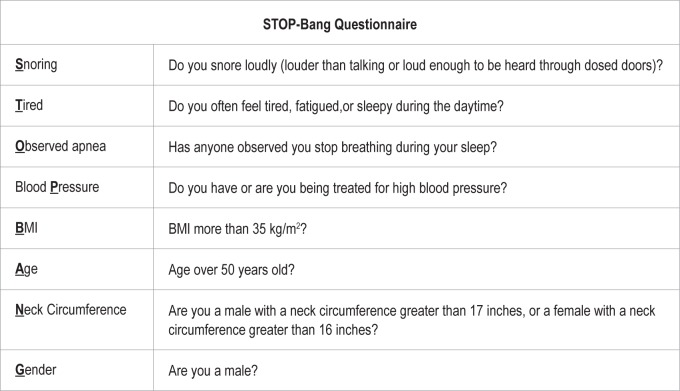
Methods: N = 195 MS patients completed a questionnaire comprised of items regarding OSA diagnosis, sleep quality and quantity, daytime symptoms, and 4 validated scales: the Epworth Sleepiness Scale, Fatigue Severity Scale, Insomnia Severity Index, and STOP-Bang questionnaire. Medical records were also accessed to examine clinical characteristics that may predict fatigue or OSA risk.
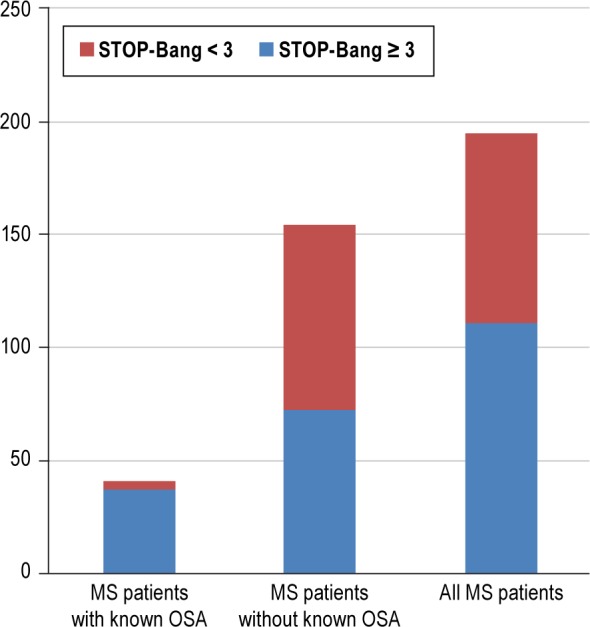
Results: N = 41 patients (21%) carried a formal diagnosis of OSA. N = 110 (56%) of all patients, and 38 (93%) of those with diagnosed OSA had STOP-Bang scores ≥ 3, indicating an elevated OSA risk. In regression models, the most significant predictors of higher FSS scores were higher STOP-Bang scores (p = 0.01), higher number of nocturnal symptoms (p < 0.0001), and higher disability level (p < 0.0001).
Conclusions: Sleep disturbances, and OSA in particular, may be highly prevalent yet underrecognized contributors to fatigue in persons with MS.
Keywords: STOP-Bang; fatigue; multiple sclerosis; obstructive sleep apnea; sleep disturbance.
Figures
Comment in
-
Association between OSA and severe fatigue in patients with multiple sclerosis (MS).J Clin Sleep Med. 2014 Jun 15;10(6):707. doi: 10.5664/jcsm.3818. J Clin Sleep Med. 2014. PMID: 24932158 Free PMC article. No abstract available.
-
Obstructive sleep apnea is an under-recognized and consequential morbidity in multiple sclerosis.J Clin Sleep Med. 2014 Jun 15;10(6):709-10. doi: 10.5664/jcsm.3820. J Clin Sleep Med. 2014. PMID: 24932159 Free PMC article. No abstract available.
References
-
- Krupp L. Fatigue is intrinsic to multiple sclerosis (MS) and is the most commonly reported symptom of the disease. Mult Scler. 2006;12:367–8. - PubMed
-
- Lerdal A, Celius EG, Krupp L, Dahl AA. A prospective study of patterns of fatigue in multiple sclerosis. Eur J Neurol. 2007;14:1338–43. - PubMed
-
- Janardhan V, Bakshi R. Quality of life in patients with multiple sclerosis: the impact of fatigue and depression. J Neurol Sci. 2002;205:51–8. - PubMed
-
- Krupp LB, Alvarez LA, LaRocca NG, Scheinberg LC. Fatigue in multiple sclerosis. Arch Neurol. 1988;45:435–7. - PubMed
-
- Smith MM, Arnett PA. Factors related to employment status changes in individuals with multiple sclerosis. Mult Scler. 2005;11:602–9. - PubMed
Publication types
MeSH terms
LinkOut - more resources
Full Text Sources
Other Literature Sources
Medical