


First branchial cleft anomaly: clinical insight into its relevance in otolaryngology with pediatric considerations
- PMID: 24533397
- PMCID: PMC3918325
- DOI: 10.1007/s12070-012-0482-0
First branchial cleft anomaly: clinical insight into its relevance in otolaryngology with pediatric considerations
Abstract
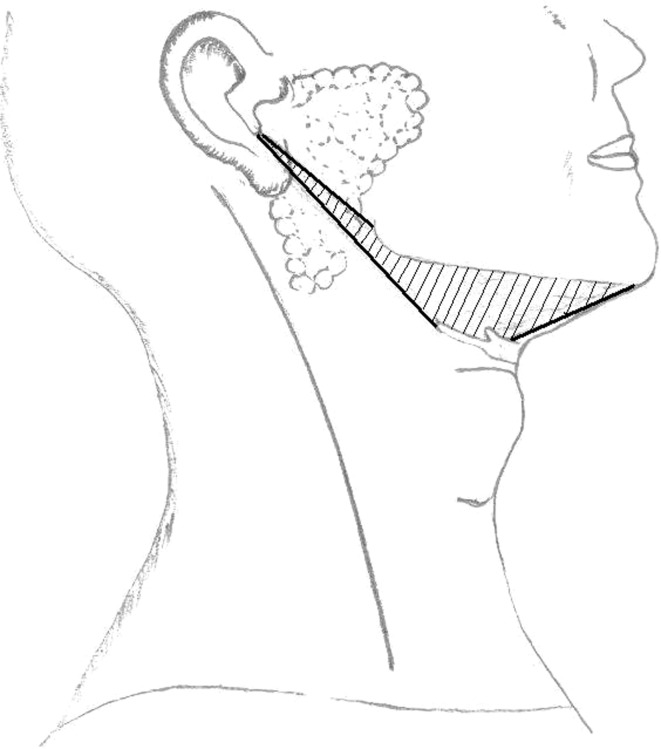
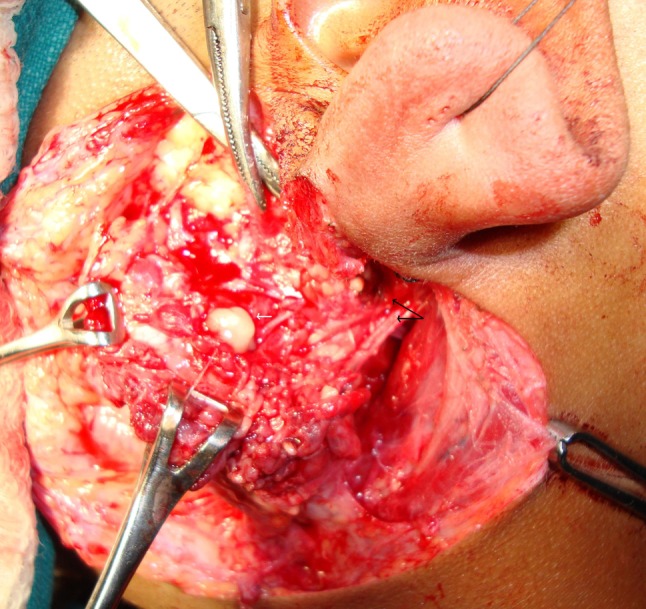
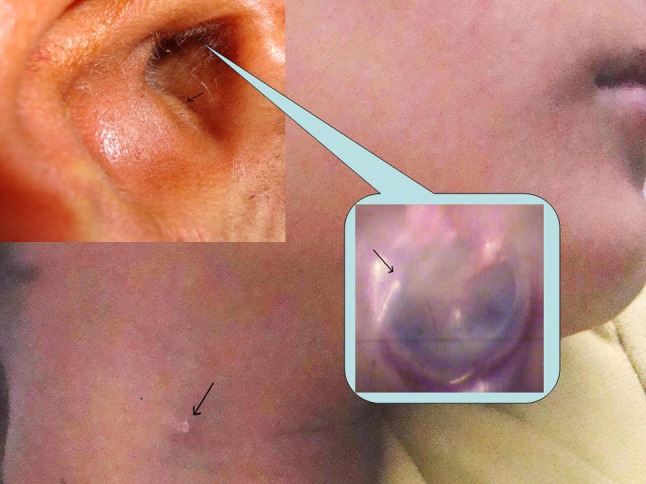
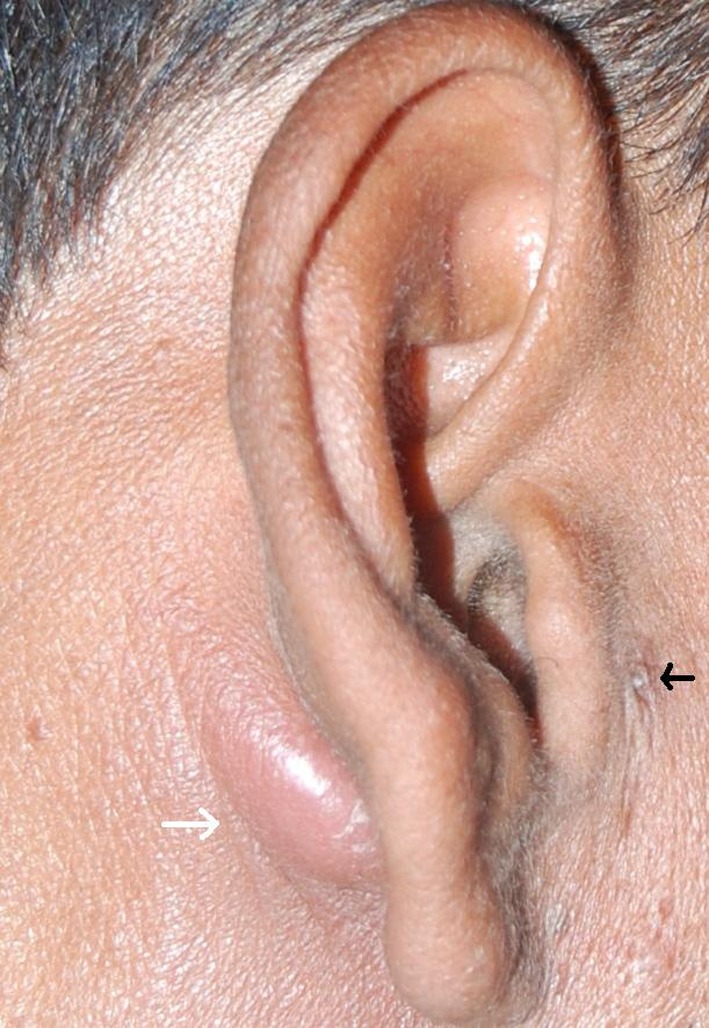
First branchial cleft anomalies (FBCA) represent a small subset of congenital malformations in neck. Prime objective of this study is to share our experience with FBCA, emphasize its relevance in otolaryngology and deal with its pediatric perspective. Embryology, pathologic anatomy and varied spectra of clinical presentations of FBCA are discussed. Along with this we have illustrated three different cases; all of them were of pediatric age group and were misdiagnosed by their treating specialists elsewhere. In this article we have also laid special emphasis on its pediatric considerations. FBCA are mostly misdiagnosed due to their unfamiliar clinical signs and symptoms. Swellings may masquerade as other neck masses. Majority of patients give a history of previous incision and drainage. While dealing with pediatric patients the important factors to be kept in mind are the age of child, superficial course of facial nerve, any associated agenesis of parotid gland. Alteration in surgical technique may be required in children. A thorough medical examination with high index of clinical suspicion should be kept in mind while dealing with such anomalies. Owing to their complex presentation and close relation with facial nerve they are challenging lesions for surgeons.
Keywords: Anomaly; Branchial cleft; Multifaceted presentations; Pediatric considerations.
Figures
References
-
- Chandler JR, Mitchell B. Branchial cleft cysts, sinuses and fistulas. Otolaryngol Clin North Am. 1981;14:175–186. - PubMed
LinkOut - more resources
Full Text Sources