. 2014 Apr 15;729(100):75-85.
doi: 10.1016/j.ejphar.2014.02.007. Epub 2014 Feb 15.

Internalization of the chemokine receptor CCR4 can be evoked by orthosteric and allosteric receptor antagonists

Affiliations

Internalization of the chemokine receptor CCR4 can be evoked by orthosteric and allosteric receptor antagonists

Laura Ajram et al. Eur J Pharmacol. .

Abstract

The chemokine receptor CCR4 has at least two natural agonist ligands, MDC (CCL22) and TARC (CCL17) which bind to the same orthosteric site with a similar affinity. Both ligands are known to evoke chemotaxis of CCR4-bearing T cells and also elicit CCR4 receptor internalization. A series of small molecule allosteric antagonists have been described which displace the agonist ligand, and inhibit chemotaxis. The aim of this study was to determine which cellular coupling pathways are involved in internalization, and if antagonists binding to the CCR4 receptor could themselves evoke receptor internalization. CCL22 binding coupled CCR4 efficiently to β-arrestin and stimulated GTPγS binding however CCL17 did not couple to β-arrestin and only partially stimulated GTPγS binding. CCL22 potently induced internalization of almost all cell surface CCR4, while CCL17 showed only weak effects. We describe four small molecule antagonists that were demonstrated to bind to two distinct allosteric sites on the CCR4 receptor, and while both classes inhibited agonist ligand binding and chemotaxis, one of the allosteric sites also evoked receptor internalization. Furthermore, we also characterize an N-terminally truncated version of CCL22 which acts as a competitive antagonist at the orthosteric site, and surprisingly also evokes receptor internalization without demonstrating any agonist activity. Collectively this study demonstrates that orthosteric and allosteric antagonists of the CCR4 receptor are capable of evoking receptor internalization, providing a novel strategy for drug discovery against this class of target.

Keywords: CCL17; CCL22; CCR4; Chemokine; MDC; TARC.


Figures

Fig. 1
Fig. 1
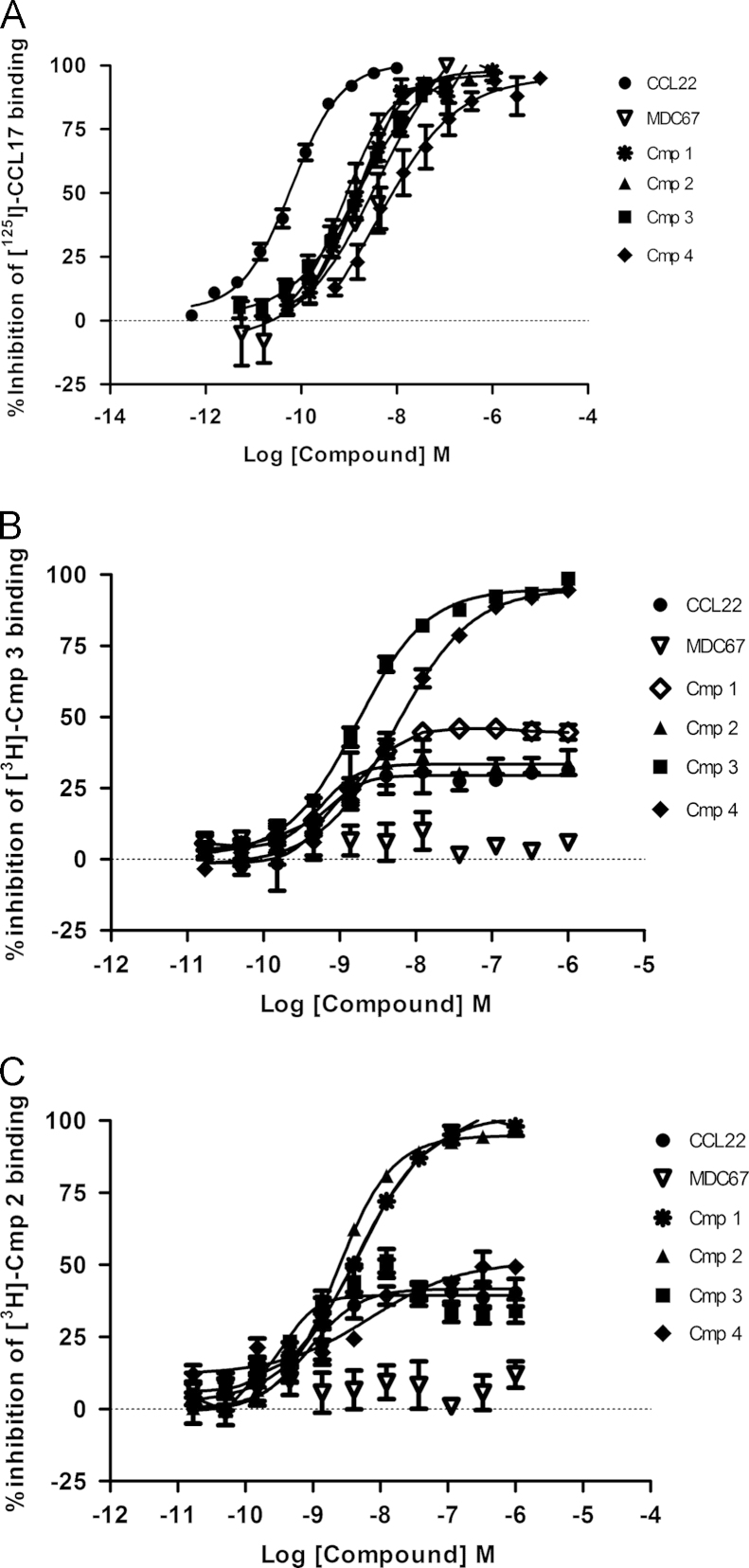
Radiolabel binding studies reveal three distinct binding sites on the CCR4 receptor. CHO-CCR4 membranes were incubated with radiolabelled CCR4-ligand prior addition of displacing CCR4-ligands. CCL22 (MDC), MDC67 Compound 1, Compound 2, Compound 3 and Compound 4 all completely displaced radiolabelled CCL17 (TARC) (panel A). Compound 3 and Compound 4 completely displaced radiolabelled Compound 3, whereas Compound 1, Compound 2 and CCL22 (MDC) only partially displaced, and MDC67 had no effect (panel B). Radiolabelled Compound 2 was displaced completely by Compound 1 and Compound 2, but only partially displaced by Compound 3, Compound 4 and CCL22 (MDC) and not displaced by MDC67 (panel C). Data shown are the mean±S.E.M of at least three separate determinations.
Fig. 2
Fig. 2
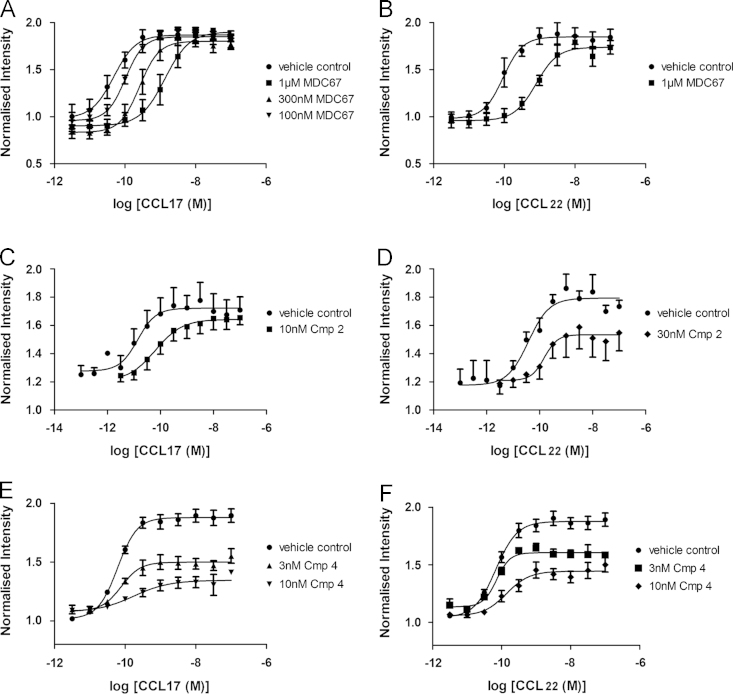
Activation of CCR4 receptors evokes actin polymerization, which is inhibited by antagonists of the CCR4 receptor. Human CD4+CCR4+ T cells were challenged with CCL22 (MDC) or CCL17 (TARC) for 15 s and increases in the F-actin content were determined as described. Increasing concentrations of MDC67 evoked parallel rightward shifts in the concentration–response to CCL17 (panel A), and CCL22 (panel B). Compound 2 evoked a rightward shift concentration–response to CCL17 (panel C), and CCL22 (panel D) accompanied with a reduction in the maximal response. Compound 4 also evoked rightward shifts in the concentration–response to CCL17 (panel E), and CCL22 (panel F) accompanied with a reduction in the maximal response.
Fig. 3
Fig. 3
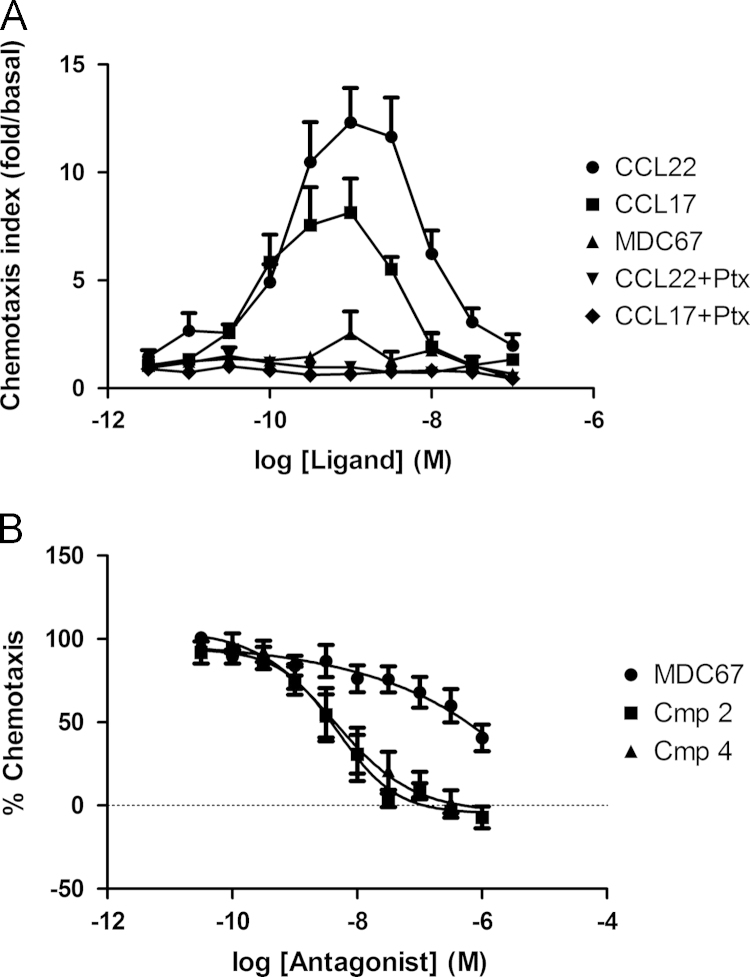
Activation of CCR4 induces chemotaxis of HUT78 cells. HUT78 cells were challenged with CCL22 (MDC) or CCL17 (TARC) in a transwell chemotaxis chamber system. CCL22 and CCL17 both evoked a concentration-dependent chemotaxis of HUT78 cells, which was completely inhibited by pretreatment with Pertussis toxin (Ptx), whereas MDC67 displays no agonist activity (panel A). Compound 2 and Compound 4 completely inhibit HUT78 cell chemotaxis to 1 nM CCL22, whereas MDC67 evokes partial inhibition of chemotaxis over the concentration range used (panel B). Data shown are the mean±S.E.M.
Fig. 4
Fig. 4
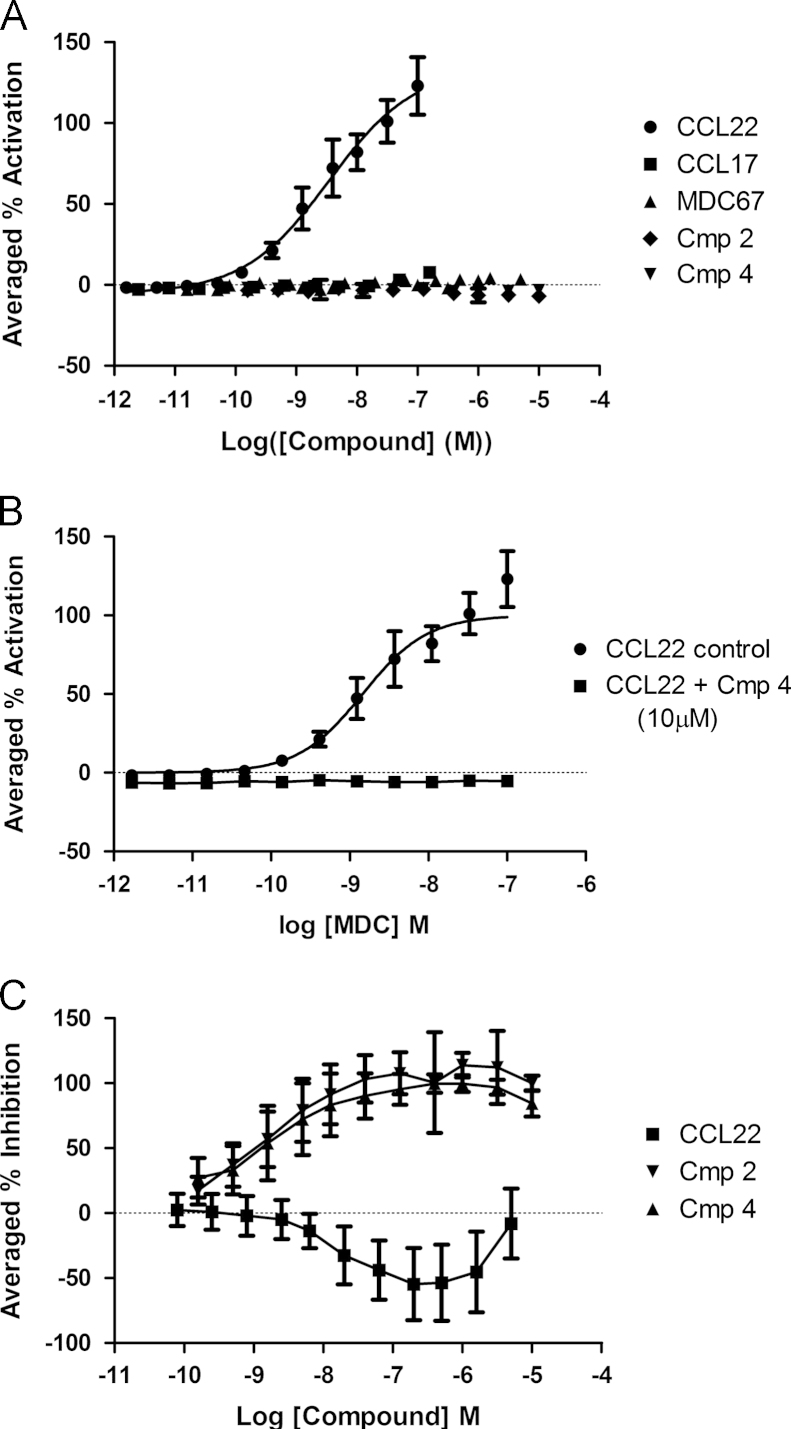
CCR4 ligands couple differentially to β-arrestin. β-arrestin coupling was assessed using an enzyme complementation assay. CCL22 induced a concentration–response coupling of CCR4 to β-arrestin, whereas none of the other tested ligands showed any activity (panel A). Compound 4 (10 µM) fully antagonized the CCL22-induced coupling of CCR4 to β-arrestin (panel B). Similarly, concentration–responses of Compound 4 and Compound 2 fully inhibited CCL22 (7.2 nM) induced CCR4 coupling to β-arrestin, whereas MDC67 showed some stimulation of coupling (panel C).
Fig. 5
Fig. 5
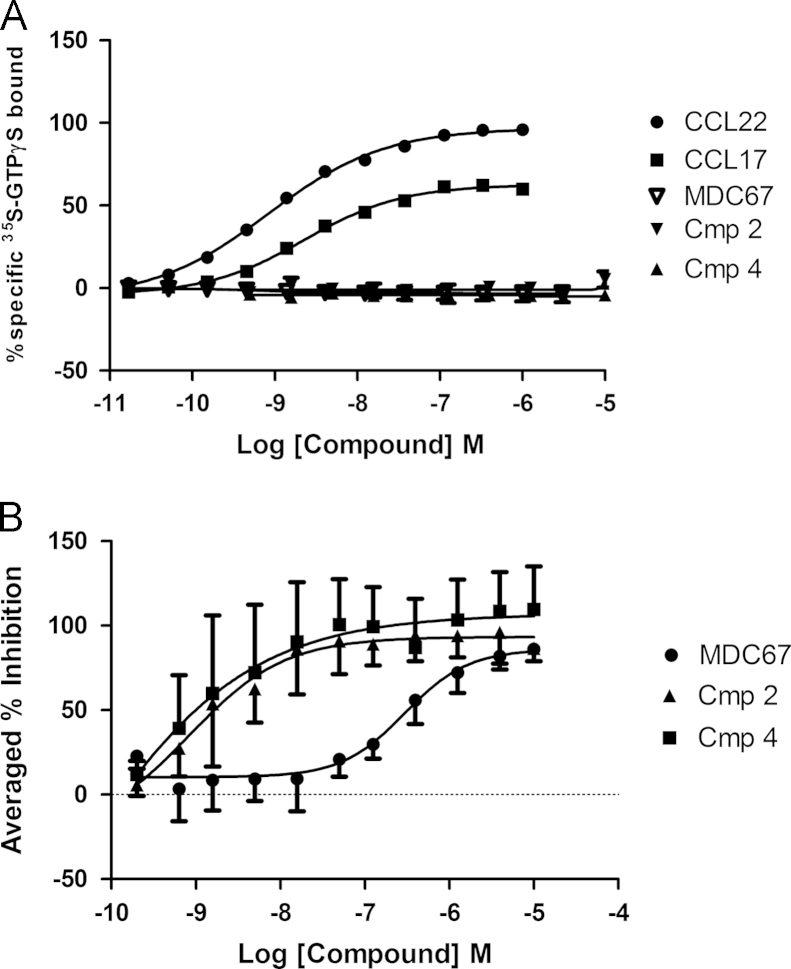
CCR4 ligands couple differently to heterotrimeric G-protein. Membranes were prepared from CHO-CCR4 cells and 35S-GTPγS binding determined. CCL22 displays full agonist behavior whereas CCL17 is a partial agonist, and Compound 2, Compound 4 and MDC67 are completely inactive (panel A). MDC67, Compound 2 and Compound 4 all fully inhibit CCL22-evoked 35S-GTPγS binding (panel B). Data shown are the mean±S.E.M.
Fig. 6
Fig. 6
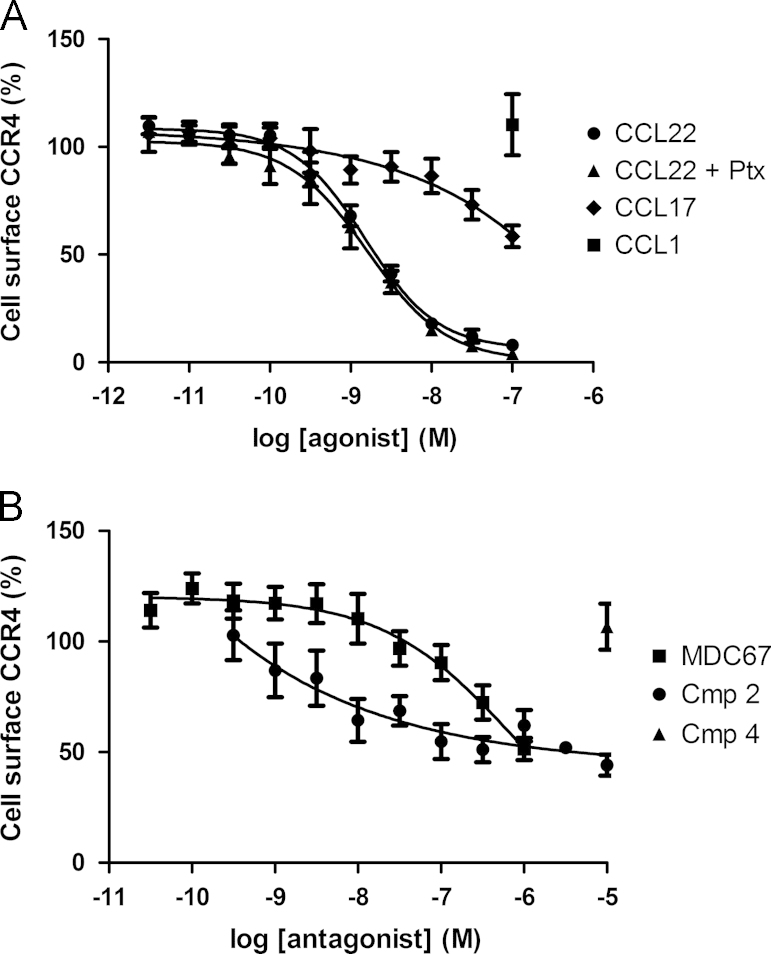
Agonist and antagonist evoked internalization of cell surface CCR4. Cell surface levels of CCR4 were determined in HUT78 cells using a PE-conjugated anti-CCR4 antibody. CCL22 evokes concentration-dependent internalization of HUT78 cell surface CCR4 receptors, which is unaffected by pretreatment with Pertussis toxin (panel A). CCL17 concentration-dependently evoked partial internalization of cell surface receptors, whereas the CCR8 agonist CCL1 (100 nM) had no effect (panel A). The antagonists MDC67 and Compound 2 also evoked partial internalization of cell surface receptors, whereas Compound 4 had no effect (panel B). Data shown are the mean±S.E.M.
Fig. 7
Fig. 7
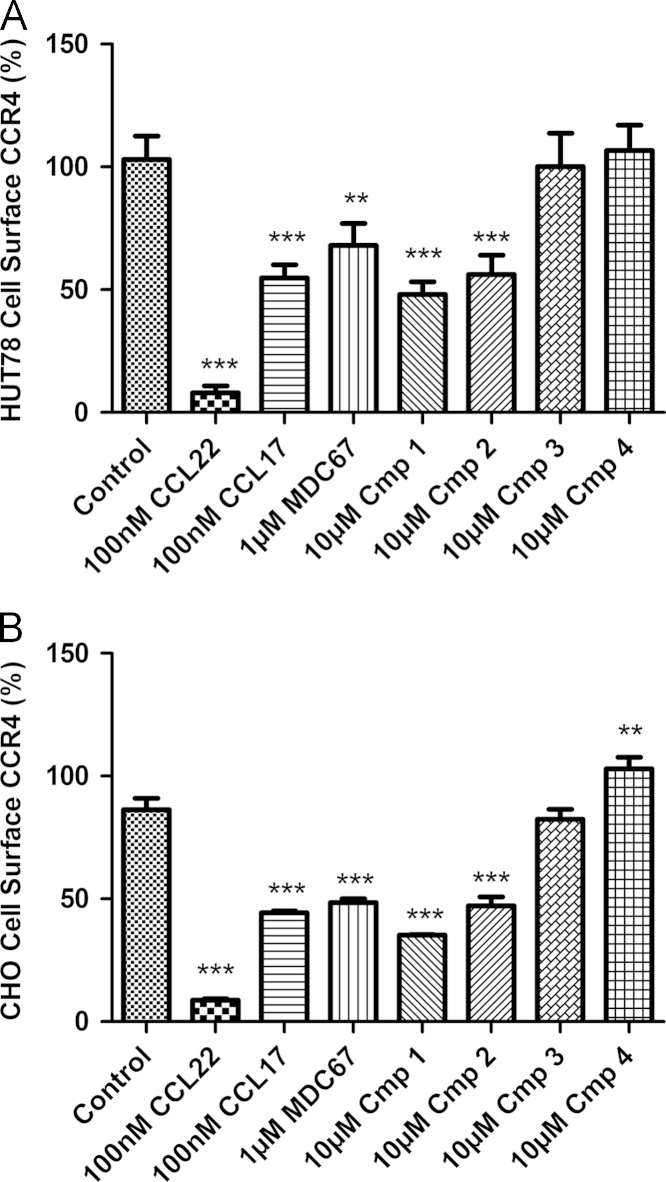
The ability of CCR4 ligands to evoke internalization of cell surface CCR4 is dependent on their site of binding. Cell surface levels of CCR4 were determined in HUT78 cells (panel A) and CHO-CCR4 cells (panel B) using a PE-conjugated anti-CCR4 antibody. Cells were incubated for 30 min with CCR4 agonists CCL22 and CCL17, and the antagonists MDC67, Compound 1, Compound 2, Compound 3 and Compound 4, before having cell surface CCR4 levels assessed. One-way ANOVA with post-hoc Dunnett׳s Multiple Comparison Test was used to compare data sets to control; denotes P<0.05, ⁎⁎ denotes P<0.01, and ⁎⁎⁎ denotes P<0.001. Data shown are the mean±S.E.M.
Fig. 8
Fig. 8
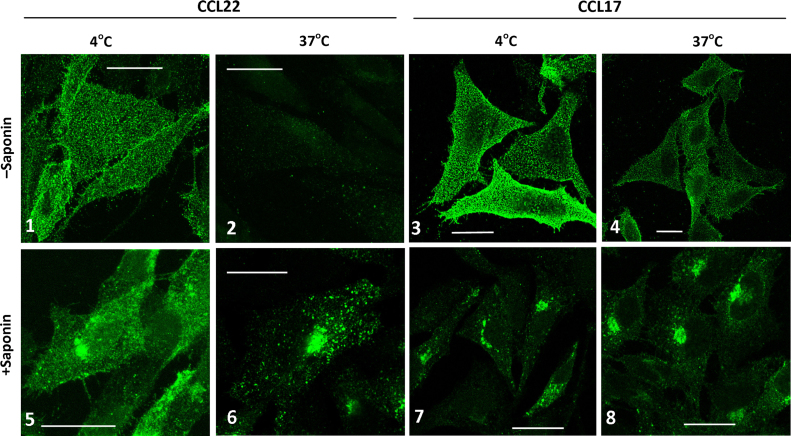
Localization of CCR4 in CHO-CCR4 cells following agonist addition. CHO-CCR4 cells were treated with 100 nM CCL22 (panels 1, 2, 5, and 6) or 100 nM CCL17 (panels 3, 4, 7, and 8) for 30 min at either 4 °C (panels 1, 3, 5, and 7) or 37 °C (panels 2, 4, 6, and 8). Following fixation, cells were left unpermeabilised (panels 1–4) or permeabilised with 0.2% saponin (panels 5–8). CCR4 was stained with anti-CCR4 followed by Alexa488-rabbit anti-mouse antibody, imaged by confocal microscopy and single 0.37 µm optical sections are shown. Scale bar=20 µm.
Fig. 9
Fig. 9
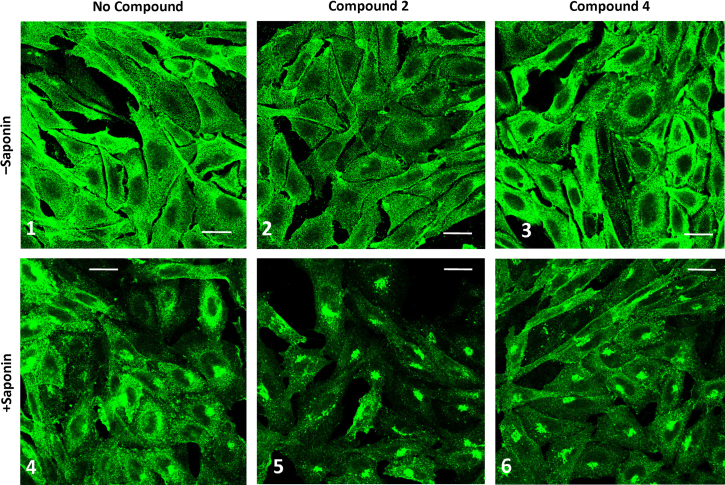
Localization of CCR4 in CHO-CCR4 cells following antagonist addition. CHO-CCR4 cells were incubated with no addition (panels 1 and 4) or with Compound 2 (panels 2 and 5) or Compound 4 (panels 3 and 6) for 30 min at 37 °C followed by fixation (panels 1–3) or fixation and permeabilisation with 0.2% Saponin (panels 4–6). CCR4 was stained with anti-CCR4 followed by Alexa488-rabbit anti-mouse antibody, imaged by confocal microscopy and single 0.37 µm optical sections are shown. Scale bar=20 µm.
Fig. 10
Fig. 10
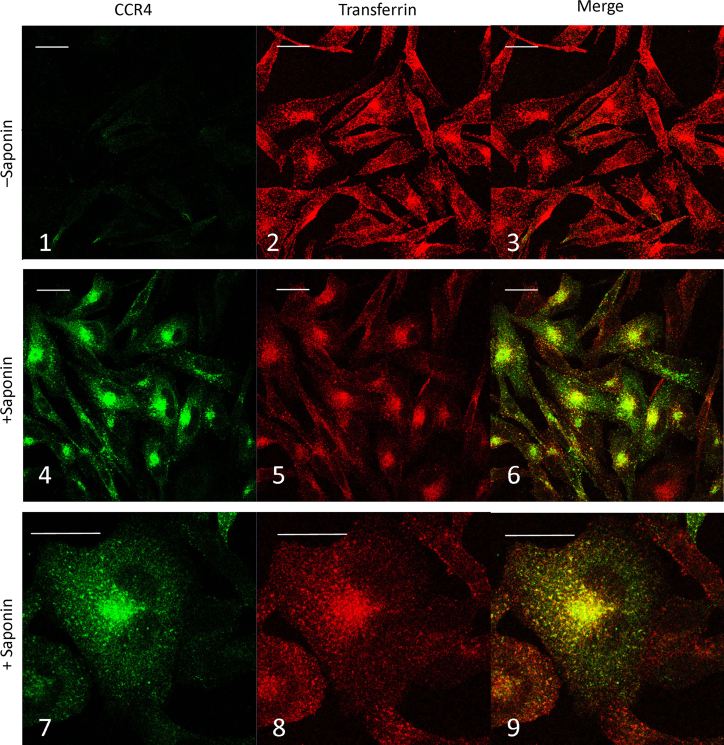
Localization of CCR4 and endocytosed transferrin. CHO-CCR4 cells were incubated with 100 nM CCL22 and Alexa-546 conjugated Transferrin for 30 min at 4 °C prior to washing and warming to 37 °C for 30 min. Following fixation and permeabilisation, CCR4 was stained with anti-CCR4 followed by Alexa488-rabbit anti-mouse antibody, imaged by confocal microscopy and single 0.37 µm optical sections are shown. Scale bar=20 µm.

References

    1. Andrews G., Jones C., Wreggett K.A. An intracellular allosteric site for a specific class of antagonists of the CC chemokine G protein-coupled receptors CCR4 and CCR5. Mol. Pharmacol. 2008;73:855–867. - PubMed
    1. Bonecchi R., Bianchi G., Bordignon P.P., D׳Ambrosio D., Lang R., Borsatti A., Sozzani S., Allavena P., Gray P.A., Mantovani A., Sinigaglia F. Differential expression of chemokine receptors and chemotactic responsiveness of type 1 T helper cells (Th1s) and Th2s. J. Exp. Med. 1998;187:129–134. - PMC - PubMed
    1. Cahn A., Hodgson S., Wilson R., Robertson. J., Watson J., Beerahee M., Hughes S.C., Young G., Graves R., Hall D., van Marle S., Solari R. Safety, tolerability, pharmacokinetics and pharmacodynamics of GSK2239633, a CC-chemokine receptor 4 antagonist, in healthy male subjects: results from an open-label and from a randomised study. BMC Pharmacol. Toxicol. 2013;14:14. - PMC - PubMed
    1. Campbell J.J., Haraldsen G., Pan J., Rottman J., Qin S., Ponath P., Andrew D.P., Warnke R., Ruffing N., Kassam N., Wu L., Butcher. E.C. The chemokine receptor CCR4 in vascular recognition by cutaneous but not intestinal memory T cells. Nature. 1999;400:776–780. - PubMed
    1. Cheng Y., Prusoff W.H. Relationship between the inhibition constant (K1) and the concentration of inhibitor which causes 50 per cent inhibition (I50) of an enzymatic reaction. Biochem. Pharmacol. 1973;22:3099–3108. - PubMed

Publication types