


Biodegradable nanofibrous drug delivery systems: effects of metronidazole and ciprofloxacin on periodontopathogens and commensal oral bacteria
- PMID: 24535074
- PMCID: PMC4136969
- DOI: 10.1007/s00784-014-1201-x
Biodegradable nanofibrous drug delivery systems: effects of metronidazole and ciprofloxacin on periodontopathogens and commensal oral bacteria
Abstract
Objectives: The purposes of this study were to fabricate biodegradable polydioxanone (PDS II®) electrospun periodontal drug delivery systems (hereafter referred to as matrices) containing either metronidazole (MET) or ciprofloxacin (CIP) and to investigate the effects of antibiotic incorporation on both periodontopathogens and commensal oral bacteria.
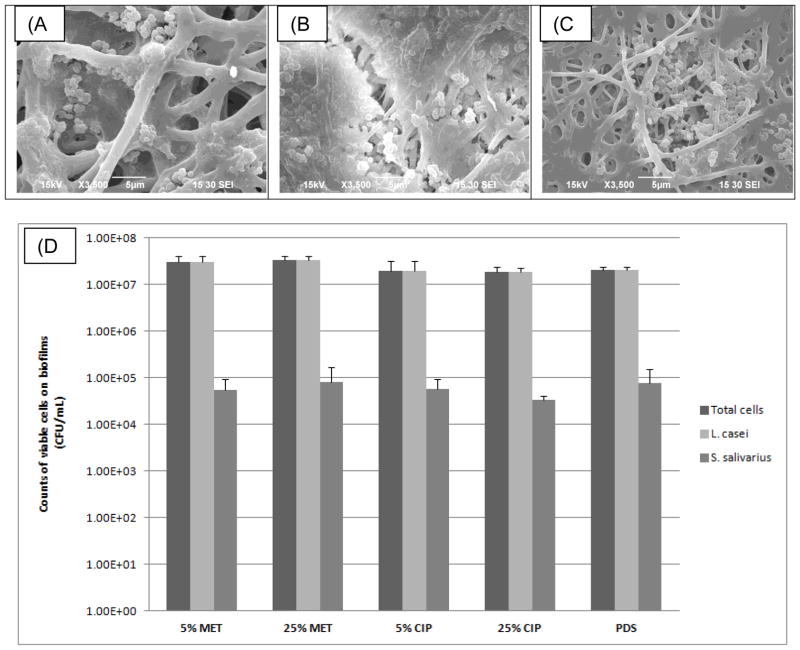
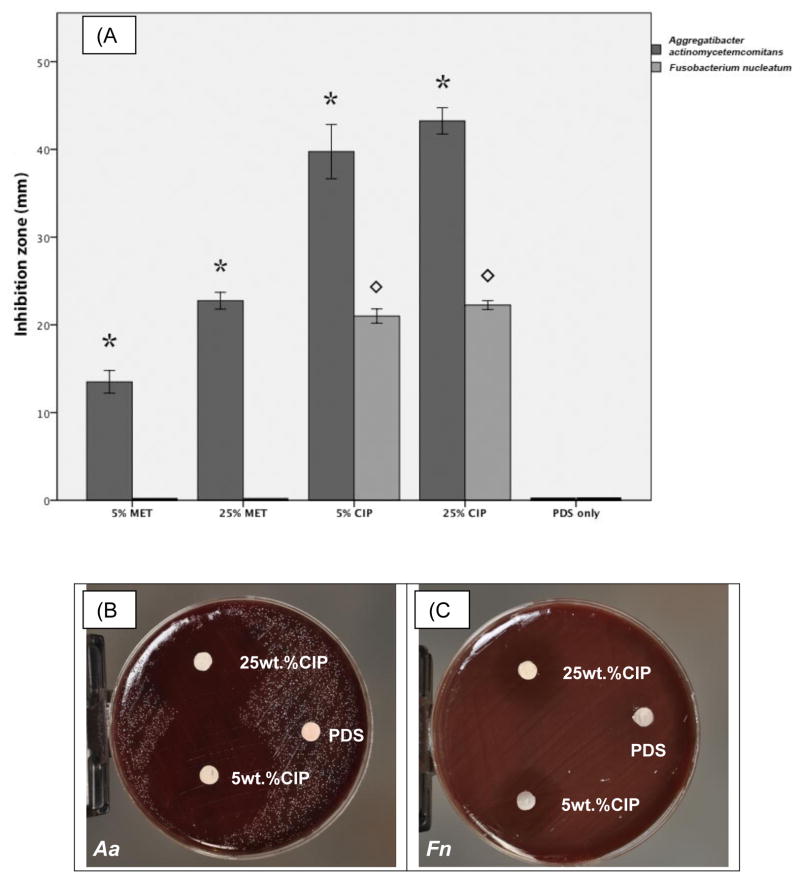
Materials and methods: Fibrous matrices were processed from PDS polymer solution by electrospinning. Antibiotic-containing PDS solutions were prepared to obtain four distinct groups: 5 wt.% MET, 25 wt.% MET, 5 wt.% CIP, and 25 wt.% CIP. Pure PDS was used as a control. High-performance liquid chromatography (HPLC) was done to evaluate MET and CIP release. Dual-species biofilms formed by Lactobacillus casei (Lc) and Streptococcus salivarius (Ss) were grown on the surface of all electrospun matrices. After 4 days of biofilm growth, the viability of bacteria on biofilms was assessed. Additionally, antimicrobial properties were evaluated against periodontopathogens Fusobacterium nucleatum (Fn) and Aggregatibacter actinomycetemcomitans (Aa) using agar diffusion assay.
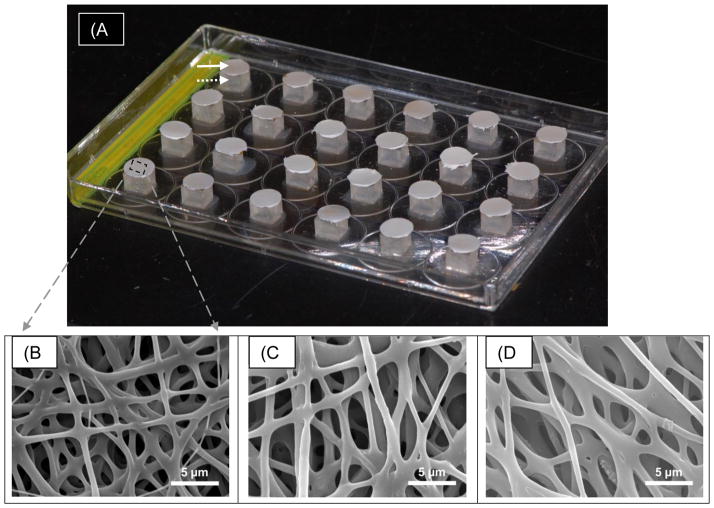
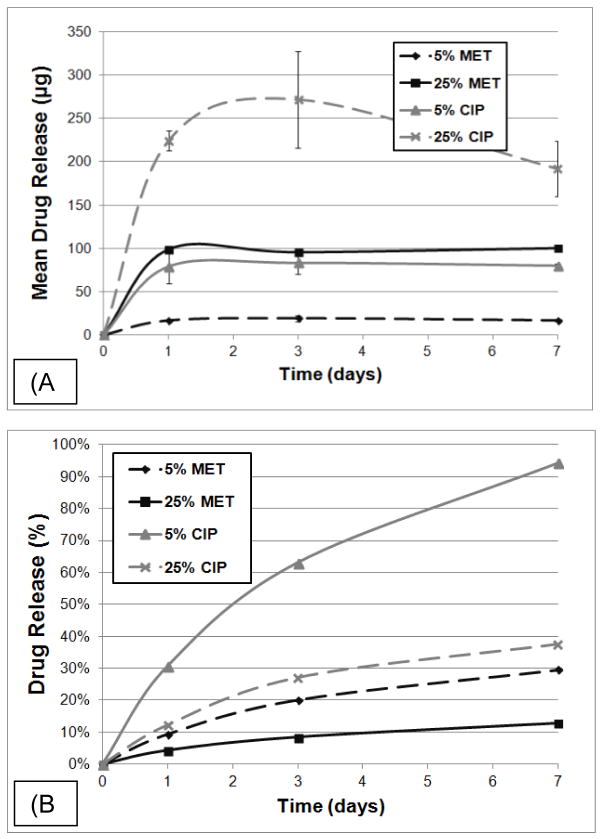
Results: A three-dimensional interconnected porous network was observed in the different fabricated matrices. Pure PDS showed the highest fiber diameter mean (1,158 ± 402 nm) followed in a descending order by groups 5 wt.% MET (1,108 ± 383 nm), 25 wt.% MET (944 ± 392 nm), 5 wt.% CIP (871 ± 309 nm), and 25 wt.% CIP (765 ± 288 nm). HPLC demonstrated that groups containing higher amounts (25 wt.%) of incorporated drugs released more over time, while those with lower levels (5 wt.%) the least. No inhibitory effect of the tested antibiotics was detected on biofilm formation by the tested commensal oral bacteria. Meanwhile, CIP-containing matrices inhibited growth of Fn and Aa.
Conclusion: CIP-containing matrices led to a significant inhibition of periodontopathogens without negatively impairing the growth of periodontal beneficial bacteria.
Clinical relevance: Based on the proven in vitro inhibition of periodontitis-related bacteria, future in vivo research using relevant animal models is needed to confirm the effectiveness of these drug delivery systems.
Conflict of interest statement
The authors declare that they have no conflict of interest.
Figures
References
-
- Walker CB, Karpinia K. Rationale for use of antibiotics in periodontics. J Periodontol. 2002;73:1188–1196. - PubMed
-
- Xajigeorgiou C, Sakellari D, Slini T, Baka A, Konstantinidis A. Clinical and microbiological effects of different antimicrobials on generalized aggressive periodontitis. J Clin Periodontol. 2006;33:254–264. - PubMed
-
- Serrano C, Torres N, Valdivieso C, Castano C, Barrera M, Cabrales A. Antibiotic resistance of periodontal pathogens obtained from frequent antibiotics users. Acta Odontol Latinoam. 2009;22:99–104. - PubMed
-
- Ardila CM, Granada MI, Guzman IC. Antibiotic resistance of subgingival species in chronic periodontitis patients. J Periodontol Res. 2010;45:557–563. - PubMed
-
- Aminov RI. The role of antibiotics and antibiotic resistance in nature. Environm Microbiol. 2009;11:2970–2988. - PubMed
Publication types
MeSH terms
Substances
Grants and funding
LinkOut - more resources
Full Text Sources
Other Literature Sources
Molecular Biology Databases
Miscellaneous
