Clinical Trial
. 2014 Jan;2(1):37-49.
doi: 10.1158/2326-6066.CIR-13-0126.

Epigenetic potentiation of NY-ESO-1 vaccine therapy in human ovarian cancer

Affiliations
Clinical Trial

Epigenetic potentiation of NY-ESO-1 vaccine therapy in human ovarian cancer

Kunle Odunsi et al. Cancer Immunol Res. 2014 Jan.

Abstract

The cancer-testis/cancer-germline antigen NY-ESO-1 is a vaccine target in epithelial ovarian cancer (EOC), but its limited expression is a barrier to vaccine efficacy. As NY-ESO-1 is regulated by DNA methylation, we hypothesized that DNA methyltransferase (DNMT) inhibitors may augment NY-ESO-1 vaccine therapy. In agreement, global DNA hypomethylation in EOC was associated with the presence of circulating antibodies to NY-ESO-1. Pre-clinical studies using EOC cell lines showed that decitabine treatment enhanced both NY-ESO-1 expression and NY-ESO-1-specific CTL-mediated responses. Based on these observations, we performed a phase I dose-escalation trial of decitabine, as an addition to NY-ESO-1 vaccine and doxorubicin liposome (doxorubicin) chemotherapy, in 12 patients with relapsed EOC. The regimen was safe, with limited and clinically manageable toxicities. Both global and promoter-specific DNA hypomethylation occurred in blood and circulating DNAs, the latter of which may reflect tumor cell responses. Increased NY-ESO-1 serum antibodies and T cell responses were observed in the majority of patients, and antibody spreading to additional tumor antigens was also observed. Finally, disease stabilization or partial clinical response occurred in 6/10 evaluable patients. Based on these encouraging results, evaluation of similar combinatorial chemo-immunotherapy regimens in EOC and other tumor types is warranted.


Figures
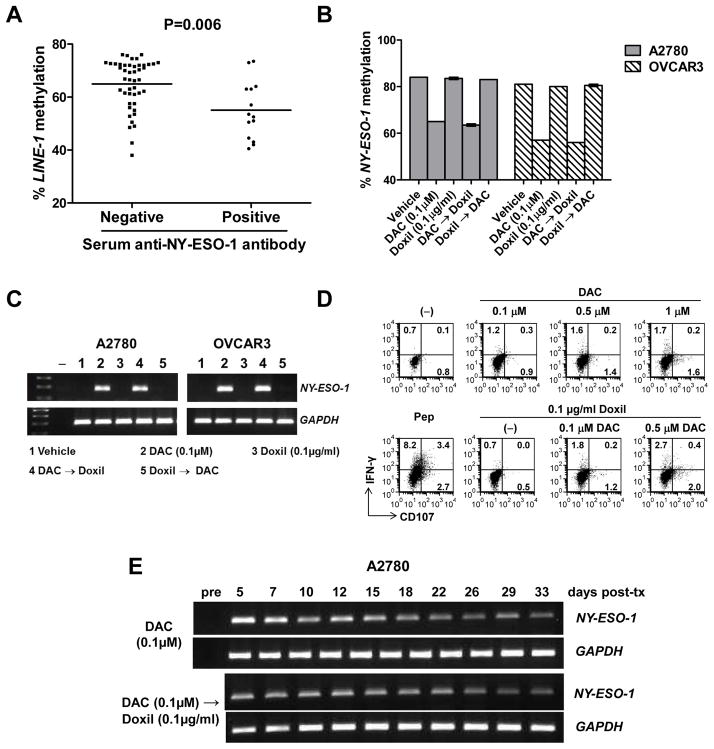
Figure 1
Figure 1. Preclinical studies supporting the use of decitabine to modulate NY-ESO-1 vaccine efficacy
A, LINE-1 is hypomethylated in NY-ESO-1 seropositive EOC patients. LINE-1 methylation was determined by pyrosequencing in EOC samples from patients positive or negative for serum NY-ESO-1 antibodies at the time of diagnosis. NY-ESO-1 seropositivity was defined as a reciprocal titer of >100 by ELISA. B, Effect of decitabine (DAC) and doxorubicin (doxil) treatments on NY-ESO-1 promoter methylation in EOC cells. A2780 and OVCAR3 cell lines were treated with PBS (control), 0.1μM decitabine for 48 hours, 0.1μg/ml doxil for 24 hours, or both drugs, in either sequence. gDNA was harvested 72 hours after the initial drug treatment, and used to determine NY-ESO-1 promoter methylation by pyrosequencing. C, Effect of decitabine (DAC) and doxorubicin (doxil) treatment on NY-ESO-1 mRNA expression in EOC cells. EOC cells were treated as described in (B), and RNA was harvested and used to measure NY-ESO-1 expression by RT-PCR. GAPDH was amplified as a positive control. D, NY-ESO-1-specific CD8+ T cell response following decitabine and/or doxorubicin (doxil) treatment. OVCAR3 (HLA-A2+veNY-ESO-1−ve) cells were treated with the indicated concentrations of decitabine (DAC), doxil, or decitabine followed by doxil, as described in (B). A NY-ESO-1-specific HLA-A2-restricted CD8+ T cell clone was stimulated for 6 hours with OVCAR3 cells following harvest and wash out of reagents. IFN-γ production and CD107 expression on HLA-A2/NY-ESO-1157–165 tetramer+ CD8+ T cells was determined by flow cytometry. As a positive control, CD8+ T cell responses were tested against NY-ESO-1157–165 peptide (0.4μg/ml)-pulsed OVCAR3 cells. Values in quadrants indicate percentages of cells. A value of ≥ 1% was considered positive. E, NY-ESO-1 expression following drug treatment and removal. A2780 cells were treated with the indicated concentrations of DAC or DAC + Doxil, and cells were extracted at the indicated time points following drug removal and used to determine NY-ESO-1 expression by RT-PCR.
Figure 2
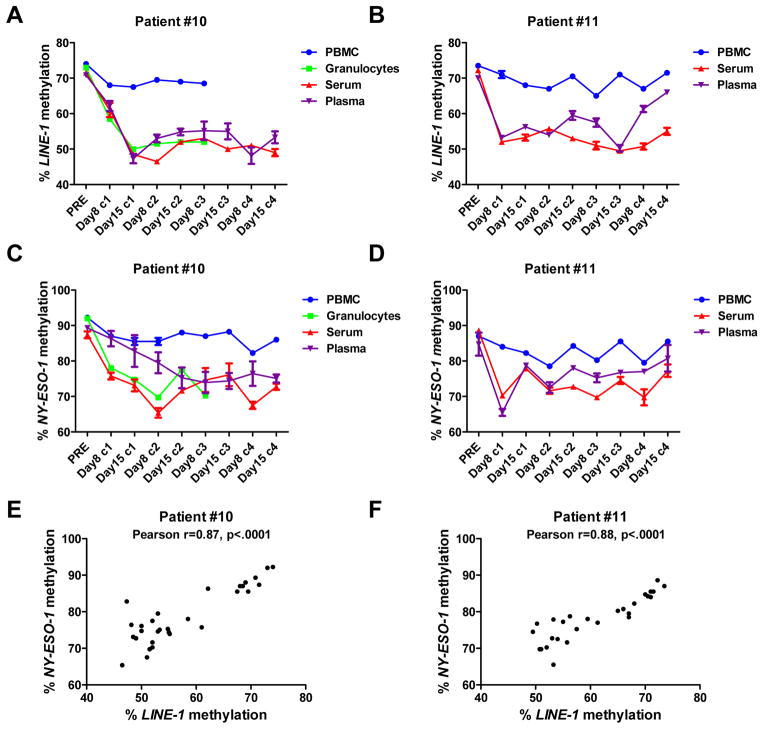
Figure 2. In vivo DNA methylation pharmacodynamics
Two patients in the 10mg/m2 × d5 decitabine cohort were used to assess DNA methylation pharmacodynamics during therapy. Whole blood was collected pre-treatment and at day 8 and 15 of each of the first four cycles of therapy. PBMCs, granulocytes, serum, and plasma samples were prepared and used for gDNA isolation. LINE-1 and NY-ESO-1 promoter-methylation were determined by pyrosequencing. A–B, LINE-1 methylation in samples from patients #10 and #11. C–D, NY-ESO-1 methylation in samples from patients #10 and #11. E–F, Association between LINE-1 methylation and NY-ESO-1 methylation in samples from patients #10 and #11. C1–C4 refers to the therapy cycle number. Error bars indicated +/− 1SD. Pearson correlation statistics are shown in panels E–F.
Figure 3
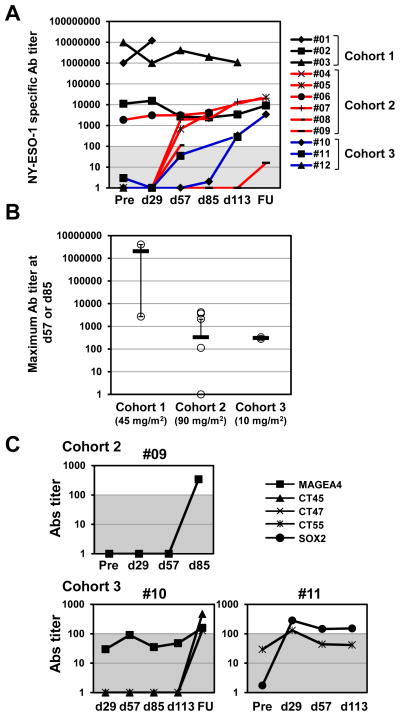
Figure 3. Humoral responses to NY-ESO-1 and other tumor antigens
A, NY-ESO-1 antibody titers in serum were measured by ELISA. EOC patients received decitabine at 45 mg/m2 × d1 (Cohort 1), 90mg/m2 × d1 (Cohort 2), or 10mg/m2 × d5 (Cohort 3), followed by doxorubicin on day 8, and vaccination on day 15, for each 28 day cycle. Patients #01, #02, #03 and #06 were baseline seropositive for NY-ESO-1 antibody. B, Comparison of maximal NY-ESO-1 antibody titers in each patient cohort at days 57 or 85. Bars indicate median ± s.d. C, Serum reactivity against a panel of 22 unrelated recombinant proteins was tested for recognition by ELISA. A positive response was considered > 100 reciprocal titer.
Figure 4
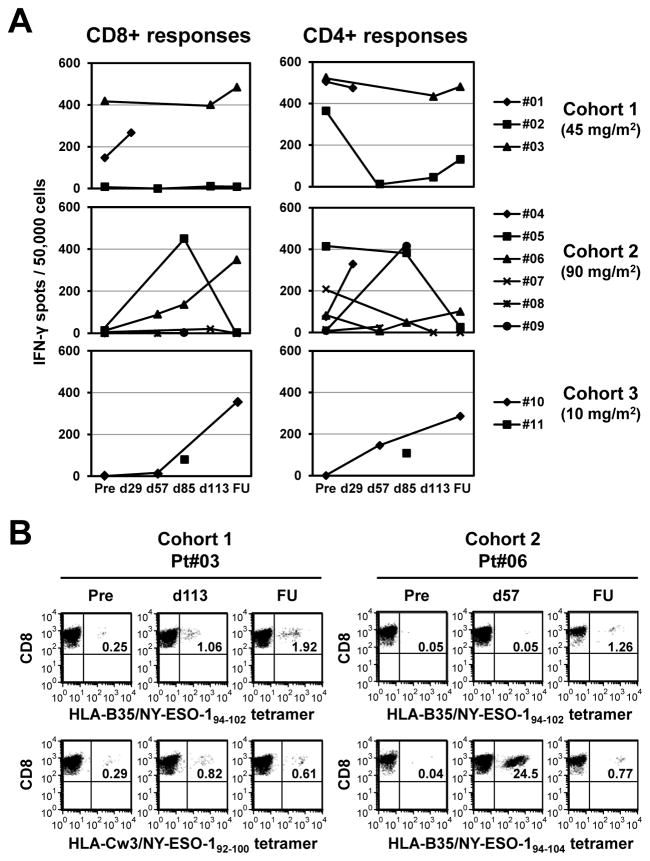
Figure 4. T cell responses to NY-ESO-1
CD8+ and CD4+ T cells isolated from PBMCs were independently stimulated with CD8CD4 cells pulsed with NY-ESO-1 pooled peptides and cultured for 14–15 days. A, IFN-γ production from CD8+ or CD4+ T cells was determined by ELISPOT assay against NY-ESO-1 pooled peptide-pulsed PHA-blasted CD4+ T cells. The number of IFN-γ spots indicated reflects subtraction of the number of spot against peptide-unpulsed target. B, NY-ESO-1 specific CD8+ T cell frequency was assessed by flow cytometry following staining with the indicated tetramers.
Figure 5
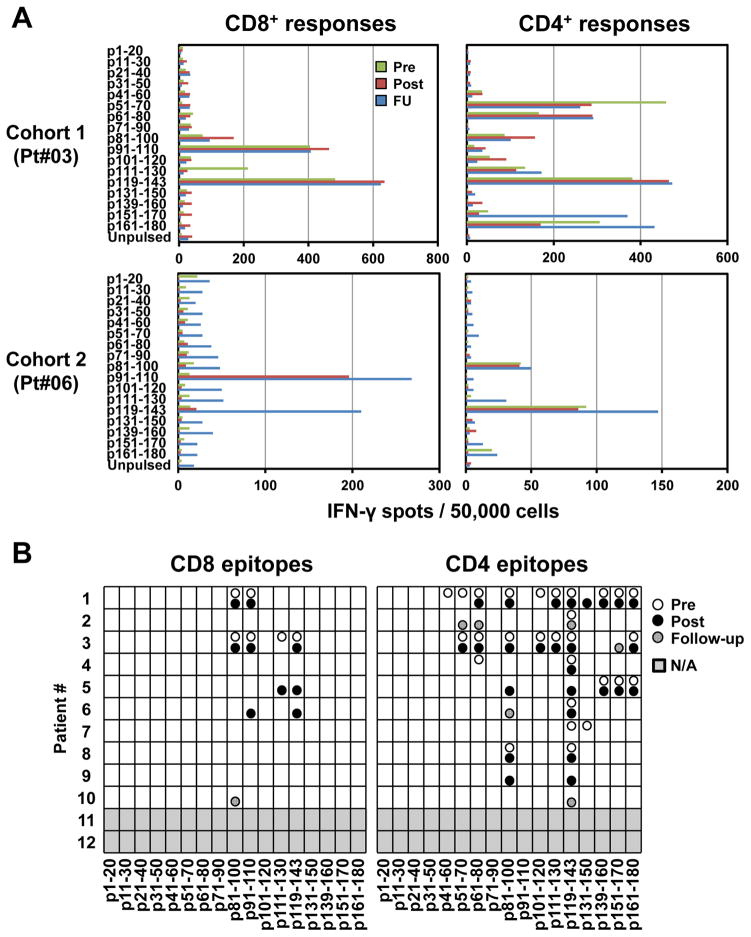
Figure 5. Epitopes of CD4+ and CD8+ T cells pre- and post-therapy
NY-ESO-1-specific CD8+ and CD4+ T cell responses against 20-mer peptides were tested by ELISPOT assays following in vitro stimulation. A, Responses of CD8+ and CD4+ T cells pre-therapy, post-therapy, and at the time of follow-up (FU; 6 months after the last treatment), from patients #03 and #06. For patient #03, the post-treatment time point shown for both CD8+ and CD4+ is day 113. For patient #06, the post-treatment time points shown are d57 and d85 for CD8+ and CD4+, respectively. B, Summary of NY-ESO-1 epitopes recognized by CD8+ or CD4+ T cells. A positive response was defined as a spot count > 50 out of 50,000 cells, and at least > 3× spot count of unpulsed targets.

References

    1. Storni T, Ruedl C, Renner WA, Bachmann MF. Innate immunity together with duration of antigen persistence regulate effector T cell induction. J Immunol. 2003;171:795–801. - PubMed
    1. Dunn GP, Old LJ, Schreiber RD. The immunobiology of cancer immunosurveillance and immunoediting. Immunity. 2004;21:137–48. - PubMed
    1. Knutson KL, Lu H, Stone B, Reiman JM, Behrens MD, Prosperi CM, et al. Immunoediting of cancers may lead to epithelial to mesenchymal transition. J Immunol. 2006;177:1526–33. - PubMed
    1. Dudley ME, Wunderlich JR, Yang JC, Sherry RM, Topalian SL, Restifo NP, et al. Adoptive cell transfer therapy following non-myeloablative but lymphodepleting chemotherapy for the treatment of patients with refractory metastatic melanoma. Journal of clinical oncology : official journal of the American Society of Clinical Oncology. 2005;23:2346–57. - PMC - PubMed
    1. Yee C, Thompson JA, Byrd D, Riddell SR, Roche P, Celis E, et al. Adoptive T cell therapy using antigen-specific CD8+ T cell clones for the treatment of patients with metastatic melanoma: in vivo persistence, migration, and antitumor effect of transferred T cells. Proceedings of the National Academy of Sciences of the United States of America. 2002;99:16168–73. - PMC - PubMed

Publication types

MeSH terms