


Education attainment is associated with patient-reported outcomes: findings from the Swedish Hip Arthroplasty Register
- PMID: 24549772
- PMCID: PMC4016468
- DOI: 10.1007/s11999-014-3504-2
Education attainment is associated with patient-reported outcomes: findings from the Swedish Hip Arthroplasty Register
Abstract
Background: Age, sex, and medical comorbidities may be associated with differences in patient-reported outcome scores after THA. Highest level of education may be a surrogate for socioeconomic status, but the degree to which this is associated with patient-reported outcomes after THA is not known.
Questions/purposes: We investigated the national Swedish Hip Arthroplasty Register for the association of education attainment on patient-reported outcomes 1 year after THA; specifically, we evaluated level of education attainment against health-related quality of life (HRQoL), pain reduction, and satisfaction with treatment 1 year after THA.
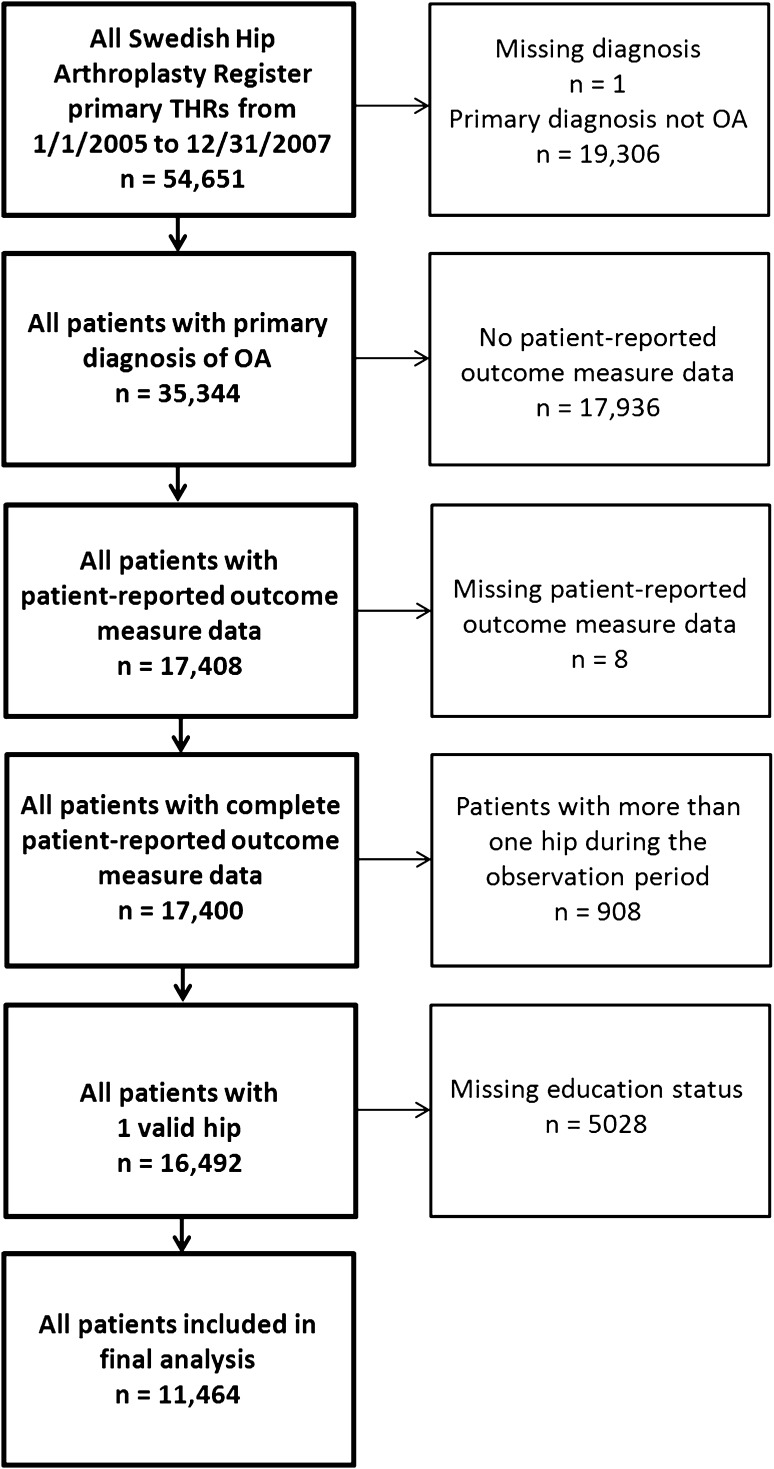
Methods: All THAs for osteoarthritis performed from 2005 through 2007 with complete patient-reported outcome measures (representing 49% of the THAs performed for this diagnosis) were selected from the Swedish Hip Arthroplasty Register. These cases were merged with national databases containing education attainment, marital status, and comorbidities (n = 11,464; mean age of patients, 64 years). The patient-reported outcome measure protocol included the HRQoL measure EuroQol five-dimension scale (EQ-5D), a VAS for pain, the Charnley classification survey, and a VAS addressing THA satisfaction. Linear regression analyses determined the association of preoperative patient factors with patient-reported outcomes.
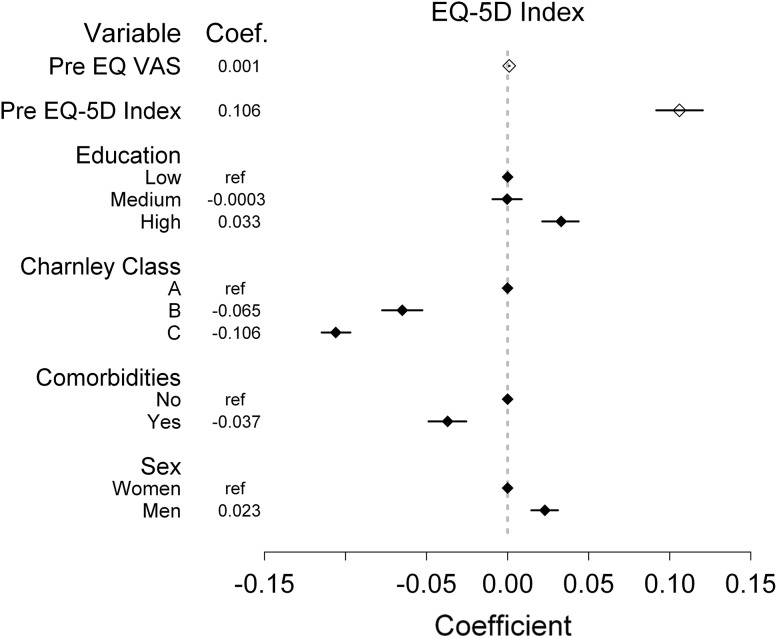
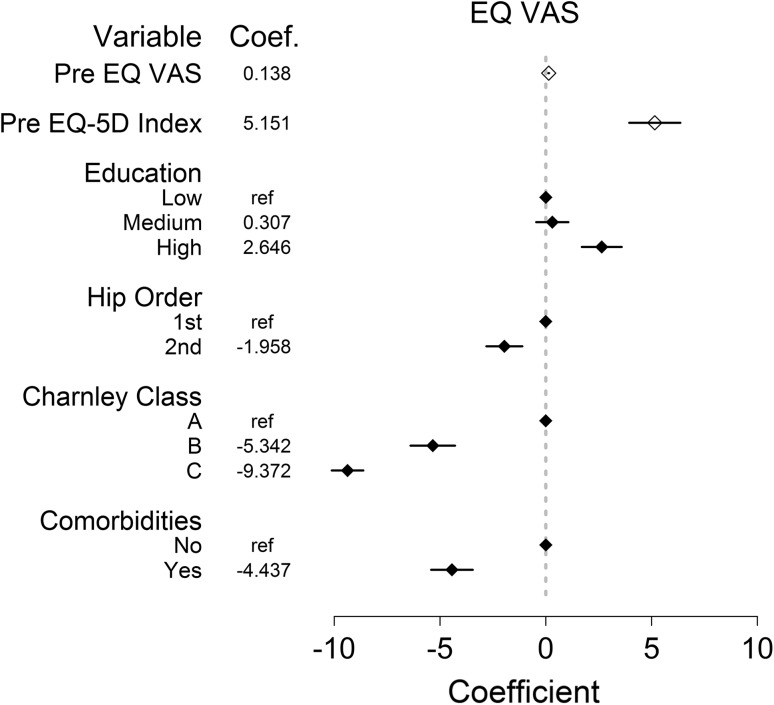
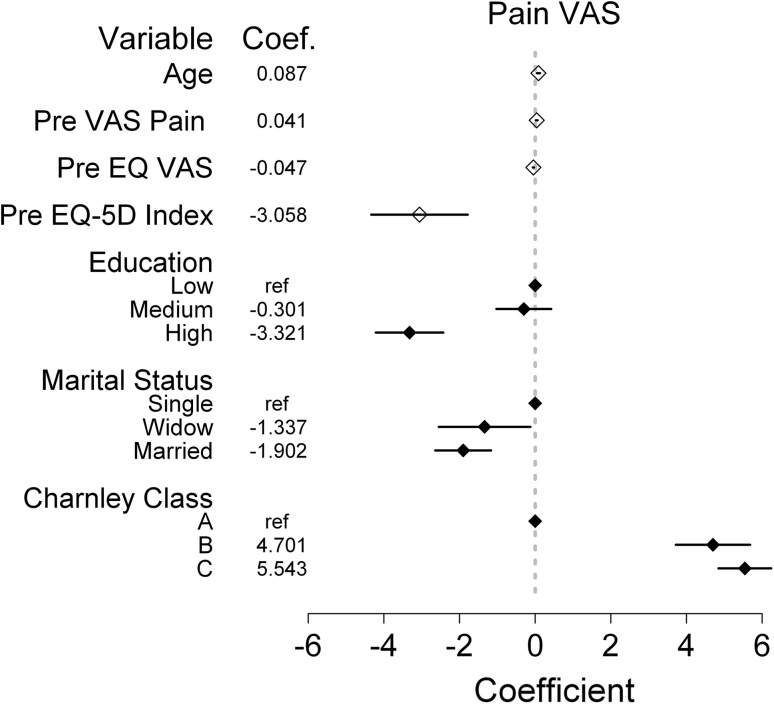
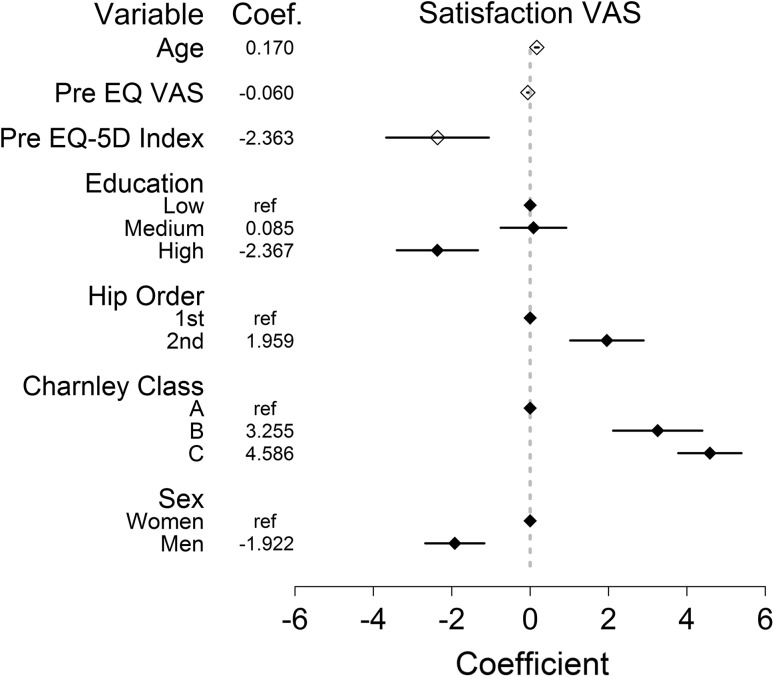
Results: High education attainment was associated with higher HRQoL (EQ-5D index ß(high) = 0.03 ± 0.01; EQ VAS ß(high) = 2.6 ± 0.5) after THA, whereas those with low and medium education were at risk for lower HRQoL. High education was associated with less pain after treatment (ß(high) = -3.3 ± 0.05). Individuals with low or medium education were at risk for less satisfaction with THA (p < 0.001).
Conclusions: Our results suggest clinicians should support patients with low and medium education to a greater extent. Identification of patients who will benefit most from THA and educating those at risk for poorer outcomes, like patients with low and medium education, ultimately may improve patient satisfaction, HRQoL, pain, and the cost utility of THA.
Level of evidence: Level III, therapeutic study. See the Instructions for Authors for a complete description of levels of evidence.
Figures
Comment in
-
Patient-reported outcome measures in arthroplasty registries Report of the Patient-Reported Outcome Measures Working Group of the International Society of Arthroplasty Registries Part II. Recommendations for selection, administration, and analysis.Acta Orthop. 2016 Jul;87 Suppl 1(Suppl 1):9-23. doi: 10.1080/17453674.2016.1181816. Epub 2016 May 26. Acta Orthop. 2016. PMID: 27228230 Free PMC article.
References
-
- Callaghan JJ, Dysart SH, Savory CF, Hopkinson WJ. Assessing the results of hip replacement: a comparison of five different rating systems. J Bone Joint Surg Br. 1990;72:1008–1009. - PubMed
Publication types
MeSH terms
LinkOut - more resources
Full Text Sources
Other Literature Sources
Medical
Research Materials
