


IL-1 receptor blockade restores autophagy and reduces inflammation in chronic granulomatous disease in mice and in humans
- PMID: 24550444
- PMCID: PMC3948220
- DOI: 10.1073/pnas.1322831111
IL-1 receptor blockade restores autophagy and reduces inflammation in chronic granulomatous disease in mice and in humans
Abstract
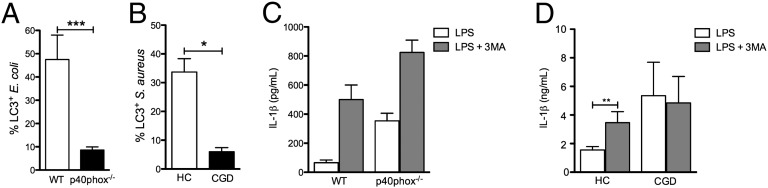
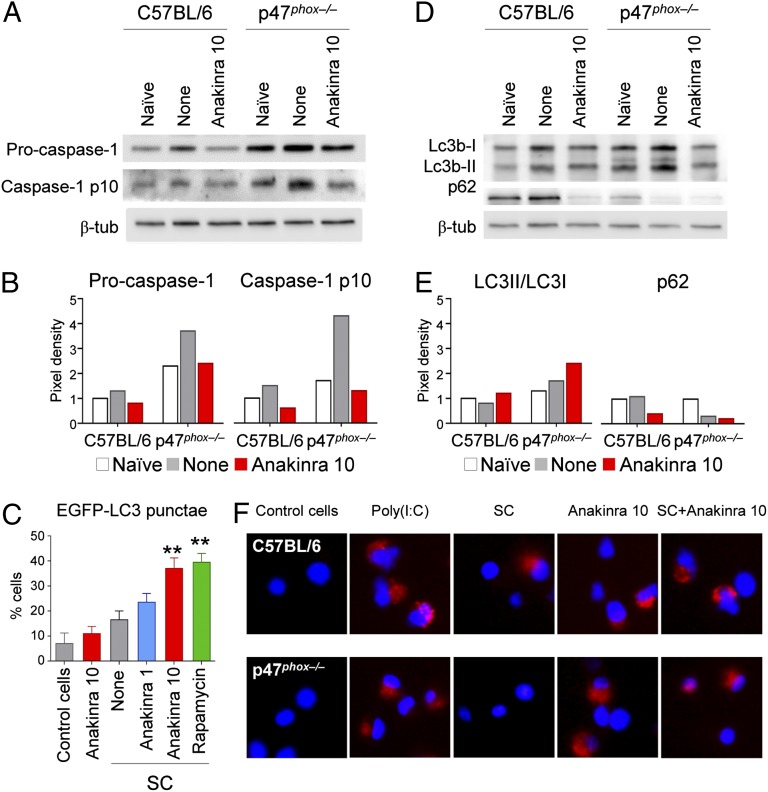
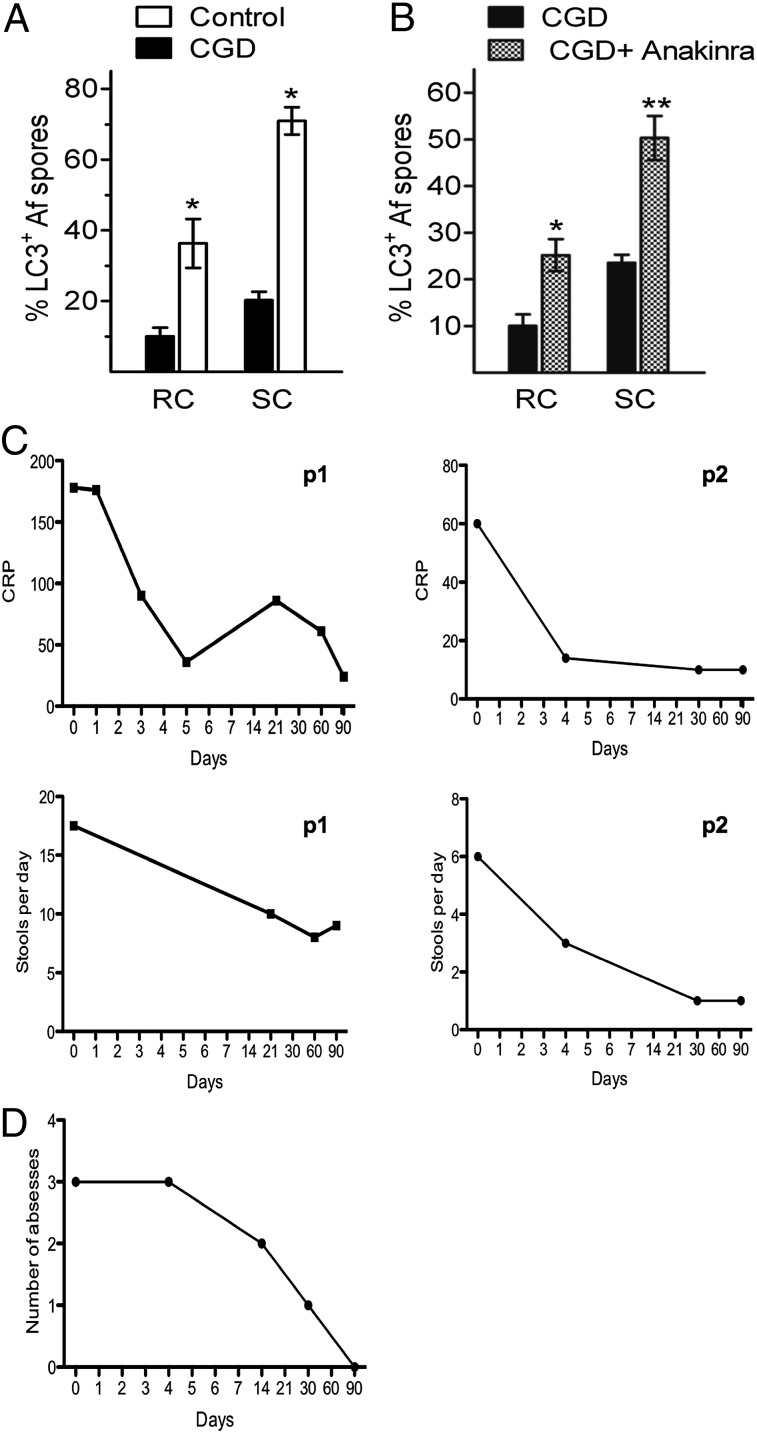
Patients with chronic granulomatous disease (CGD) have a mutated NADPH complex resulting in defective production of reactive oxygen species; these patients can develop severe colitis and are highly susceptible to invasive fungal infection. In NADPH oxidase-deficient mice, autophagy is defective but inflammasome activation is present despite lack of reactive oxygen species production. However, whether these processes are mutually regulated in CGD and whether defective autophagy is clinically relevant in patients with CGD is unknown. Here, we demonstrate that macrophages from CGD mice and blood monocytes from CGD patients display minimal recruitment of microtubule-associated protein 1 light chain 3 (LC3) to phagosomes. This defect in autophagy results in increased IL-1β release. Blocking IL-1 with the receptor antagonist (anakinra) decreases neutrophil recruitment and T helper 17 responses and protects CGD mice from colitis and also from invasive aspergillosis. In addition to decreased inflammasome activation, anakinra restored autophagy in CGD mice in vivo, with increased Aspergillus-induced LC3 recruitment and increased expression of autophagy genes. Anakinra also increased Aspergillus-induced LC3 recruitment from 23% to 51% (P < 0.01) in vitro in monocytes from CGD patients. The clinical relevance of these findings was assessed by treating CGD patients who had severe colitis with IL-1 receptor blockade using anakinra. Anakinra treatment resulted in a rapid and sustained improvement in colitis. Thus, inflammation in CGD is due to IL-1-dependent mechanisms, such as decreased autophagy and increased inflammasome activation, which are linked pathological conditions in CGD that can be restored by IL-1 receptor blockade.
Keywords: Crohn disease; LPS; S. aureus; autoinflammatory disease; interleukin-1.
Conflict of interest statement
The authors declare no conflict of interest.
Figures

Comment in
-
Deficient autophagy unravels the ROS paradox in chronic granulomatous disease.Autophagy. 2014 Jun;10(6):1141-2. doi: 10.4161/auto.28638. Autophagy. 2014. PMID: 24879159 Free PMC article.
-
Chronic granulomatous disease: a potentially lethal combination of immunodeficiency and excess inflammation.Clin Infect Dis. 2014 Jul 15;59(2):iii. Clin Infect Dis. 2014. PMID: 25105187 No abstract available.
References
-
- Segal BH, Leto TL, Gallin JI, Malech HL, Holland SM. Genetic, biochemical, and clinical features of chronic granulomatous disease. Medicine (Baltimore) 2000;79(3):170–200. - PubMed
-
- Antachopoulos C. Invasive fungal infections in congenital immunodeficiencies. Clin Microbiol Infect. 2010;16(9):1335–1342. - PubMed
-
- Ben-Ari J, Wolach O, Gavrieli R, Wolach B. Infections associated with chronic granulomatous disease: Linking genetics to phenotypic expression. Expert Rev Anti Infect Ther. 2012;10(8):881–894. - PubMed
Publication types
MeSH terms
Substances
Grants and funding
- AI-15614/AI/NIAID NIH HHS/United States
- R01 DK060049/DK/NIDDK NIH HHS/United States
- P30 DK043351/DK/NIDDK NIH HHS/United States
- R01 AI015614/AI/NIAID NIH HHS/United States
- DK-43351/DK/NIDDK NIH HHS/United States
- R01 AI062773/AI/NIAID NIH HHS/United States
- R01 DK083756/DK/NIDDK NIH HHS/United States
- DK-83756/DK/NIDDK NIH HHS/United States
- R01 DK097485/DK/NIDDK NIH HHS/United States
- AI-62773/AI/NIAID NIH HHS/United States
- 293714/ERC_/European Research Council/International
- R56 AI015614/AI/NIAID NIH HHS/United States
- DK-60049/DK/NIDDK NIH HHS/United States
LinkOut - more resources
Full Text Sources
Other Literature Sources
Medical
Molecular Biology Databases
Research Materials
