


Ion conduction and conformational flexibility of a bacterial voltage-gated sodium channel
- PMID: 24550503
- PMCID: PMC3948317
- DOI: 10.1073/pnas.1320907111
Ion conduction and conformational flexibility of a bacterial voltage-gated sodium channel
Abstract
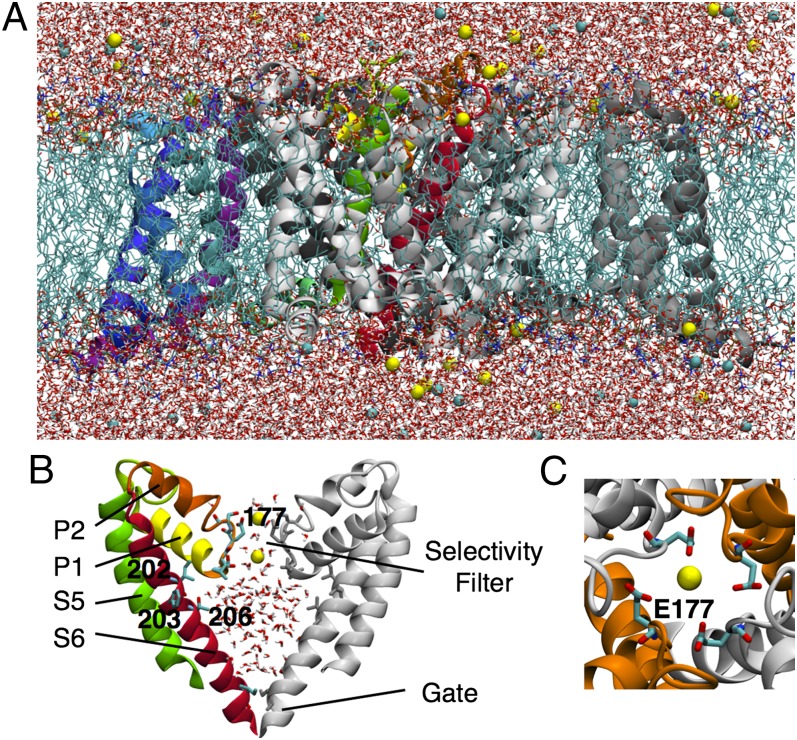
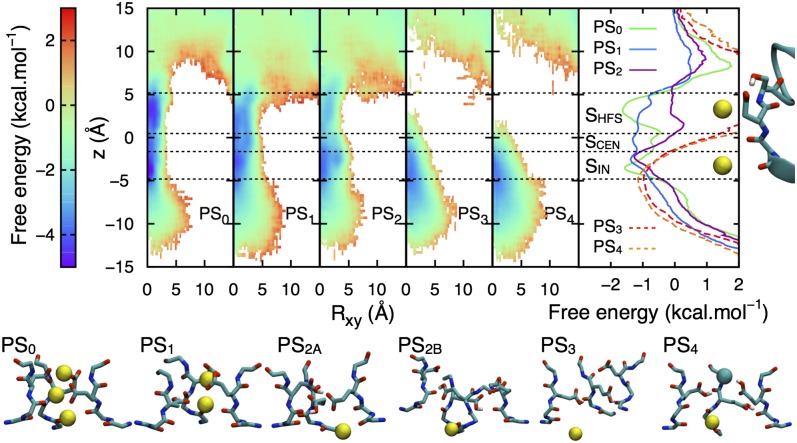
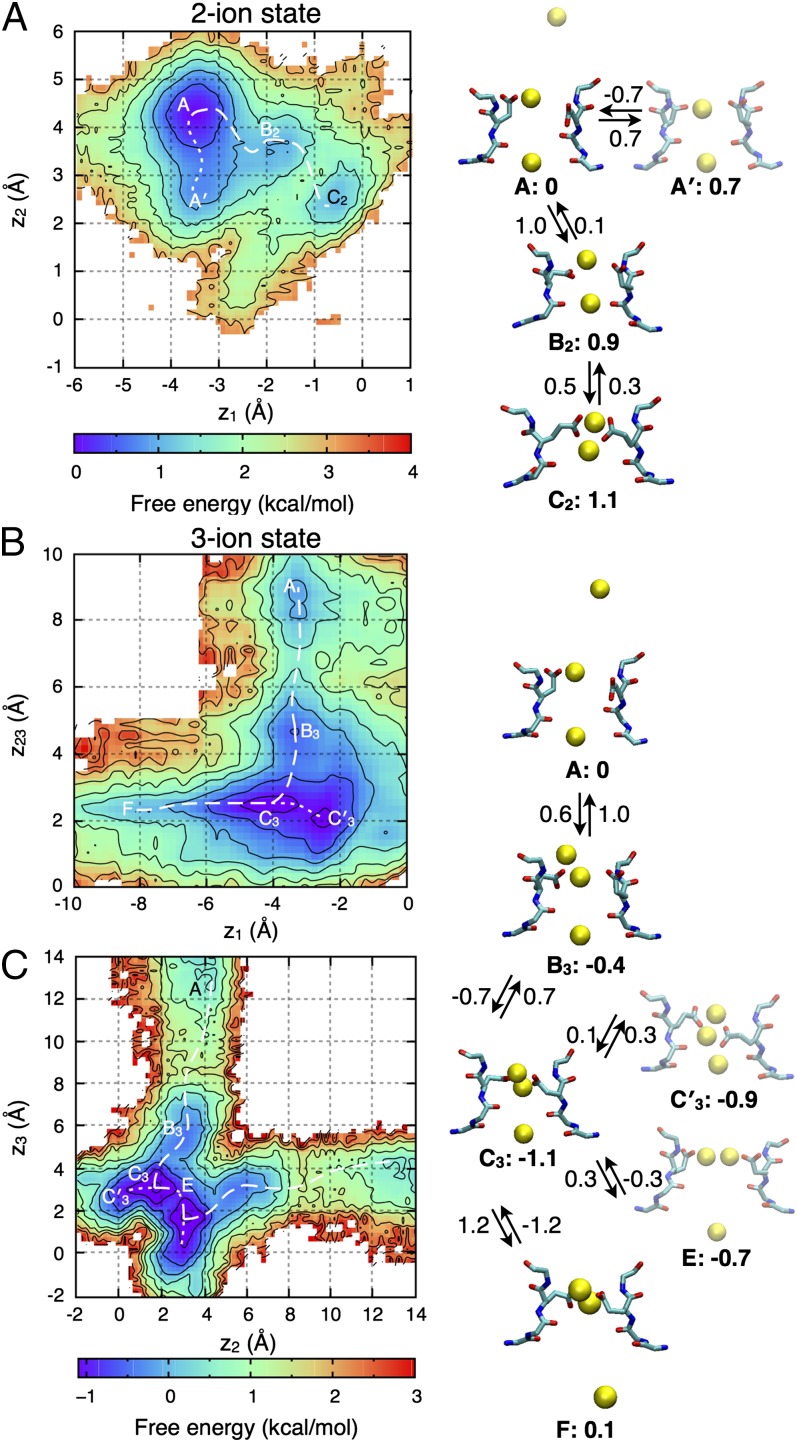
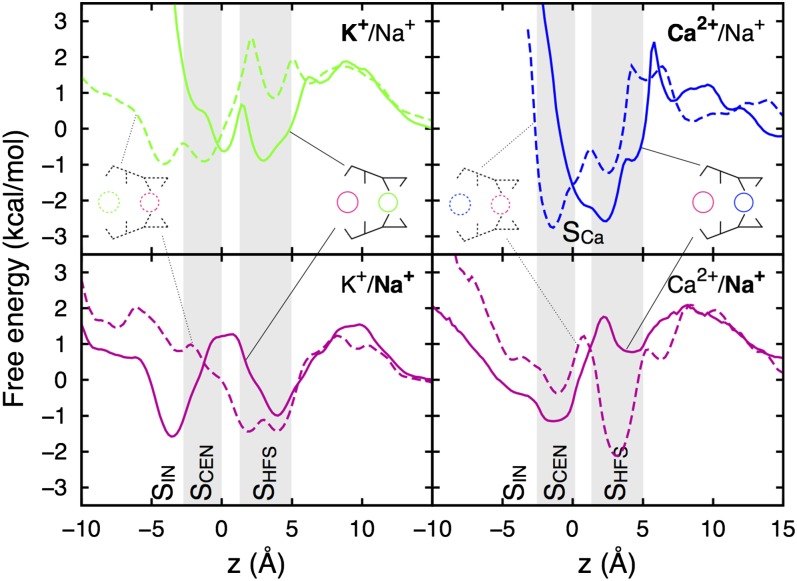
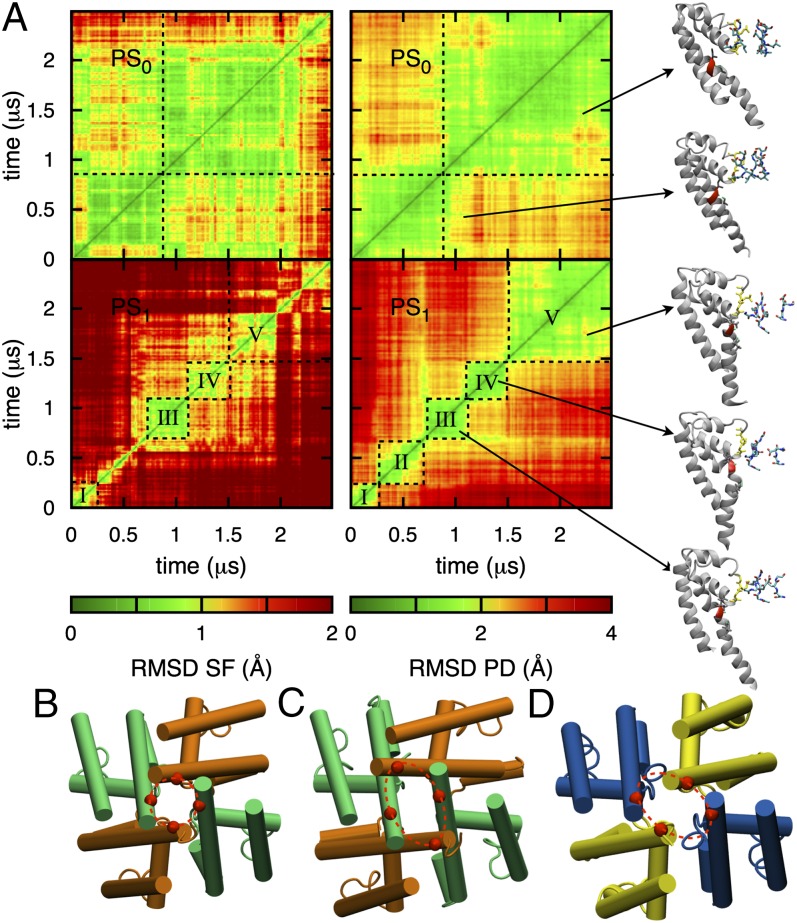
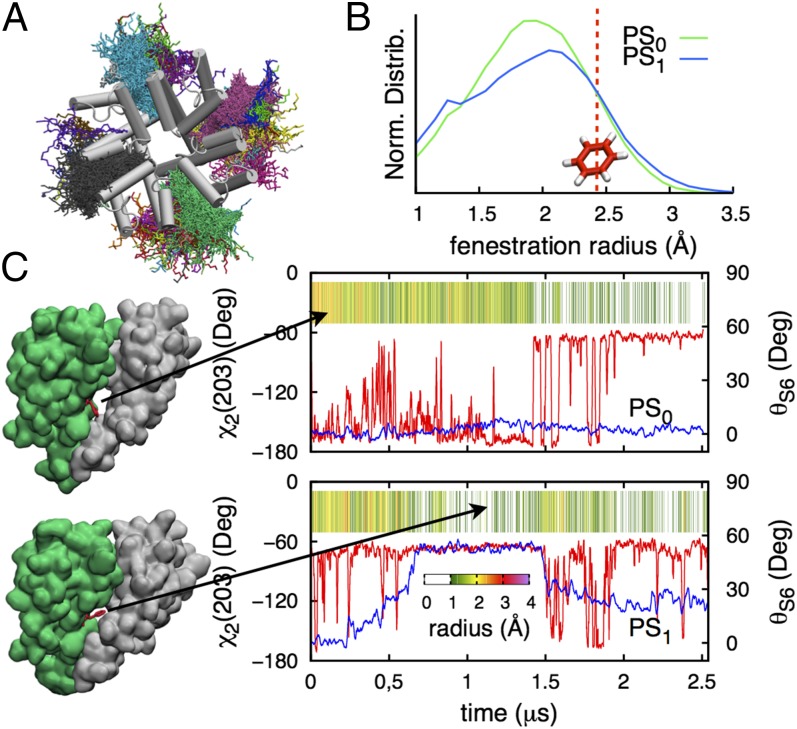
Voltage-gated Na(+) channels play an essential role in electrical signaling in the nervous system and are key pharmacological targets for a range of disorders. The recent solution of X-ray structures for the bacterial channel NavAb has provided an opportunity to study functional mechanisms at the atomic level. This channel's selectivity filter exhibits an EEEE ring sequence, characteristic of mammalian Ca(2+), not Na(+), channels. This raises the fundamentally important question: just what makes a Na(+) channel conduct Na(+) ions? Here we explore ion permeation on multimicrosecond timescales using the purpose-built Anton supercomputer. We isolate the likely protonation states of the EEEE ring and observe a striking flexibility of the filter that demonstrates the necessity for extended simulations to study conduction in this channel. We construct free energy maps to reveal complex multi-ion conduction via knock-on and "pass-by" mechanisms, involving concerted ion and glutamate side chain movements. Simulations in mixed ionic solutions reveal relative energetics for Na(+), K(+), and Ca(2+) within the pore that are consistent with the modest selectivity seen experimentally. We have observed conformational changes in the pore domain leading to asymmetrical collapses of the activation gate, similar to proposed inactivated structures of NavAb, with helix bending involving conserved residues that are critical for slow inactivation. These structural changes are shown to regulate access to fenestrations suggested to be pathways for lipophilic drugs and provide deeper insight into the molecular mechanisms connecting drug activity and slow inactivation.
Conflict of interest statement
The authors declare no conflict of interest.
Figures
References
-
- Hille B. Ionic Channels of Excitable Membranes. 3rd Ed. Sunderland, MA: Sinauer; 2001.
-
- Mike A, Lukacs P. The enigmatic drug binding site for sodium channel inhibitors. Curr Mol Pharmacol. 2010;3(3):129–144. - PubMed
-
- Ren D, et al. A prokaryotic voltage-gated sodium channel. Science. 2001;294(5550):2372–2375. - PubMed
-
- Koishi R, et al. A superfamily of voltage-gated sodium channels in bacteria. J Biol Chem. 2004;279(10):9532–9538. - PubMed
Publication types
MeSH terms
Substances
Grants and funding
LinkOut - more resources
Full Text Sources
Other Literature Sources
Miscellaneous
