Neurocysticercosis as a cause of epilepsy and seizures in two community-based studies in a cysticercosis-endemic region in Peru
- PMID: 24551255
- PMCID: PMC3923674
- DOI: 10.1371/journal.pntd.0002692
Neurocysticercosis as a cause of epilepsy and seizures in two community-based studies in a cysticercosis-endemic region in Peru
Abstract
Background: The prevalence of epilepsy added to inadequate treatment results in chronic morbidity and considerable mortality in poor populations. Neurocysticercosis (NCC), a helminthic disease of the central nervous system, is a leading cause of seizures and epilepsy in most of the world.
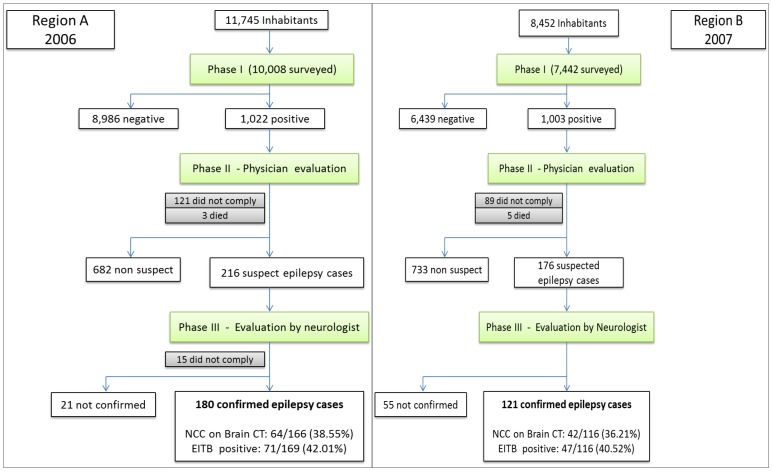
Methods: Taking advantage of a cysticercosis elimination program, we performed two community-based cross-sectional studies between 2006 and 2007 in 58 rural communities (population 20,610) to assess the prevalence and characteristics of epilepsy and epileptic seizures in this endemic region. Serological and computed tomography (CT) data in individuals with epilepsy were compared to previous surveys in general population from the same region.
Principal findings: In two surveys, 17,450 individuals were evaluated. Lifetime prevalence of epilepsy was 17.25/1000, and prevalence of active epilepsy was 10.8/1000 inhabitants. The prevalence of epilepsy increased after age 25 years and dropped after age 45. Only 24% (45/188) of patients with active epilepsy were taking antiepileptic drugs, all at sub-therapeutic doses. Antibodies to cysticercosis were found in approximately 40% of individuals with epilepsy in both studies. In one survey only individuals presenting strong antibody reactions were significantly associated with having epilepsy (OR 5.74; p<0.001). In the second, the seroprevalence as well as the proportion presenting strong antibody reactions were both significantly higher in individuals with epilepsy (OR 2.2 and 4.33, respectively). Brain CT showed NCC-compatible images in 109/282 individuals with epilepsy (39%). All individuals with viable parasites on CT were seropositive.
Conclusion: The prevalence of epilepsy in this cysticercosis endemic region is high and NCC is an important contributor to it.
Conflict of interest statement
The authors have declared that no competing interest exist.
Figures


References
-
- Burneo JG (2003) Sonko-Nanay and epilepsy among the Incas. Epilepsy Behav 4: 181–184. - PubMed
-
- Fisher RS, van Emde Boas W, Blume W, Elger C, Genton P, et al. (2005) Epileptic seizures and epilepsy: definitions proposed by the International League Against Epilepsy (ILAE) and the International Bureau for Epilepsy (IBE). Epilepsia 46: 470–472. - PubMed
-
- Medina MT, Duron RM, Martinez L, Osorio JR, Estrada AL, et al. (2005) Prevalence, incidence, and etiology of epilepsies in rural Honduras: the Salama Study. Epilepsia 46: 124–131. - PubMed
-
- Del Brutto OH, Santibanez R, Idrovo L, Rodriguez S, Diaz-Calderon E, et al. (2005) Epilepsy and neurocysticercosis in Atahualpa: a door-to-door survey in rural coastal Ecuador. Epilepsia 46: 583–587. - PubMed
Publication types
MeSH terms
Grants and funding
LinkOut - more resources
Full Text Sources
Other Literature Sources
Medical