Fetal ascites and hydrometrocolpos due to persistent urogenital sinus and cloaca: a rare congenital anomaly and review of literature
- PMID: 24554677
- PMCID: PMC3931976
- DOI: 10.1136/bcr-2013-202231
Fetal ascites and hydrometrocolpos due to persistent urogenital sinus and cloaca: a rare congenital anomaly and review of literature
Abstract
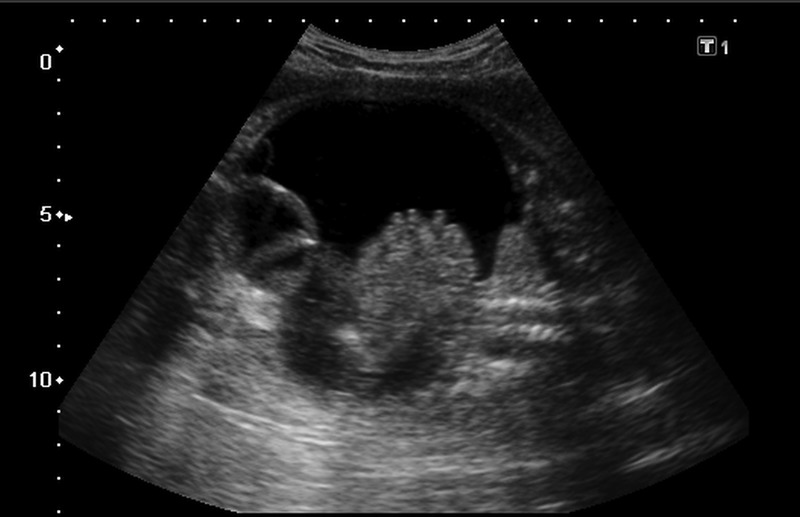
Fetal ascites can occur due to many heterogeneous disorders. Its association with hydrometrocolpos because of persistent urogenital sinus and cloaca is extremely rare. A 29-year-old primigravida presented at 32 weeks of gestation with ultrasonographic evidence of fetal ascites, a cystic pelvic mass, hydronephrosis and oligohydramnios. Fetal ascites in this case was due to fetal urine draining through fallopian tubes into the abdomen as a result of vesicovaginal fistula and distal vaginal atresia. The antenatal ultrasound results along with autopsy findings are discussed. Though rare, a persistent urogenital sinus is to be suspected in isolated fetal ascites cases where the viral tests are negative and there is no evidence of cardiac anomalies as this is a treatable anomaly if diagnosed at early gestational age.
Figures


References
-
- Leung WC, Lam YH, Tang MH. Isolated foetal ascitis. Hong Kong Med J 2001;7:432–4 - PubMed
-
- Arena F, Romero C, Cruccetti A, et al. The neonatal management and surgical correction of urinary hydrometrocolpos caused by a persistent urogenital sinus. BJU Int 1999;84:1063–8 - PubMed
-
- Gul A, Yildirim G, Gedikbasi A, et al. Prenatal ultrasonographic features of persistent urogenital sinus with hydrometrocolpos and ascitis. Arch Gynecol Obstet 2008;278:493–6 - PubMed
-
- Blask AR, Sanders RC, Gearhart JP. Obstructed uterovaginal anomalies: demonstration with sonography. Part I. Neonates and infants. Radiology 1991;179:79–83 - PubMed
Publication types
MeSH terms
Supplementary concepts
LinkOut - more resources
Full Text Sources
Other Literature Sources
Medical