


Abnormal heart rate characteristics are associated with abnormal neuroimaging and outcomes in extremely low birth weight infants
- PMID: 24556979
- PMCID: PMC11019753
- DOI: 10.1038/jp.2014.18
Abnormal heart rate characteristics are associated with abnormal neuroimaging and outcomes in extremely low birth weight infants
Abstract
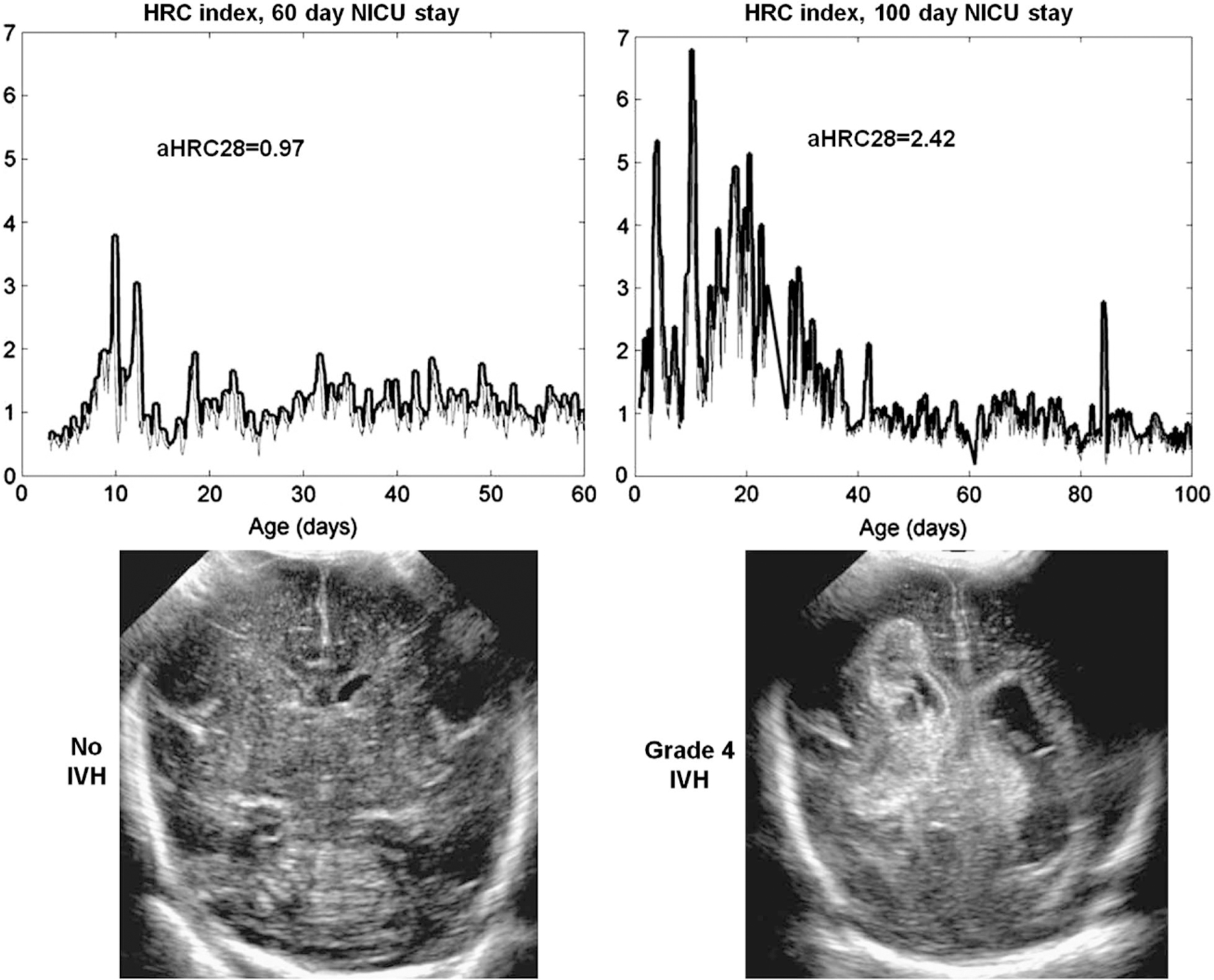
Objective: Brain injury in preterm infants may lead to an inflammatory response and central nervous system dysfunction reflected by abnormal heart rate characteristics (HRC). We hypothesized that a continuously monitored HRC index reflecting reduced HR variability and decelerations correlates with abnormal neuroimaging and outcomes in extremely low birth weight infants (ELBW).
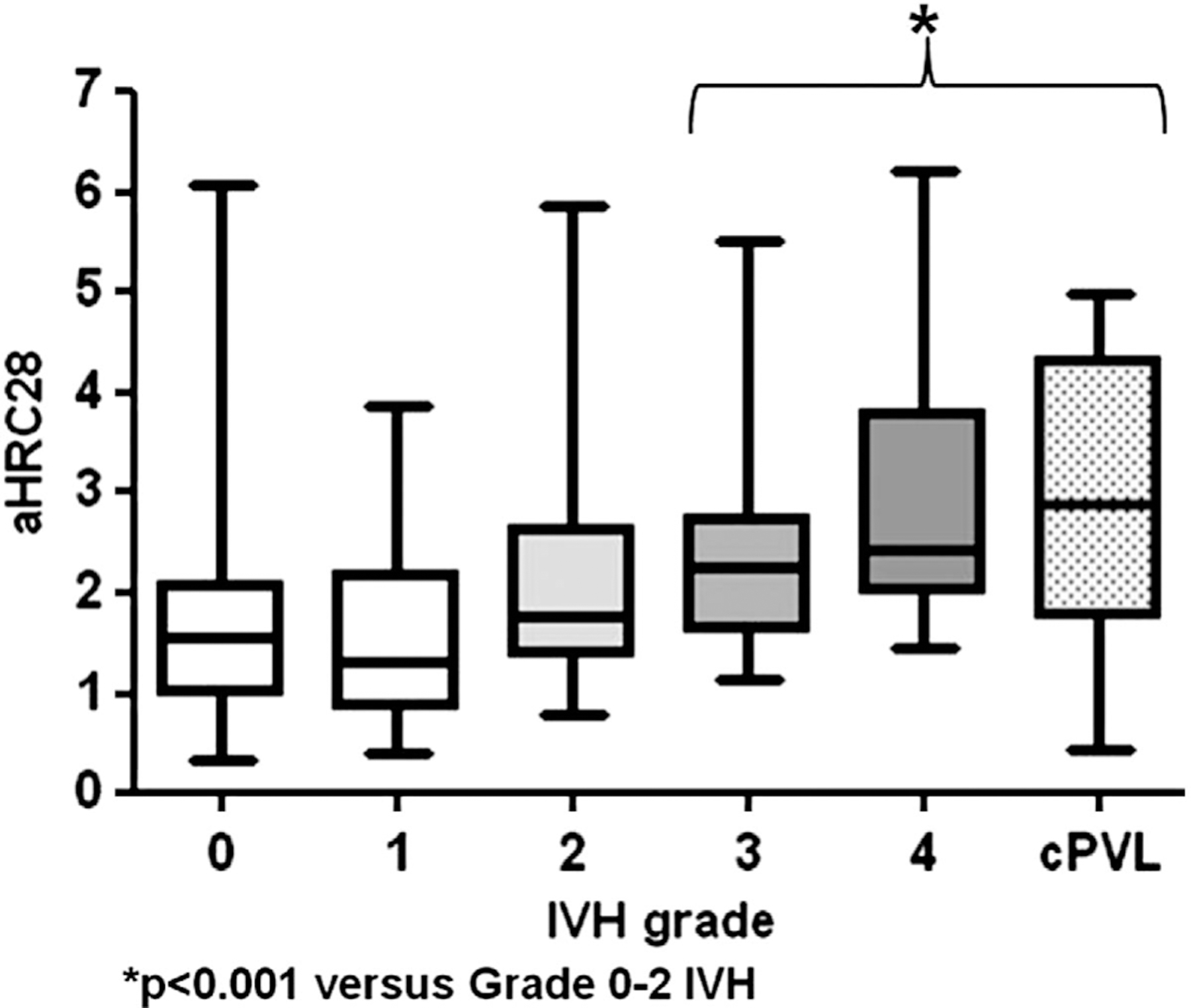
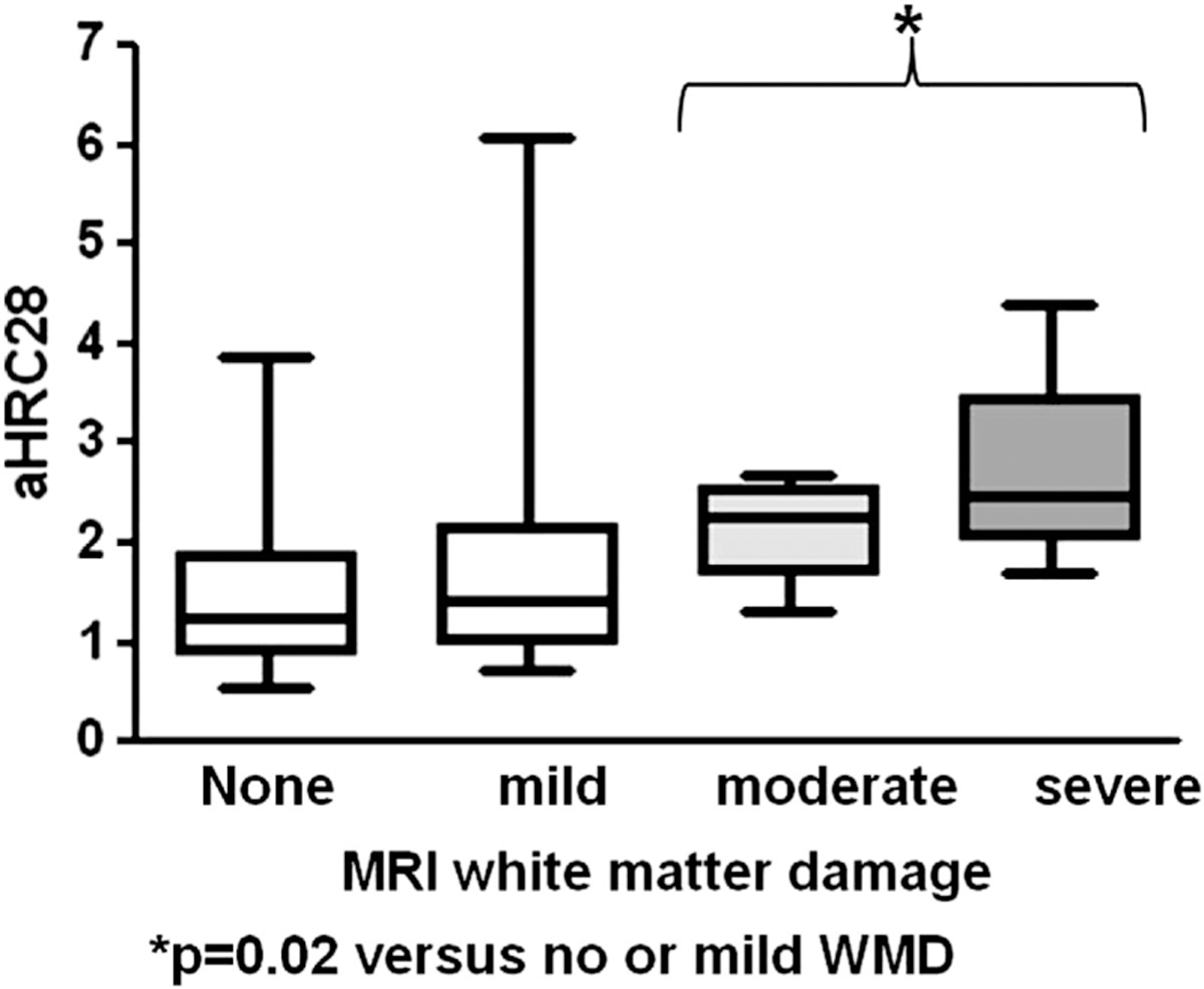
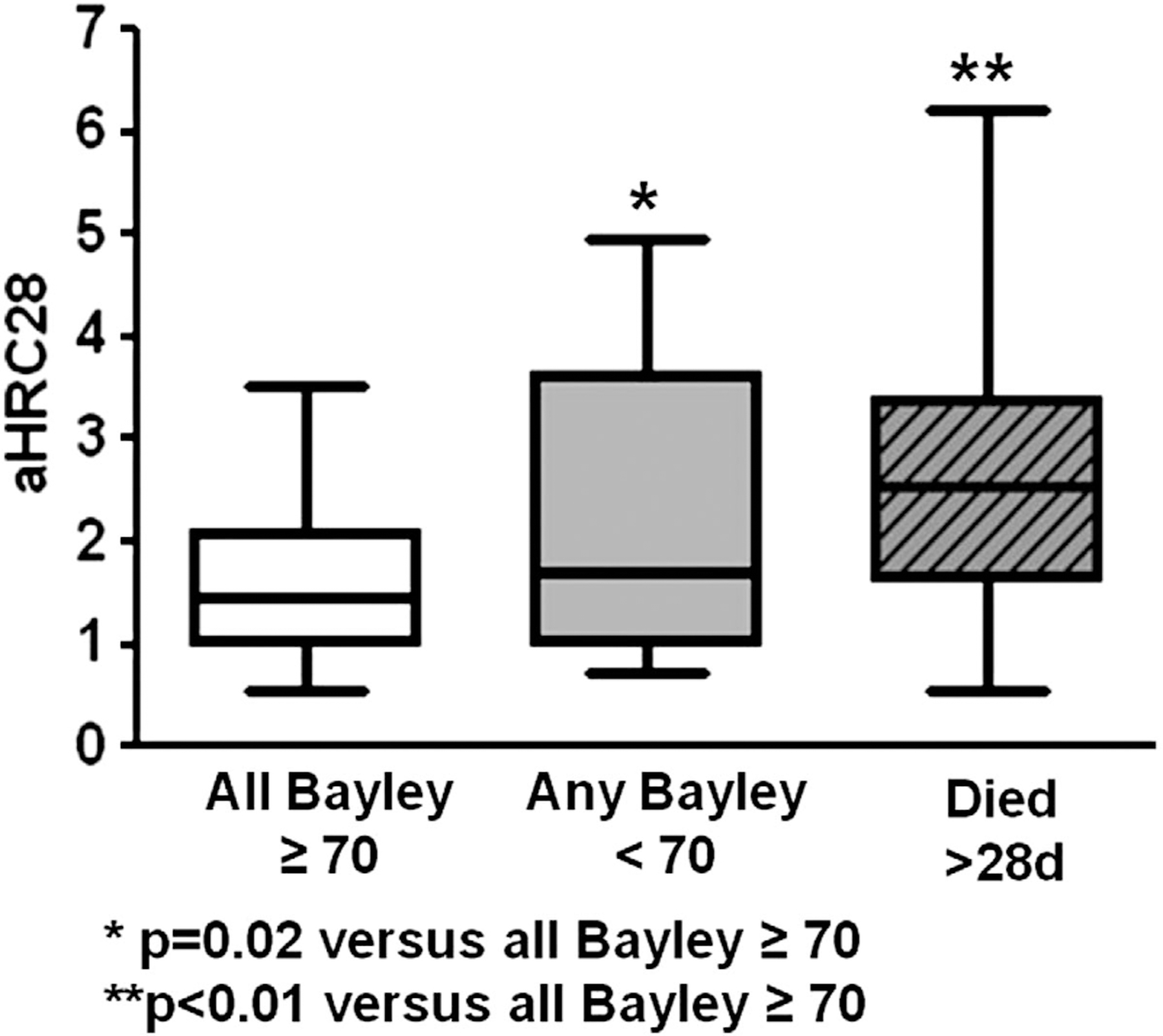
Study design: We analyzed the average HRC index within 28 days after birth (aHRC28) and head ultrasound (HUS) in 384 ELBW infants. In 50 infants with brain magnetic resonance imaging (MRI) and 70 infants with Bayley neurodevelopmental testing at 1 year of age, we analyzed the relationship between aHRC28, MRI abnormalities and low Bayley scores.
Result: aHRC28 was higher in infants with severe HUS abnormalities (2.65±1.27 for Grade III-IV intraventricular hemorrhage (IVH) or cystic periventricular leukomalacia (cPVL) versus 1.72±0.95 for normal or Grade I-II IVH, P<0.001). Higher aHRC28 was also associated with white matter damage on MRI and death or Bayley motor or mental developmental index <70. Associations persisted after adjusting for gestational age, birth weight and septicemia. For every one point increase in aHRC28, the odds ratio of death or Bayley score <70 was 2.45 (95% CI 1.46, 4.05, P<0.001).
Conclusion: A continuously monitored HRC index provides an objective, noninvasive measure associated with abnormal brain imaging and adverse neurologic outcomes in ELBW infants.
Conflict of interest statement
CONFLICT OF INTEREST
The heart rate characteristics monitoring randomized clinical trial was supported by NIH (grant R01-HD48562 to J.M.) and by Medical Predictive Science Corporation, Charlottesville, VA, which provided study hardware and software for heart rate characteristics monitoring and for study data collection and management. Neither of these funding sources had any role in the design of the original study or the current report, in the analysis and interpretation of the data, in the decision to submit the manuscript, or in the preparation, review, or approval of it. Dr Lake and Dr Moorman have consulting agreements and equity shares in Medical Predictive Science Corporation, Charlottesville, VA.
Figures
References
-
- Rees S, Inder T. Fetal and neonatal origins of altered brain development. Early Hum Dev 2005; 81(9): 753–761. - PubMed
-
- Volpe JJ. Perinatal brain injury: from pathogenesis to neuroprotection. Ment Retard Dev Disabil Res Rev 2001; 7(1): 56–64. - PubMed
-
- Bauer SC, Msall ME. Optimizing neurodevelopmental outcomes after prematurity: lessons in neuroprotection and early intervention. Minerva Pediatr 2010; 62(5): 485–497. - PubMed
Publication types
MeSH terms
Grants and funding
LinkOut - more resources
Full Text Sources
Other Literature Sources
