


P62/SQSTM1 at the interface of aging, autophagy, and disease
- PMID: 24557832
- PMCID: PMC4082582
- DOI: 10.1007/s11357-014-9626-3
P62/SQSTM1 at the interface of aging, autophagy, and disease
Abstract
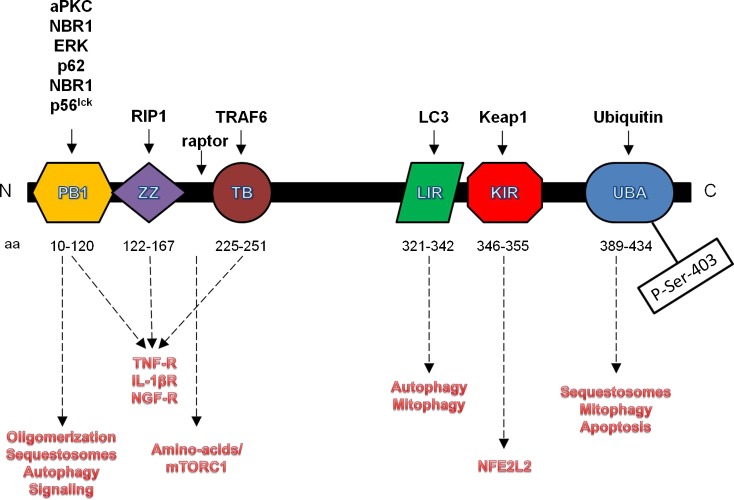
Advanced age is characterized by increased incidence of many chronic, noninfectious diseases that impair the quality of living of the elderly and pose a major burden on the healthcare systems of developed countries. These diseases are characterized by impaired or altered function at the tissue and cellular level, which is a hallmark of the aging process. Age-related impairments are likely due to loss of homeostasis at the cellular level, which leads to the accumulation of dysfunctional organelles and damaged macromolecules, such as proteins, lipids, and nucleic acids. Intriguingly, aging and age-related diseases can be delayed by modulating nutrient signaling pathways converging on the target of rapamycin (TOR) kinase, either by genetic or dietary intervention. TOR signaling influences aging through several potential mechanisms, such as autophagy, a degradation pathway that clears the dysfunctional organelles and damaged macromolecules that accumulate with aging. Autophagy substrates are targeted for degradation by associating with p62/SQSTM1, a multidomain protein that interacts with the autophagy machinery. p62/SQSTM1 is involved in several cellular processes, and its loss has been linked to accelerated aging and to age-related pathologies. In this review, we describe p62/SQSTM1, its role in autophagy and in signaling pathways, and its emerging role in aging and age-associated pathologies. Finally, we propose p62/SQSTM1 as a novel target for aging studies and age-extending interventions.
Figures
References
-
- Adam T, Opie LH, Essop MF. AMPK activation represses the human gene promoter of the cardiac isoform of acetyl-CoA carboxylase: role of nuclear respiratory factor-1. Biochem Biophys Res Commun. 2010;398(3):495–499. - PubMed
-
- Anello M, et al. Functional and morphological alterations of mitochondria in pancreatic beta cells from type 2 diabetic patients. Diabetologia. 2005;48(2):282–289. - PubMed
-
- Askanas V, Engel W. Inclusion-body myositis and myopathies: different etiologies, possibly similar pathogenic mechanisms. Curr Opin Neurol. 2002;15(5):525–531. - PubMed
Publication types
MeSH terms
Substances
LinkOut - more resources
Full Text Sources
Other Literature Sources
Medical