


Stunting is characterized by chronic inflammation in Zimbabwean infants
- PMID: 24558364
- PMCID: PMC3928146
- DOI: 10.1371/journal.pone.0086928
Stunting is characterized by chronic inflammation in Zimbabwean infants
Abstract
Background: Stunting affects one-third of children in developing countries, but the causes remain unclear. We hypothesized that enteropathy leads to low-grade inflammation, which suppresses the growth hormone-IGF axis and mediates stunting.
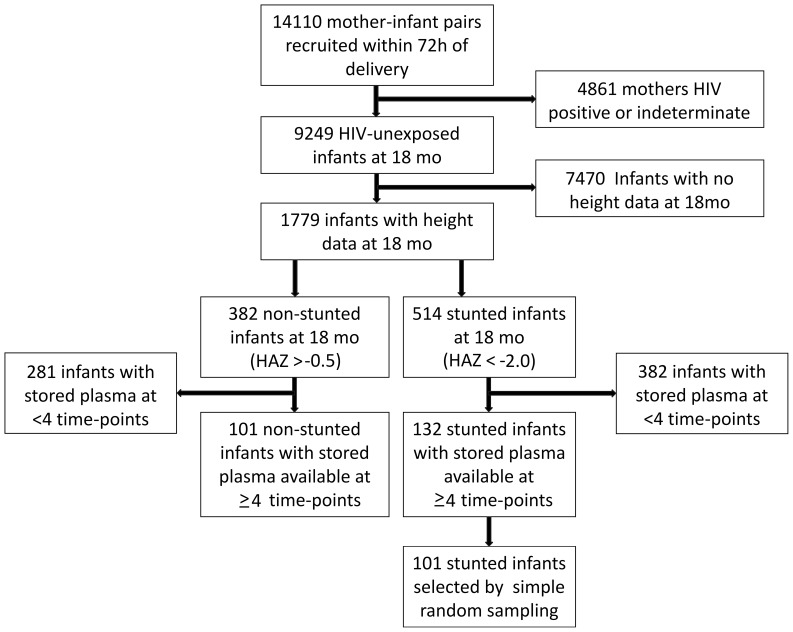
Methods: We conducted a case-control study of 202 HIV-unexposed Zimbabwean infants who were stunted (height-for-age Z-score (HAZ) <-2; cases) or non-stunted (HAZ >-0.5; controls) at 18 months. We measured biomarkers of intestinal damage (I-FABP), inflammation (CRP, AGP, IL-6) and growth hormone-IGF axis (IGF-1, IGFBP3) in infant plasma at 6 weeks and 3, 6, 12 and 18 months, and in paired maternal-infant plasma at birth. Adjusted mean differences between biomarkers were estimated using regression models. Multivariate odds ratios of stunting were estimated by logistic regression.
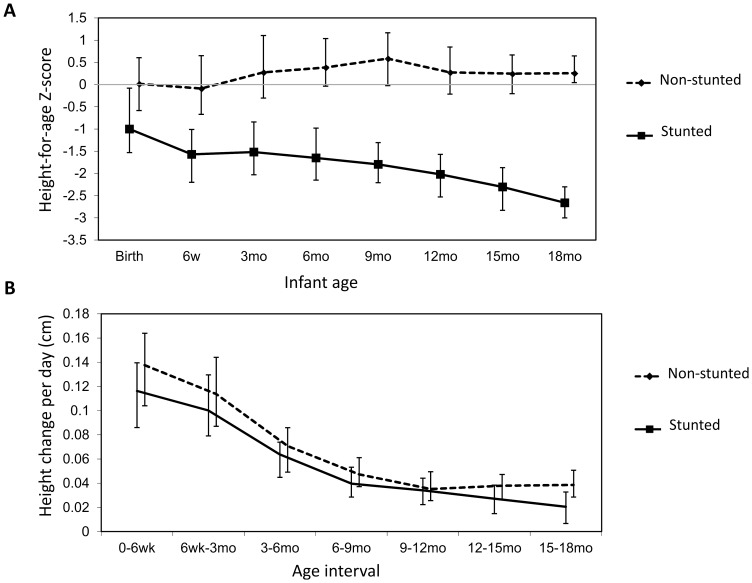
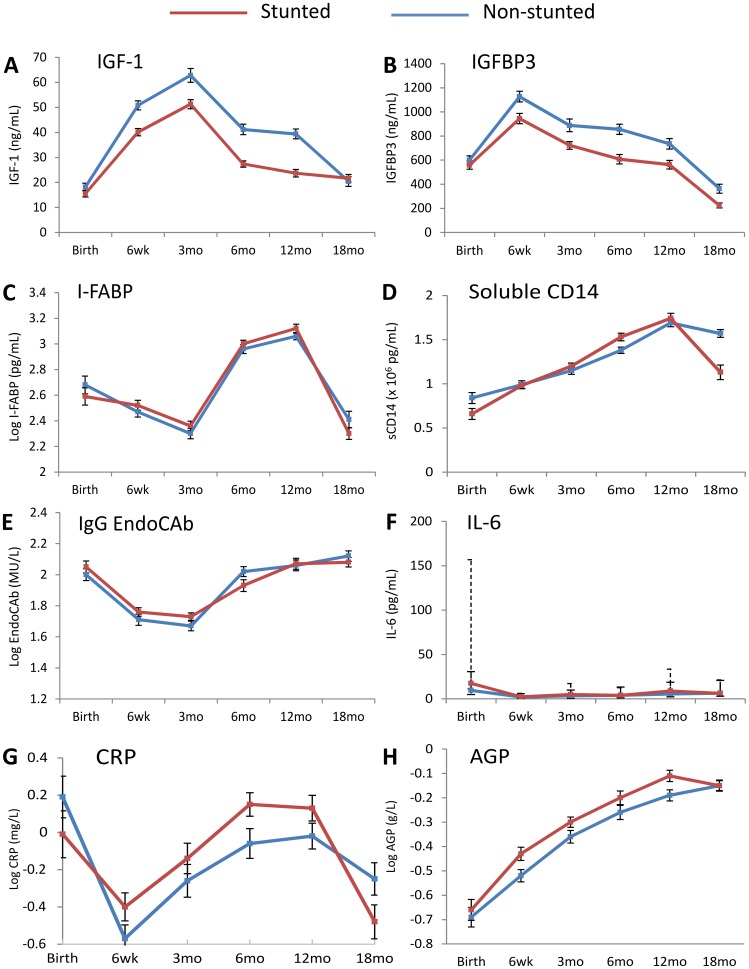
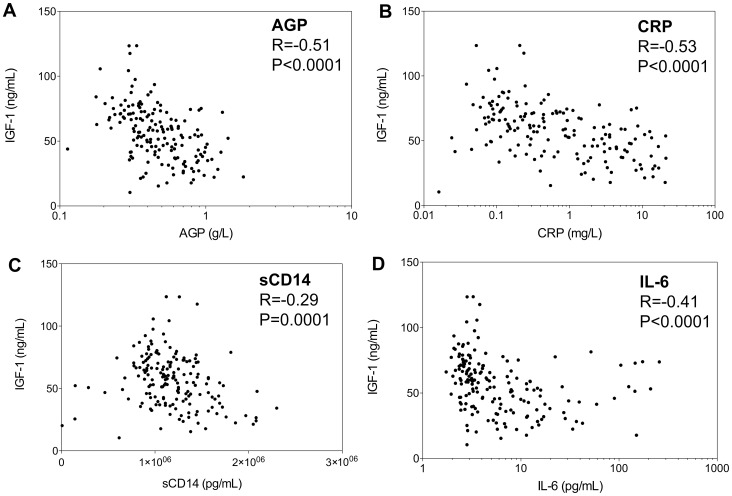
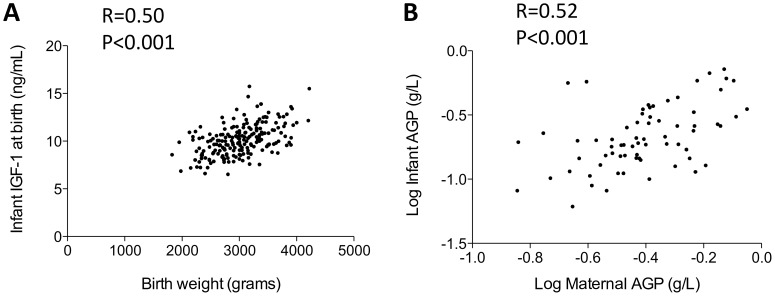
Results: At birth, cases were shorter (median (IQR) HAZ -1.00 (-1.53, -0.08) vs 0.03 (-0.57, 0.62,); P<0.001) than controls and their mothers had lower levels of IGF-1 (adjusted mean difference (95%CI) -21.4 (-39.8, -3.1) ng/mL). From 6 weeks to 12 months of age, levels of CRP and AGP were consistently higher and IGF-1 and IGFBP3 lower in cases versus controls; IGF-1 correlated inversely with inflammatory markers at all time-points. I-FABP increased between 3-12 months, indicating extensive intestinal damage during infancy, which was similar in cases and controls. In multivariate analysis, higher log10 levels of CRP (aOR 3.06 (95%CI 1.34, 6.99); P = 0.008) and AGP (aOR 7.87 (95%CI 0.74, 83.74); P = 0.087) during infancy were associated with stunting. There were no associations between levels of I-FABP, IL-6, sCD14 or EndoCAb and stunting.
Conclusions: Stunting began in utero and was associated with low maternal IGF-1 levels at birth. Inflammatory markers were higher in cases than controls from 6 weeks of age and were associated with lower levels of IGF-1 throughout infancy. Higher levels of CRP and AGP during infancy were associated with stunting. These findings suggest that an extensive enteropathy occurs during infancy and that low-grade chronic inflammation may impair infant growth.
Conflict of interest statement
Figures
References
-
- Black RE, Victora CG, Walker SP, Bhutta ZA, Christian P, et al. (2013) Maternal and child undernutrition and overweight in low-income and middle-income countries. Lancet 382: 427–451. - PubMed
-
- Victora CG, de Onis M, Hallal PC, Blossner M, Shrimpton R (2010) Worldwide timing of growth faltering: revisiting implications for interventions. Pediatrics 125: e473–480. - PubMed
-
- Dewey KG, Adu-Afarwuah S (2008) Systematic review of the efficacy and effectiveness of complementary feeding interventions in developing countries. Maternal and Child Nutrition: Blackwell Publishing Ltd: Program in International and Community Nutrition, University of California, Davis, CA, USA. - PMC - PubMed
-
- Briend A (1990) Is diarrhoea a major cause of malnutrition among the under-fives in developing countries? A review of available evidence. Eur J Clin Nutr 44: 611–628. - PubMed
Publication types
MeSH terms
Substances
Grants and funding
LinkOut - more resources
Full Text Sources
Other Literature Sources
Medical
Research Materials
Miscellaneous
