. 2014 Feb 18;9(2):e88734.
doi: 10.1371/journal.pone.0088734. eCollection 2014.

Seroprevalence of Molluscum contagiosum virus in German and UK populations

Affiliations

Seroprevalence of Molluscum contagiosum virus in German and UK populations

Subuhi Sherwani et al. PLoS One. .

Abstract

Molluscum contagiosum virus (MCV) is a significant but underreported skin pathogen for children and adults. Seroprevalence studies can help establish burden of disease. Enzyme linked immunosorbent assay (ELISA) based studies have been published for Australian and Japanese populations and the results indicate seroprevalences between 6 and 22 percent in healthy individuals, respectively. To investigate seroprevalence in Europe, we have developed a recombinant ELISA using a truncated MCV virion surface protein MC084 (V123-R230) expressed in E. coli. The ELISA was found to be sensitive and specific, with low inter- and intra-assay variability. Sera from 289 German adults and children aged 0-40 years (median age 21 years) were analysed for antibodies against MC084 by direct binding ELISA. The overall seropositivity rate was found to be 14.8%. The seropositivity rate was low in children below the age of one (4.5%), peaked in children aged 2-10 years (25%), and fell again in older populations (11-40 years; 12.5%). Ten out of 33 healthy UK individuals (30.3%; median age 27 years) had detectable MC084 antibodies. MCV seroconversion was more common in dermatological and autoimmune disorders, than in immunocompromised patients or in patients with multiple sclerosis. Overall MCV seroprevalence is 2.1 fold higher in females than in males in a UK serum collection. German seroprevalences determined in the MC084 ELISA (14.8%) are at least three times higher than incidence of MC in a comparable Swiss population (4.9%). While results are not strictly comparable, this is lower than Australian seroprevalence in a virion based ELISA (n = 357; 23%; 1999), but higher than the seroprevalence reported in a Japanese study using an N-terminal truncation of MC133 (n = 108, 6%; 2000. We report the first large scale serological survey of MC in Europe (n = 393) and the first MCV ELISA based on viral antigen expressed in E. coli.


Conflict of interest statement

Competing Interests: The authors have declared that no competing interests exist.

Figures

Figure 1
Figure 1. Bioinformatics.
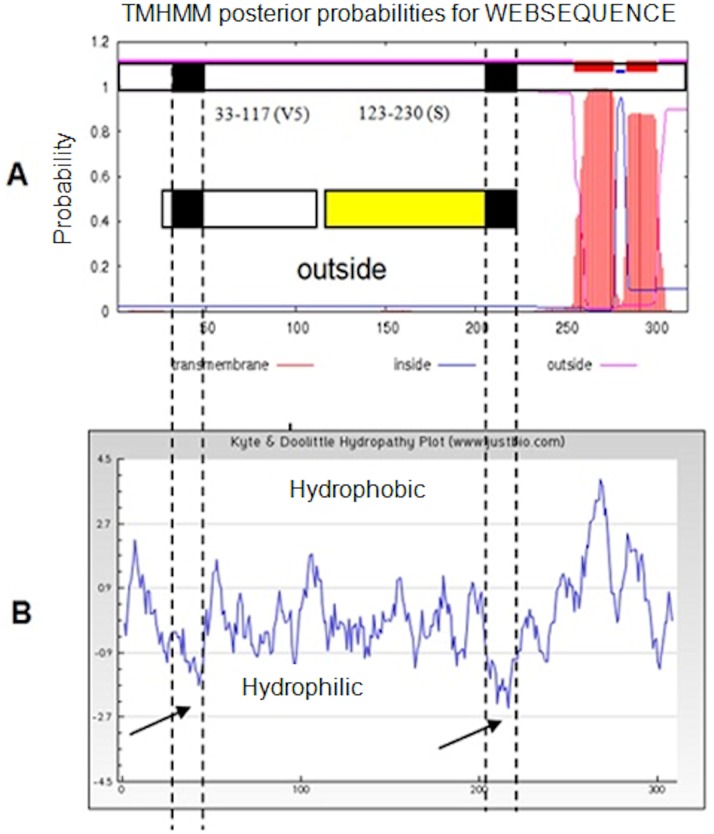
(A) Transmembrane plot (TMHMM Server v.2.0) of mc084 amino acids 1–318; (B) hydropathy plot of MC084 protein with predicted high hydrophilic/antigenic regions indicated by black boxes. The full length ORF (MC084 1–318; predicted molecular weight 34.2 kD; shown on top) was cloned into vRB12 using specific primers tailed with restriction enzyme sites BamHI-HindIII) and C-terminal StrepII epitope tag. The resulting plasmid p319 was sequenced and the recombinant vaccinia virus v319 isolated on BSC-1 cells using the plaqueless mutant system . N- and C-terminal (in yellow) truncations were subcloned from the original full length MCV gene into pGEX-2TK for overexpression in E. coli BL21 (RIL+). TMHMM was used to determine transmembrane regions whereas the Kyte-Doolittle plot was used to identify hydrophilic regions with predicted high antigenicity .
Figure 2
Figure 2. pGEX 2TK construct.
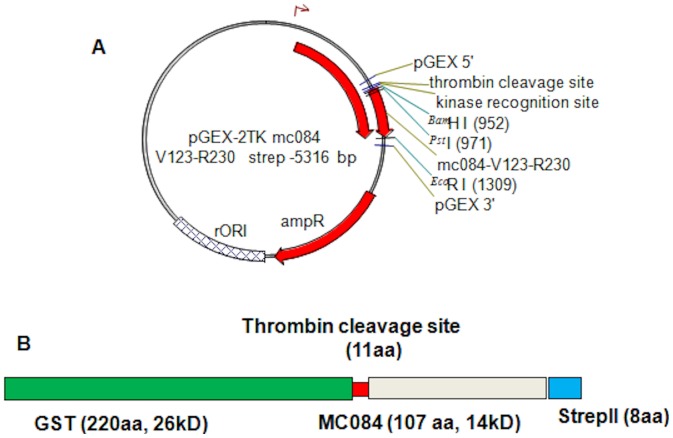
(A) Schematic of recombinant plasmid p332 with a MC084 specific insert of 107 amino acids (V123-R230); predicted molecular weight 14 kD (B) Schematic of fusion protein of GST (green), followed by Thrombin kinase site (red), MC084 V123-R230 (grey), and strep II tag (blue); predicted antigenic site (black) (C) Western blot giving 40 kD GST fusion protein GST-MC084S (V123-R230) detected using Strep MAB-Classic HRP conjugate (IBA-lifesciences). Vector NTI (vNTI) was used to produce virtual molecules and schematic diagrams of constructs prior to molecular cloning (InforMax, Inc).
Figure 3
Figure 3. Protein purification.
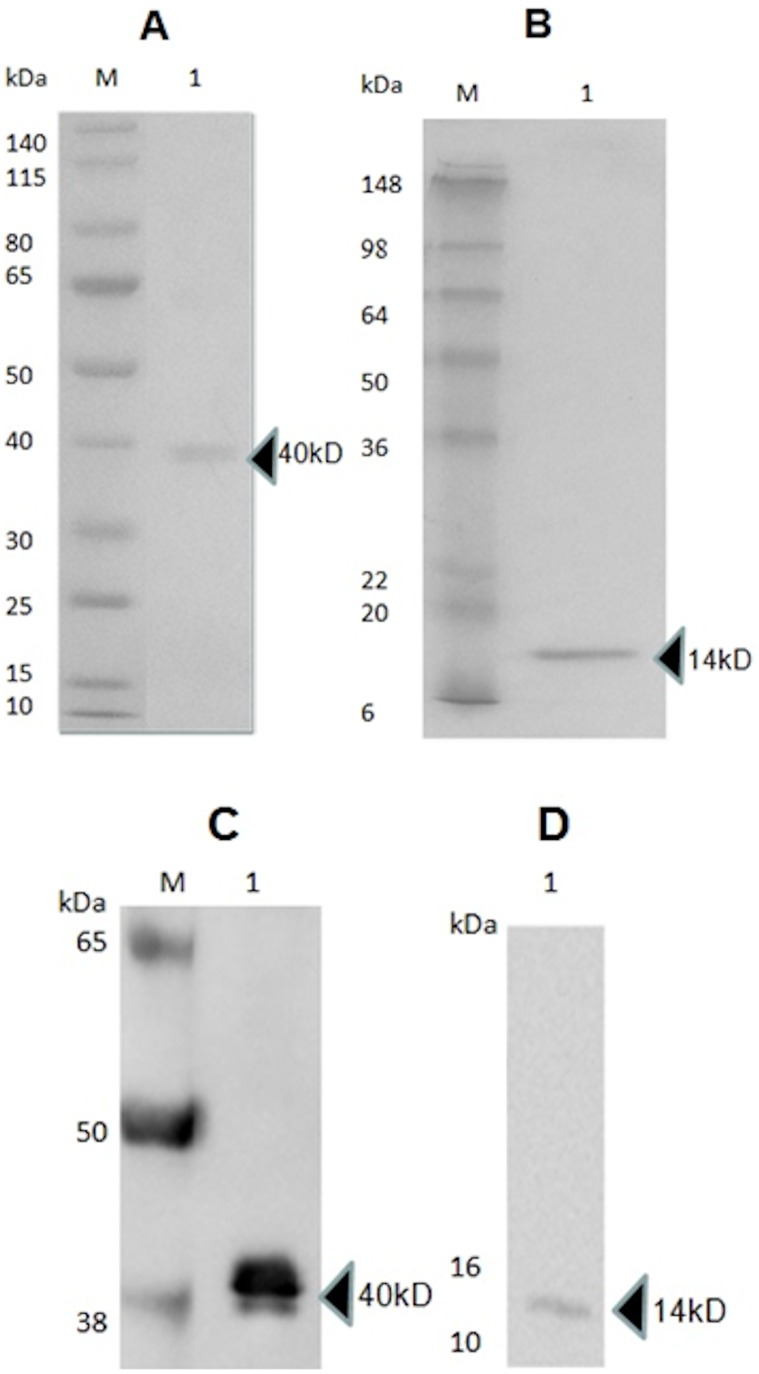
Characterisation of over expressed recombinant fusion protein GST-MC084S and FPLC purified recombinant MC084S protein by SDS-PAGE and Western Blot. M: Molecular weight markers expressed in kDa. (A) Over-expressed 40 kDa Recombinant GST-MC084S fusion protein separated in a 4–12% Bis-Tris gel. (B) FPLC purified 14 kDa protein separated in a 15% Bis-Arylamide gel. Both gels were stained with Coomassie Brilliant Blue R-250. (C) GST-MC084S fusion protein after transfer to nitrocellulose (D) FPLC purified MC084S. The membranes were probed with Strep MAB-Classic HRP conjugate (IBA-lifesciences). Arrow heads indicate the locations of proteins.
Figure 4
Figure 4. Sensitivity.
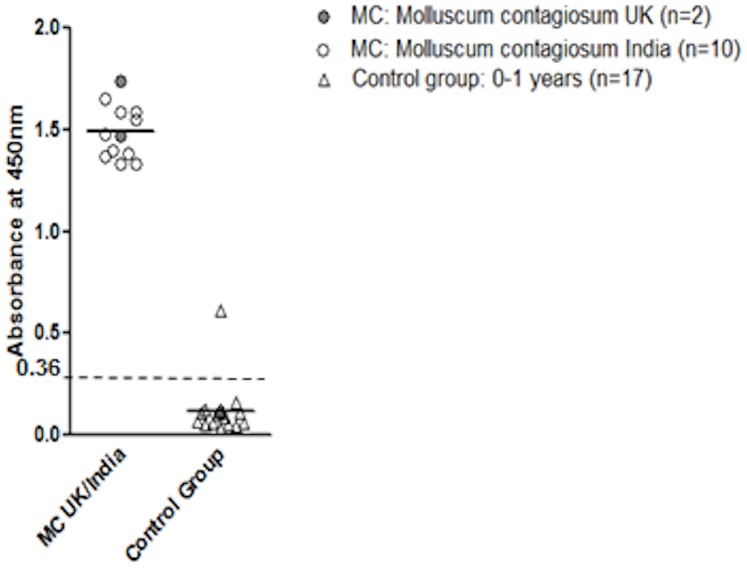
Absorbance plot of twelve sera from patients clinically diagnosed with MCV (India n = 10; UK n = 2; control group of 0–1 year old individuals n = 17).
Figure 5
Figure 5. Tissue stain details.
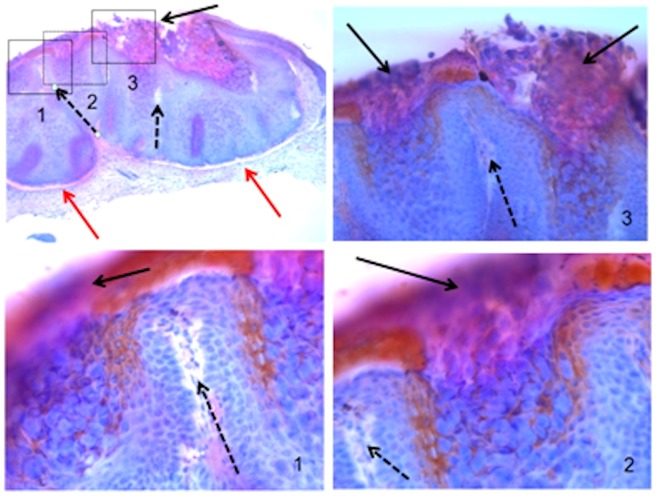
Microscopy (4×) of a Molluscum contagiosum lesion section (17315/11) stained with MC patient positive serum (CF2012-1) and haematoxylin-eosin counterstain (upper left hand corner). Three insets showing details at various magnifications [inset 1-(10×), inset 2-(20×) and inset 3-(20×)].
Figure 6
Figure 6. HaCaT Immunofluorescence.
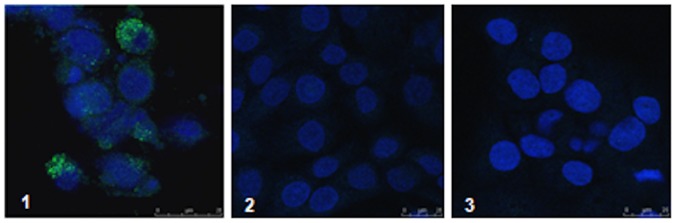
(A) HaCaT cell culture infected with recombinant vaccinia virus expressing MC084S (v319). Reactivity of high titre human serum HDV0901071 and secondary antibody AlexaFluor 488 (Green) goat anti-human IgG (H+L). (B) HaCaT cell culture infected with recombinant vaccinia virus expressing MC084S (v319). Reactivity of low titre human serum HDV0900040 and secondary antibody AlexaFluor 488 (Green) goat anti-human IgG (H+L). (C) Mock infected cells. Reactivity of high titre human serum HDV0901071 and secondary antibody AlexaFluor 488 (Green) goat anti-human IgG (H+L). Nuclei are stained with DAPI (Hoechst) and shown in blue. Samples were analysed for fluorescence emission properties by using confocal scanning laser microscopy Leica TCS SP2 AOBS.
Figure 7
Figure 7. German seroprevalence.
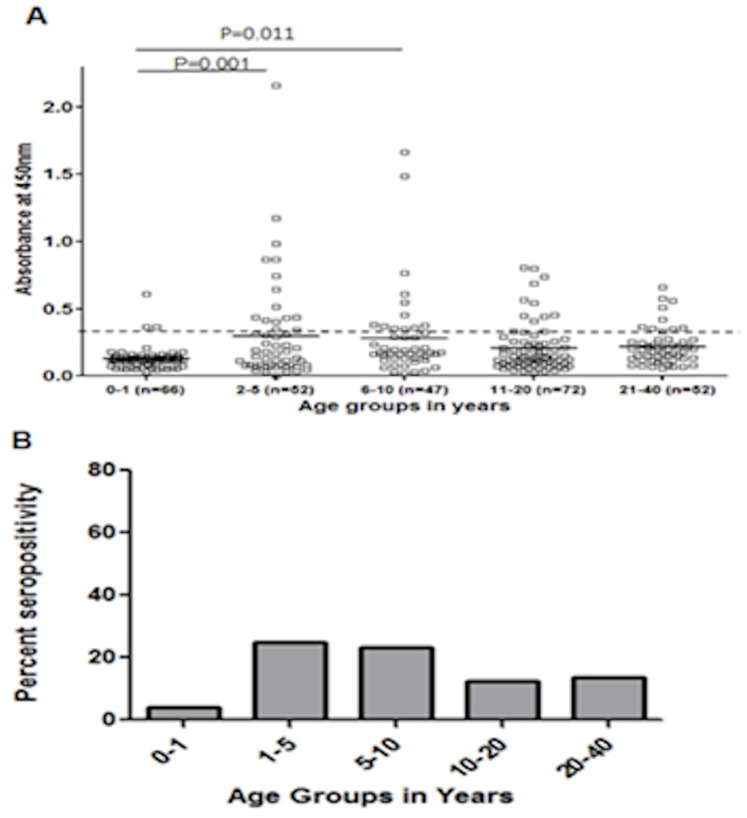
Distribution of anti-MC084S antibodies in a German population tested by direct binding ELISA (A) Serological responses to MCV antigen MC084 in a German population (n = 289; ages 0–40 years) expressed as the δODU value of an individual serum sample. The horizontal bar within each group represents the median absorbance measurement. (B) Percent seropositivities in different age groups after cut–off of 0.36 (i) 0–1 years (4.5%), (ii) 2–5 years (25%), (iii) 6–10 years (23.4%), 11–20 years (12.5%), and 21–40 years (13.5%).
Figure 8
Figure 8. UK seroprevalence.
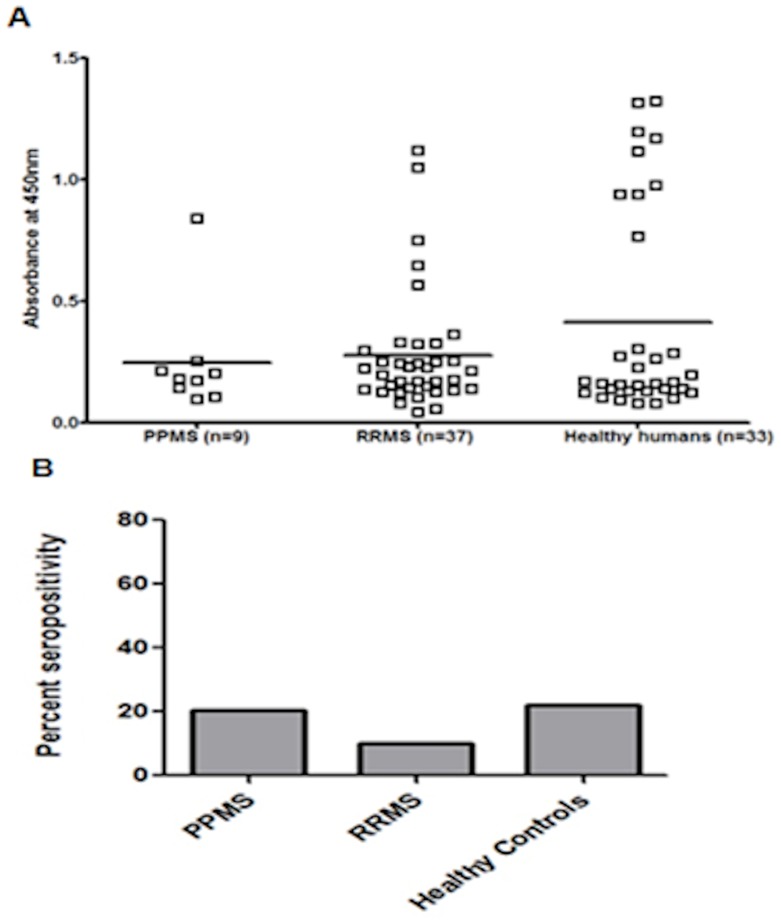
Distribution of anti-MC084S antibodies in a UK population tested by direct binding ELISA. (A) Serological responses to MCV antigen MC084S (V123-R230) in UK population (n = 79) expressed as the δODU value of an individual serum sample in different groups (i) Primary progressive multiple sclerosis (PPMS; n = 9), (ii) Relapsing remitting multiple sclerosis (RRMS; n = 33) and (iii) Healthy humans (n = 37). The horizontal bar within each group represents the median absorbance measurement (B) Percent positivity in individual groups for MC084S after cut-off of 0.36 (i) PPMS (11.1%), (ii) RRMS (16.2%) and (iii) healthy humans (30.3%).

References

    1. Chen X, Anstey A, Bugert JJ (2013) Molluscum contagiosum virus infection of the human skin: A comprehensive review of scientific studies and clinical practise. Lancet Infec Dis 13(10): 877–888. - PubMed
    1. Senkevich TG, Bugert JJ, Shisler JR, Koonin EV, Darai G, Moss B (1996) Genome sequence of a human tumorigenic poxvirus: prediction of specific host response-evasion genes. Science 273: 813–816. - PubMed
    1. Bugert JJ (2008) Molluscum Contagiosum Virus In: Mahy BWJ, Van Regenmortel MHV, editors. Encyclopedia of Virology. Oxford: Elsevier-Academic Press. pp. 319–24.
    1. Breman JG, Arita I (1980) The confirmation and maintenance of smallpox eradication. New Engl J 303: 1263–73. - PubMed
    1. Esposito JJ (1991) Family: poxviridae in classification and nomenclature of viruses, 5th report. Arch Virol Suppl (2) 91–102.

Publication types

MeSH terms

LinkOut - more resources