. 2014 Feb 18;9(2):e88916.
doi: 10.1371/journal.pone.0088916. eCollection 2014.

Stem cell therapy and curcumin synergistically enhance recovery from spinal cord injury

Affiliations

Stem cell therapy and curcumin synergistically enhance recovery from spinal cord injury

D Ryan Ormond et al. PLoS One. .

Abstract

Acute traumatic spinal cord injury (SCI) is marked by the enhanced production of local cytokines and pro-inflammatory substances that induce gliosis and prevent reinnervation. The transplantation of stem cells is a promising treatment strategy for SCI. In order to facilitate functional recovery, we employed stem cell therapy alone or in combination with curcumin, a naturally-occurring anti-inflammatory component of turmeric (Curcuma longa), which potently inhibits NF-κB. Spinal cord contusion following laminectomy (T9-10) was performed using a weight drop apparatus (10 g over a 12.5 or 25 mm distance, representing moderate or severe SCI, respectively) in Sprague-Dawley rats. Neural stem cells (NSC) were isolated from subventricular zone (SVZ) and transplanted at the site of injury with or without curcumin treatment. Functional recovery was assessed by BBB score and body weight gain measured up to 6 weeks following SCI. At the conclusion of the study, the mass of soleus muscle was correlated with BBB score and body weight. Stem cell therapy improved recovery from moderate SCI, however, it had a limited effect on recovery after severe SCI. Curcumin stimulated NSC proliferation in vitro, and in combination with stem cell therapy, induced profound recovery from severe SCI as evidenced by improved functional locomotor recovery, increased body weight, and soleus muscle mass. These findings demonstrate that curcumin in conjunction with stem cell therapy synergistically improves recovery from severe SCI. Furthermore, our results indicate that the effect of curcumin extends beyond its known anti-inflammatory properties to the regulation of stem cell proliferation.


Conflict of interest statement

Competing Interests: The authors have declared that no competing interests exist.

Figures

Figure 1
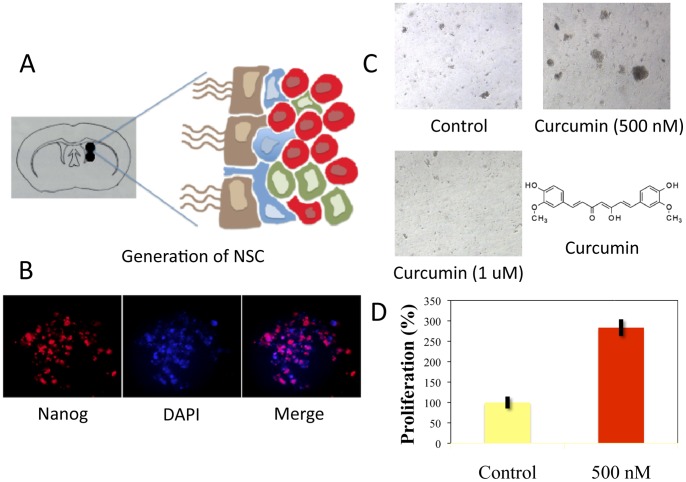
Figure 1. Curcumin enhances stem cell proliferation of NSC derived from SVZ in low doses, however it induces apoptosis at high doses.
A: Schematic presentation of treatments timeline used in moderate and severe SCI. B: Micropunched area of the subventricular zone (SVZ), depicting the presence of ependymal cells (brown), astrocytes (blue), transit amplifying cells (green) and neuroblasts (red). C: Immunofluorescence analysis demonstrates the presence of stem cell marker nanog in neurospheres and DAPI staining for DNA. D, E: Effect of curcumin on neurosphere formation. At a low concentration of 500 nM, curcumin treatment stimulated proliferation of NSC in 24 hr. At higher concentrations (1 uM), curcumin caused autolysis and neurosphere fragmentation. The chemical structure of curcumin is also displayed.
Figure 2
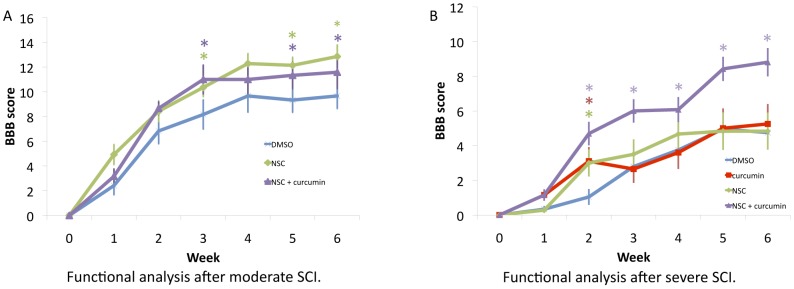
Figure 2. Stem cell therapy in conjunction with low-dose curcumin had a synergistic effect in recovery from severe SCI, as demonstrated by improved BBB score.
A: Functional analysis (BBB) after moderate SCI showed that stem cell therapy with a high dose of curcumin rendered BBB scores, which were statistically significant as compared to control rats (DMSO), starting from week 3. B: In severe SCI, rats undergoing combined NSC transplantation and curcumin showed consistent improvement in BBB score as compared to DMSO treated controls. Statistical analysis of combined NSC+curcumin treatment also demonstrated significant improvement in comparison to NSC or curcumin treatment alone.
Figure 3
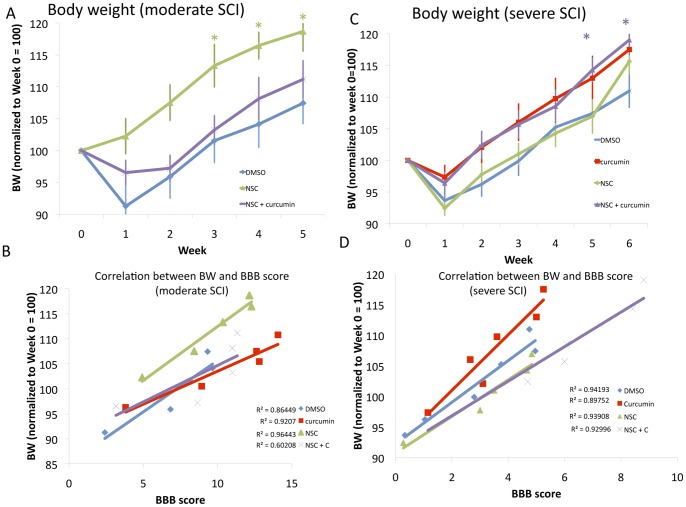
Figure 3. Stem cell therapy in conjunction with curcumin synergistically improves recovery from moderate or severe SCI, as demonstrated by improved body weight gain, which correlated with BBB score.
A: Stem cell transplanted animals showed improved body weight gain in comparison to combinational treatment or DMSO treated controls. B: A positive correlation exists between body weight gain and improved BBB score in moderate SCI. R2 values are listed next to their respective cohort. C: Combination of NSC therapy with curcumin treatment showed significant improvement in body weight gain in comparison to DMSO control. Curcumin treated rats showed a trend toward significance in BW gain. D: Correlation of BBB scores with body weight after severe SCI. R2 values are listed next to their respective cohort.
Figure 4
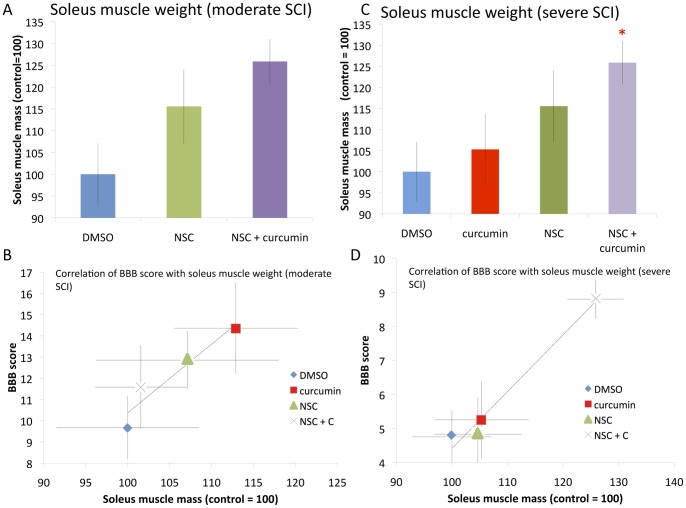
Figure 4. Soleus muscle weight as an indicator of recovery after moderate and severe SCI, and correlated with BBB score.
A: Rats with greater recovery of hindlimb motor function have better soleus muscle weight at necropsy. While stem cell transplanted animals and combinational treatments had improved soleus muscle weight in comparison to DMSO controls, this did not reach statistical significance. B: Correlation of BBB score with soleus muscle weight after moderate SCI demonstrates strong correlation (0.97). Values presented are mean ± SEM. *p<0.05. C: Soleus muscle weight after severe SCI showed that all cohorts had larger soleus muscle mass compared to DMSO treated controls, however curcumin or stem cell monotherapy showed only a trend towards significance. NSC plus curcumin treatment improved soleus muscle weight significantly in comparison to DMSO controls. D: Correlation of BBB score with soleus muscle weight after severe SCI demonstrated a strong correlation (r2 = 0.91). Values presented are mean ± SEM. *p<0.05.
Figure 5
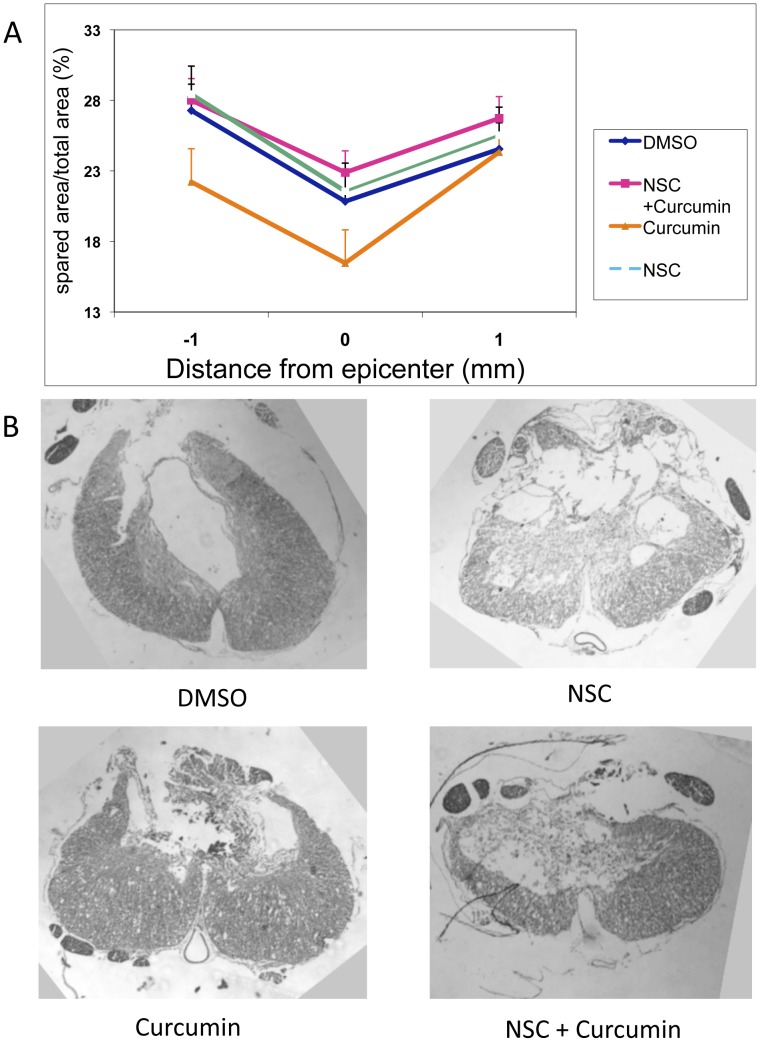
Figure 5. Histopathological examination after severe SCI.
A: NSC plus curcumin and NSC all displayed enhanced spared area relative to the total area suggesting an improvement in recovery. DMSO treated rats also demonstrated increased spared area of the spinal cord, but somewhat less than the NSC plus curcumin, or NSC treatments. Curcumin-treated rats demonstrated less spared area than the other three treatments. B: Photomicrographs of representative samples of spinal cord sections across the area of contusion stained with Lox blue.

References

    1. Sekhon LH, Fehlings MG (2001) Epidemiology, demographics, and pathophysiology of acute spinal cord injury. Spine 26(24 Suppl): S2–12. - PubMed
    1. Christopher & Dana Reeve Foundation (2009) One Degree of Separation: Paralysis and Spinal Cord Injury in the United States. Christopher & Dana Reeve Foundation.
    1. Renault-Mihara F, Okada S, Shibata S, Nakamura M, Toyama Y, et al. (2008) Spinal cord injury: emerging beneficial role of reactive astrocytes’ migration. Int J Biochem Cell Biol 40(9): 1649–53. - PubMed
    1. Ghosh S, Hayden MS (2008) New regulators of NF-kappaB in inflammation. Nat Rev Immunol 8(11): 837–48. - PubMed
    1. Aggarwal BB, Sung B (2009) Pharmacological basis for the role of curcumin in chronic diseases: an age-old spice with modern targets. Trends Pharmacol Sci 30(2): 85–94. - PubMed

Publication types

MeSH terms