. 2014 Feb 13:6:ecurrents.hd.3304e87e460b4bb0dc519a29f4deccca.
doi: 10.1371/currents.hd.3304e87e460b4bb0dc519a29f4deccca.
The PDE1/5 Inhibitor SCH-51866 Does Not Modify Disease Progression in the R6/2 Mouse Model of Huntington's Disease
Affiliations
- PMID: 24558637
- PMCID: PMC3923778
- DOI: 10.1371/currents.hd.3304e87e460b4bb0dc519a29f4deccca
Item in Clipboard
The PDE1/5 Inhibitor SCH-51866 Does Not Modify Disease Progression in the R6/2 Mouse Model of Huntington's Disease
PLoS Curr.
.
Abstract
Huntington's disease is a neurodegenerative disorder caused by mutations in the CAG tract of huntingtin. Several studies in HD cellular and rodent systems have identified disturbances in cyclic nucleotide signaling, which might be relevant to pathogenesis and therapeutic intervention. To investigate whether selective phosphodiesterase (PDE) inhibitors can improve some aspects of disease pathogenesis in HD models, we have systematically evaluated the effects of a variety of cAMP and cGMP selective PDE inhibitors in various HD models. Here we present the lack of effect in a variety of endpoints of the PDE subtype selective inhibitor SCH-51866, a PDE1/5 inhibitor, in the R6/2 mouse model of HD, after chronic oral dosing.
Figures
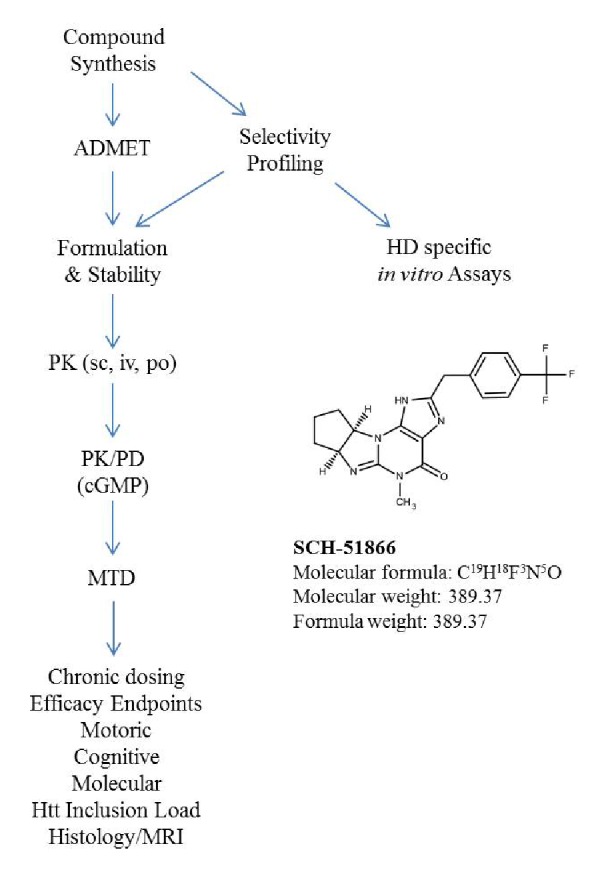
This flow scheme is representative of the CHDI compound testing process.
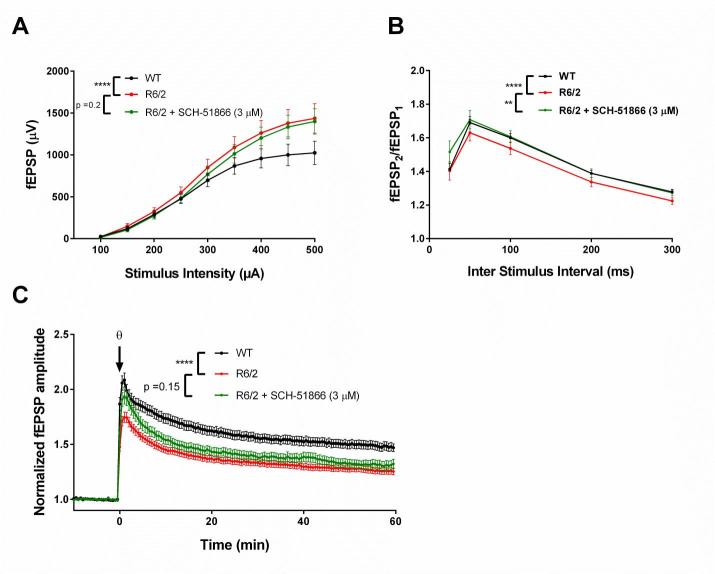
(A) Basal synaptic transmission is elevated in R6/2 compared to WT. SCH-51866 has no significant effect on R6/2 input/ouput (I/O) parameters; (B) SCH-51866 restored R6/2 paired-pulse facilitation (PPF) to WT levels; (C) SCH-51866 did not restore the deficit in R6/2 long-term potentiation (LTP). Significance is denoted by asterisks (p< 0.0001 = ****, p < 0.01=**)
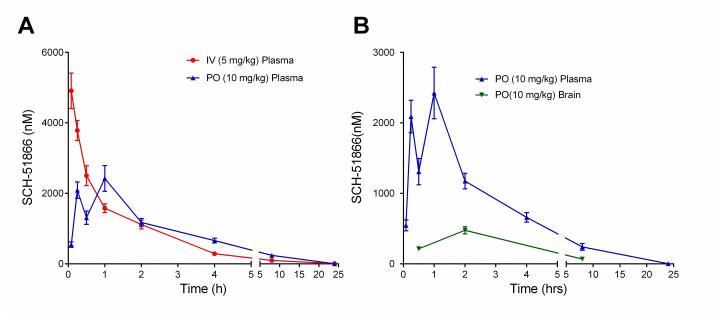
(A) Exposure of SCH-51866 in plasma following IV (5 mg/kg) or oral (10 mg/kg) administration; (B) Exposure of SCH-51866 in plasma and brain tissue after oral (PO) (10 mg/kg) dosing.
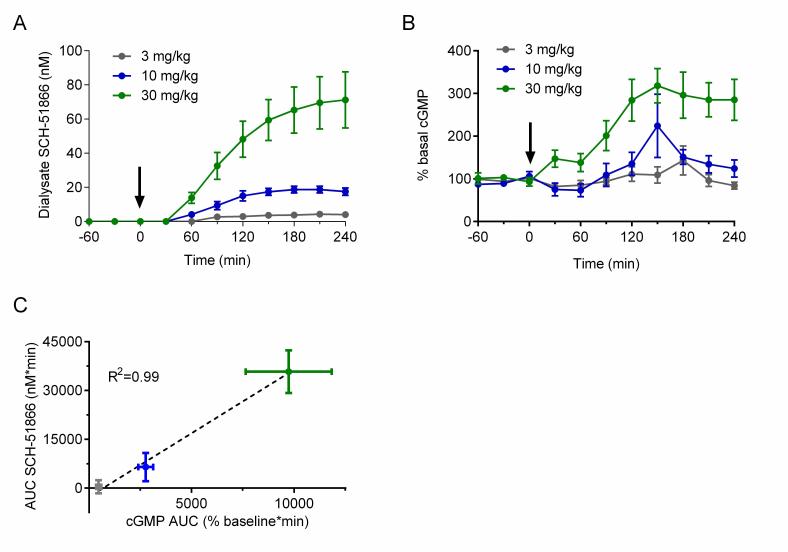
(A) Quantification of SCH-51866 concentration in extracellular dialysate after po acute administration; dialysate levels shown are not adjusted for recovery factor, which on average was 56%; (B) Quantification of cGMP elevation measured in extracellular dialysate after acute po administration; (C) Correlation of AUC evaluation of SCH-51866 and cGMP elevation in extracellular dialysate shows a dose-proportional increase in cGMP in response to increasing concentration of SCH-51866. Elevation in cGMP was significant over baseline for both 10 and 30 mg/kg dose groups, but not the 3 mg/kg dose group.
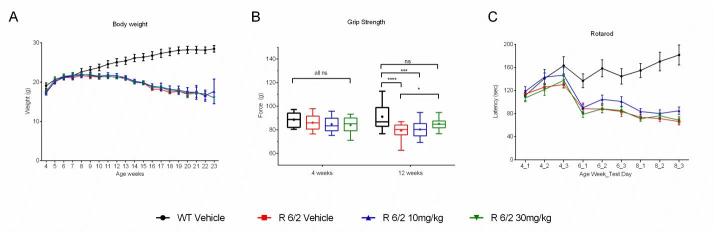
Analysis of (A) body weight; (B) Grip strength measured at 12 weeks of age was significantly improved over the R6/2 vehicle group in the 30 mg/kg dose group, and was equivalent to wild type vehicle controls; (C) Rotarod performance;
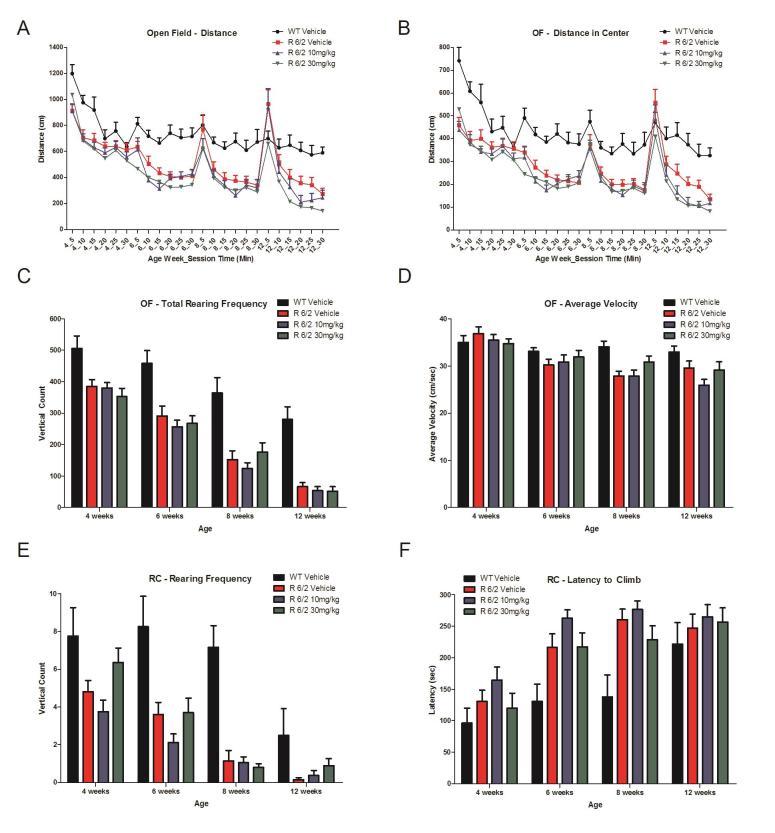
Chronic SCH-51866 administration in R6/2 mice showed no improvement in (A) Open field total distance traveled, (B) distance in center (C), total rear frequency, (D) average velocity in an open field, (E) in rearing frequency or (F) latency to climb a custom-made pencil holder.
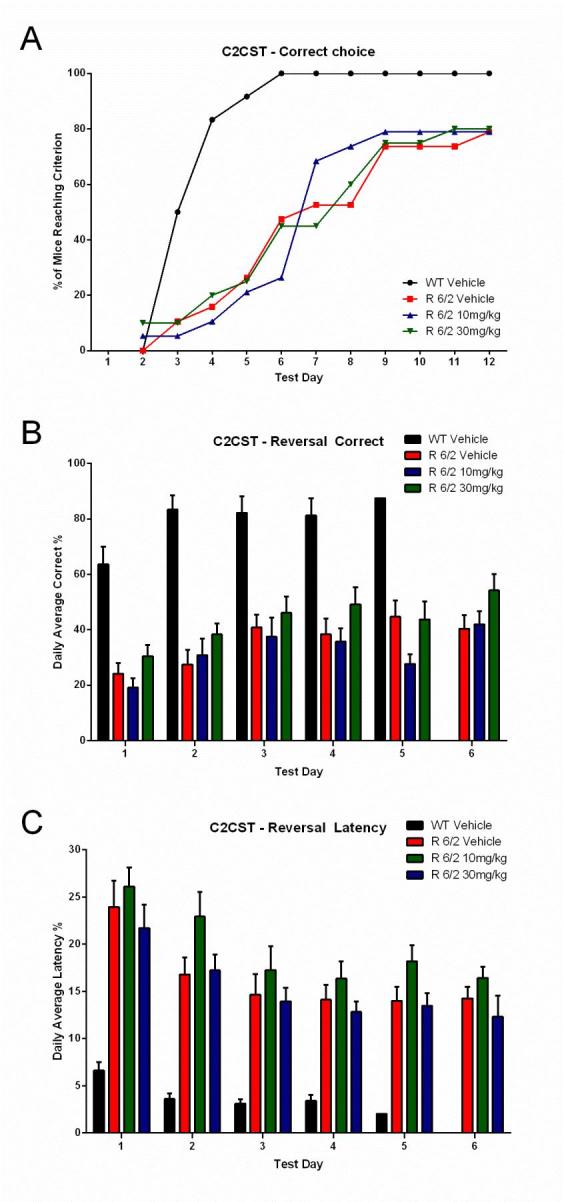
(A) Learning phase; data expressed as cumulative number of animals reaching criteria; (B) Reversal learning; data expressed as % correct choices made over time after platform reversal; (C) Latency to make the choice. Administration of SCH51866 did not improve any of these parameters. Deficits in R6/2 versus wildtype animals are clearly detectable at 9 weeks of age.
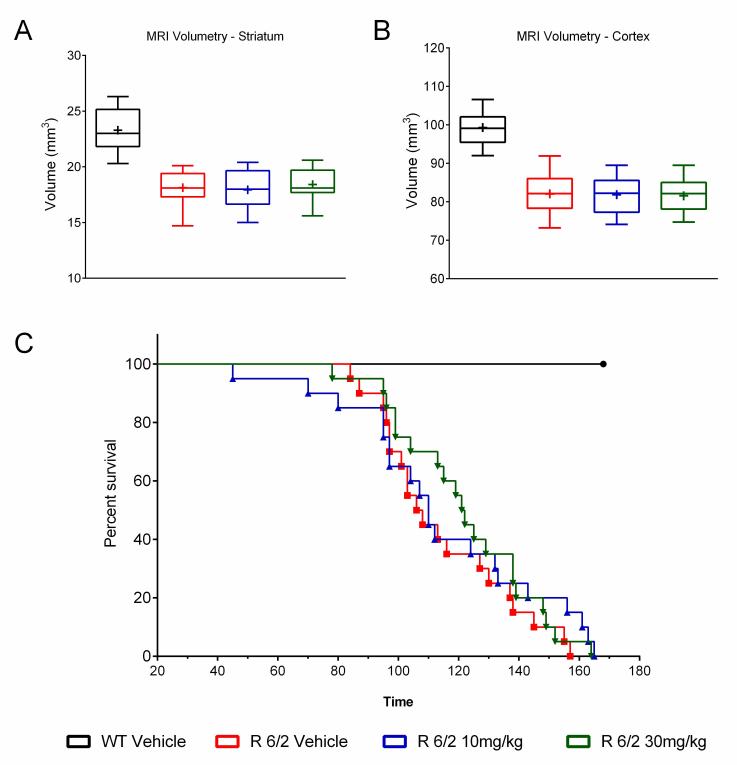
There was no improvement in brain volume in R6/2 treated striatum (A) or cortex (B); (C) Survival analysis of mice treated with SCH-51866 versus R6/2 vehicle-treated animals and WT controls showed no survival benefit of SCH-51866 treatment.
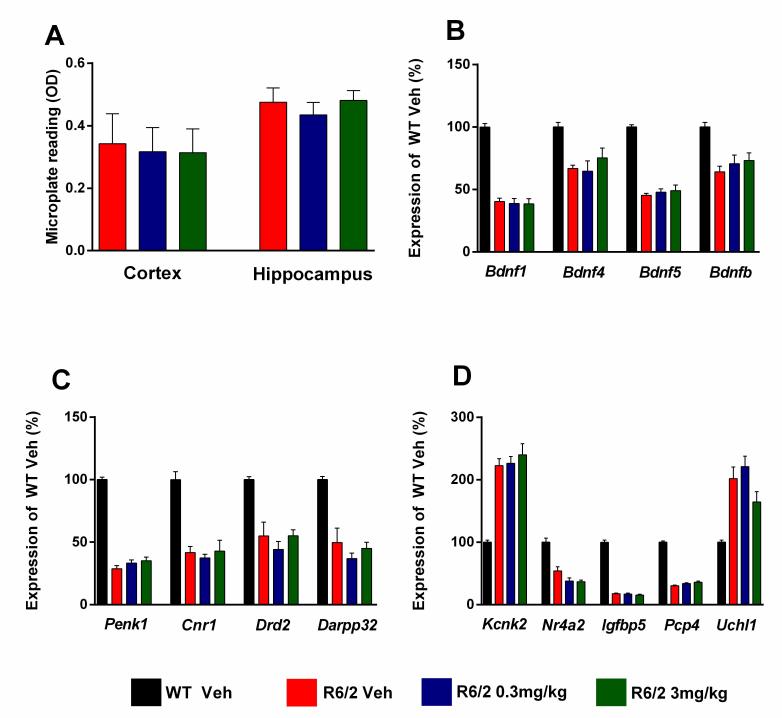
A) Analysis of cortical and hippocampal aggregated HTT levels as measured using the Seprion ligand in R6/2 animals dosed with vehicle or SCH-51866. (B-C) Analysis of specified gene expression changes in R6/2s vs control littermates and in R6/2s treated chronically with SCH-51866 in B) cortex, C) striatum, and D) cerebellum. The drug had no effects on the dysregulation of these genes. Bdnf = brain derived neurotrophic factor, promoter transcripts 1, 4 and 5 and coding region (b); Penk1 = preproenkephalin; Cnr1 = cannabinoid receptor 1; Drd2 = dopamine receptor 2; Darpp32 = dopamine and cAMP regulated neuronal phosphoprotein; Kcnk2 = potassium channel, subfamily K member 2; Nr4a2 = nuclear receptor subfamily 4 group A member 2; Igfbp5 = insulin-like growth factor binding protein; Pcp4 = Purkinje cell protein 4; Uchl1 = ubiquitin carboxy-terminal hydrolase L1
References
-
- Hebb A, Robertson H (2007) Role of phosphodiesterases in neurological and psychiatric disease. Current Opinion in Pharmacology 7: 86-92. - PubMed
-
- Rose GM, Hopper A, De Vivo M, Tehim A (2005) Phosphodiesterase inhibitors for cognitive enhancement. Curr Pharm Des 11: 3329-3334. - PubMed
-
- Giampà C, DeMarch Z, D'Angelo V, Morello M, Martorana A, et al. (2006) Striatal modulation of cAMP-response-element-binding protein (CREB) after excitotoxic lesions: implications with neuronal vulnerability in Huntington's disease. European Journal of Neuroscience 23: 11-20. - PubMed
-
- Giampà C, Patassini S, Borreca A, Laurenti D, Marullo F, et al. (2009) Phosphodiesterase 10 inhibition reduces striatal excitotoxicity in the quinolinic acid model of Huntington's disease. Neurobiology of Disease 34: 450-456. - PubMed
LinkOut - more resources
Full Text Sources
Other Literature Sources
Miscellaneous