


First molecular characterization of Cryptosporidium and Giardia from bovines (Bos taurus and Bubalus bubalis) in Sri Lanka: unexpected absence of C. parvum from pre-weaned calves
- PMID: 24559043
- PMCID: PMC4015788
- DOI: 10.1186/1756-3305-7-75
First molecular characterization of Cryptosporidium and Giardia from bovines (Bos taurus and Bubalus bubalis) in Sri Lanka: unexpected absence of C. parvum from pre-weaned calves
Abstract
Background: The genetic characterization of Cryptosporidium and Giardia has important implications for investigating their epidemiology and underpins their control. We undertook the first molecular epidemiological survey of domestic bovids in selected regions of Sri Lanka to establish whether they excreted Cryptosporidium and/or Giardia with zoonotic potential.
Methods: Faecal samples were collected from dairy calves (n = 340; Bos taurus; < 3 months of age; weekly sampling for six weeks) and water buffaloes (n = 297; Bubalus bubalis; <6 months and ≥6 months of age; one sampling) from seven different farms in Sri Lanka. Genomic DNAs were extracted from individual faecal samples and then tested for the presence of parasite DNA using a PCR-based mutation scanning-targeted sequencing-phylogenetic approach, employing genetic markers within the small subunit of nuclear ribosomal RNA and 60 kDa glycoprotein genes (designated pSSU and pgp60, respectively) for Cryptosporidium, and within the triose phosphate isomerise (ptpi) gene for Giardia.
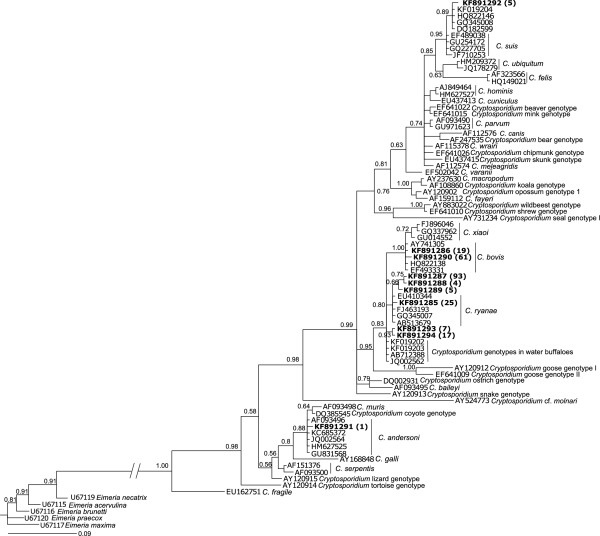
Results: Based on pSSU sequence data, C. bovis, C. ryanae and six new genotypes that were genetically similar but not identical to C. andersoni (n = 1), C. bovis (n = 1), C. ryanae (n = 3) and C. suis (n = 1) were recorded in cattle. For pSSU, two other, new genotypes were defined in water buffalo, which were genetically most similar to Cryptosporidium genotypes recorded previously in this host species in other countries including Australia. Consistent with the findings for pSSU, no species or genotypes of Cryptosporidium with zoonotic potential were detected using pgp60. Based on ptpi sequence data, G. duodenalis assemblages A and E were detected in four and 137 samples from cattle, respectively, and assemblage E in two samples from water buffaloes.
Conclusions: The present study showed that C. parvum, the most commonly reported zoonotic species of Cryptosporidium recognised in bovine calves globally, was not detected in any of the samples from pre-weaned calves tested in the present study. However, eight new genotypes were recorded. Future studies of different host species in various regions are required to investigate the molecular epidemiology of cryptosporidiosis and giardiasis in Sri Lanka and neighbouring countries in South Asia.
Figures

References
-
- Ryan UM, Cacciò SM. Zoonotic potential of Giardia. Int J Parasitol. 2013;43(12–13):943–956. - PubMed
-
- Jex AR, Chalmers RM, Smith HV, Widmer G, McDonald V, Gasser RB. Cryptosporidiosis. In Oxford Textbook of Zoonoses. Edited by Palmer SR, Soulsby L, Torgerson PR, Brown DWG. New York: Oxford University Press Inc.; 2011. (Chapter 46)
-
- Snelling WJ, Xiao L, Ortega-Pierres G, Lowery CJ, Moore JE, Rao JR, Smyth S, Millar BC, Rooney PJ, Matsuda M, Kenny F, Xu J, Dooley JS. Cryptosporidiosis in developing countries. J Infect Dev Ctries. 2007;1(3):242–256. - PubMed
Publication types
MeSH terms
LinkOut - more resources
Full Text Sources
Other Literature Sources
Medical
